
17:29Machine-translated from Azerbaijani by AIRead in Azerbaijani
AI Agents Used 5 Times More Tokens Than Humans on OpenRouter

According to August data from the OpenRouter platform, artificial intelligence agents significantly outpaced humans in token usage. Agents used 7.3 trillion tokens, while humans used 1.4 trillion. Agent traffic surpassed human usage in February, and 6 months later, the gap had grown to more than 5 times. A token is a small piece of text processed by an artificial intelligence model. In an X post dated September 30, 2026, Futurum Group CEO Daniel Newman predicted that the gap would first reach 10 times and then rise even higher.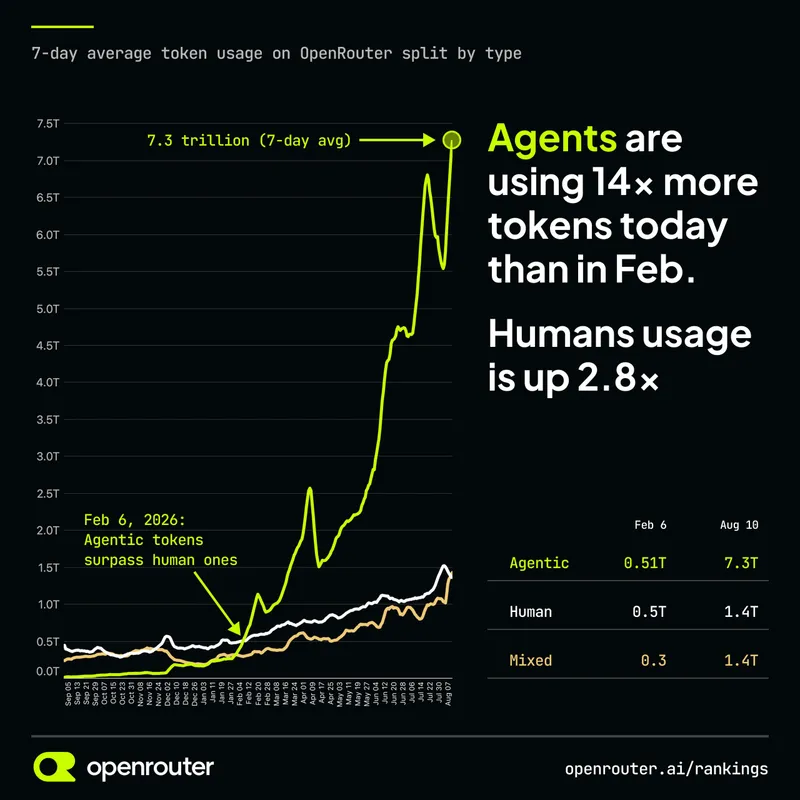 The chart shows the 7-day average for token usage. OpenRouter considers 7 indicators when classifying traffic as agent, human, or mixed. These include how frequently tools are called, the number of messages in a conversation, and the interval between requests. From February to August, agents’ token usage increased 14 times. Usage by humans increased 2.8 times, while the mixed category, involving both a human and an agent, increased approximately 4.7 times. More than 85% of the tokens used by agents come from cached requests. In other words, the systems are mainly rereading parts of text and conversations they have seen before. Processing such data is considerably cheaper than computing a new request from scratch. However, stored data still occupies memory. Context is stored in temporary memory called the KV cache. As this cache grows, demand also increases for the fast HBM memory used in artificial intelligence servers.
 The figures show the volume of tokens processed, not the amount of money spent, and are based on traffic from only 1 platform. Moreover, growth was not continuous: usage declined in April and July. At the same time, the use of agents is also expanding at other companies. According to a survey conducted by McKinsey in 2026, 40% of large organizations use artificial intelligence agents at scale. The figure was 27% 1 year earlier. A similar situation was observed in a call center test conducted with the DeepSeek model and Nvidia H200 accelerators. In September, 96% of the input received by the agents in the test through Claude Code consisted of rereading old conversations. Micron expects shortages of RAM and other types of memory to worsen further in 2027 and 2028. Prioritizing HBM production and the rapid growth in agent usage could also put pressure on computer memory prices.
The chart shows the 7-day average for token usage. OpenRouter considers 7 indicators when classifying traffic as agent, human, or mixed. These include how frequently tools are called, the number of messages in a conversation, and the interval between requests. From February to August, agents’ token usage increased 14 times. Usage by humans increased 2.8 times, while the mixed category, involving both a human and an agent, increased approximately 4.7 times. More than 85% of the tokens used by agents come from cached requests. In other words, the systems are mainly rereading parts of text and conversations they have seen before. Processing such data is considerably cheaper than computing a new request from scratch. However, stored data still occupies memory. Context is stored in temporary memory called the KV cache. As this cache grows, demand also increases for the fast HBM memory used in artificial intelligence servers. The figures show the volume of tokens processed, not the amount of money spent, and are based on traffic from only 1 platform. Moreover, growth was not continuous: usage declined in April and July. At the same time, the use of agents is also expanding at other companies. According to a survey conducted by McKinsey in 2026, 40% of large organizations use artificial intelligence agents at scale. The figure was 27% 1 year earlier. A similar situation was observed in a call center test conducted with the DeepSeek model and Nvidia H200 accelerators. In September, 96% of the input received by the agents in the test through Claude Code consisted of rereading old conversations. Micron expects shortages of RAM and other types of memory to worsen further in 2027 and 2028. Prioritizing HBM production and the rapid growth in agent usage could also put pressure on computer memory prices.