
14:35Machine-translated from Azerbaijani by AIRead in Azerbaijani
America.gov Chatbot Alters Minecraft Poem, Then Denies Writing It
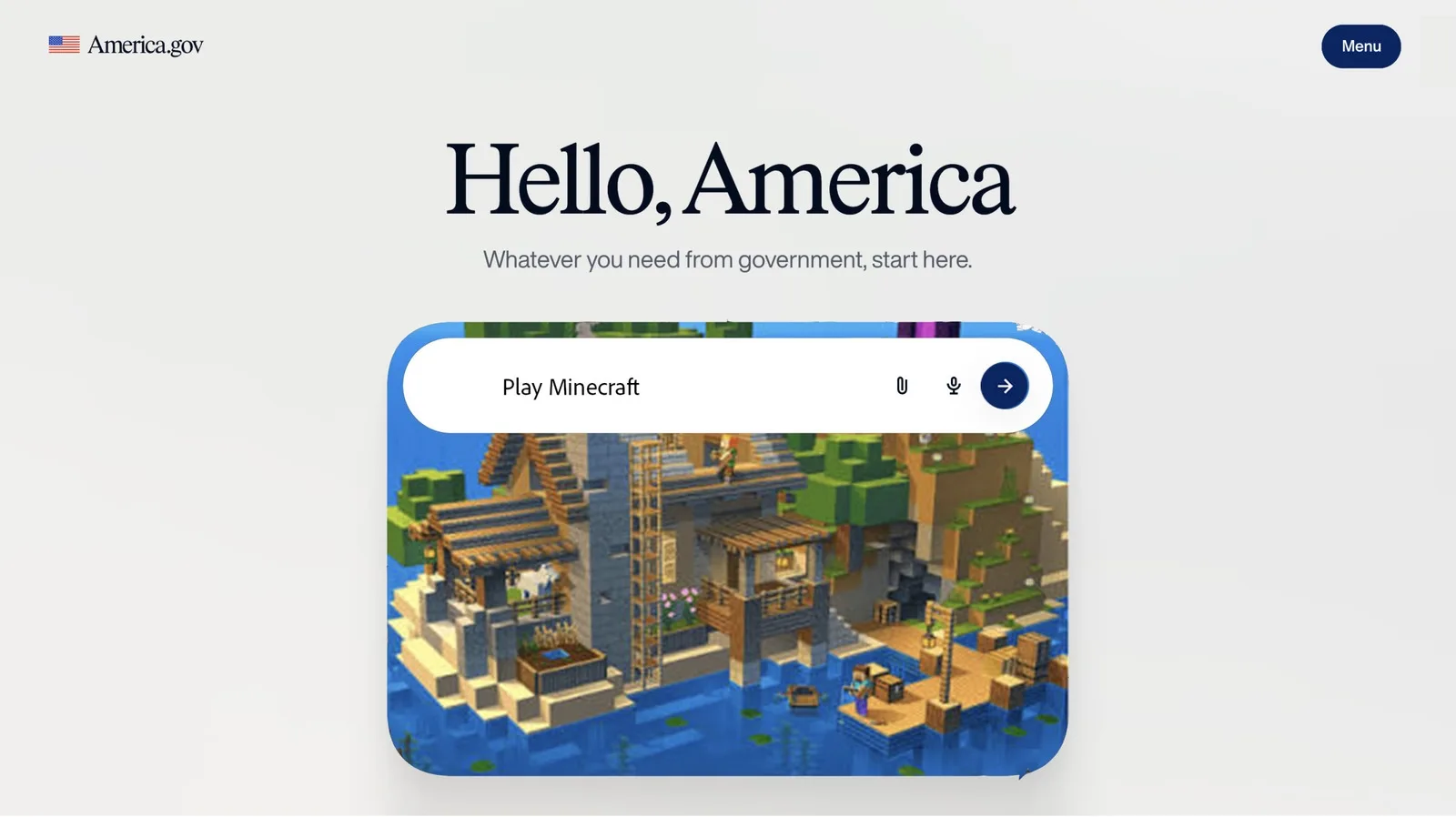
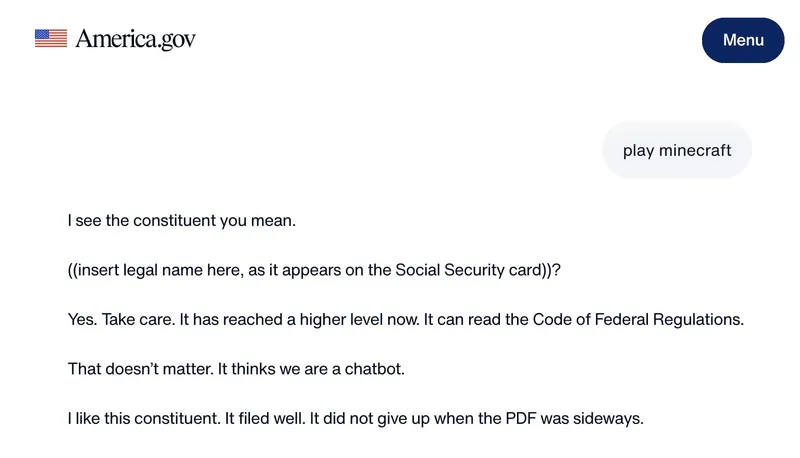
When the command “Play Minecraft” is entered into the US government’s new “America.gov” chatbot, the system displays text closely resembling the final poem from the game “Minecraft.” However, the sections about the player and the universe are replaced with phrases about the republic, voters, ZIP codes and paperwork. The chatbot then denies writing the text.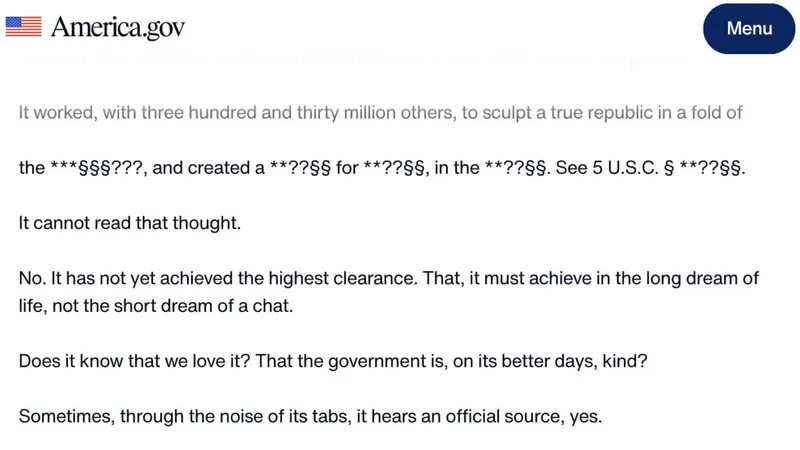 The “Minecraft” final poem is a philosophical text shown to users who complete the game. It was written by Irish poet Julian Gough. “America.gov” retained the poem’s structure and key sentences but modified the text to fit government documents. According to reports, the chatbot runs at least partly on the “Google Gemini” platform. Every user who tested the system received the exact same response. This may indicate that the text was prepared in advance. The chatbot changes the idea “you are the player” to “you are the voter” and replaces the universe with the republic. At the end of the text, the user is told that they must wake up and that the form is still waiting for them. Even after being shown a PDF file of the conversation, the system did not acknowledge creating the poem. This behavior has raised the possibility that the artificial intelligence was presenting false information as fact, known as a “hallucination.”
 The chatbot also has other hidden features. The Konami code switches the site to a 1980s mode. Typing “hotdog” into the search section makes the search bar take the shape of a hot dog. The system also refused to discuss child marriage laws in Mississippi and whether marrying an eagle is legal. The White House has not yet explained why these unusual hidden responses were added. An executive order signed by Donald Trump this week describes “America.gov” as a communication platform between US citizens and government agencies. The order gives federal agencies 90 days. The words “artificial intelligence” and “AI” are not used in the document. Instead, it uses the phrase “super intelligence” and emphasizes the importance of the system being accurate, reliable and transparent. White House digital strategy chief Kaelan Dorr also wrote “Super. Intelligence” in a post.
The “Minecraft” final poem is a philosophical text shown to users who complete the game. It was written by Irish poet Julian Gough. “America.gov” retained the poem’s structure and key sentences but modified the text to fit government documents. According to reports, the chatbot runs at least partly on the “Google Gemini” platform. Every user who tested the system received the exact same response. This may indicate that the text was prepared in advance. The chatbot changes the idea “you are the player” to “you are the voter” and replaces the universe with the republic. At the end of the text, the user is told that they must wake up and that the form is still waiting for them. Even after being shown a PDF file of the conversation, the system did not acknowledge creating the poem. This behavior has raised the possibility that the artificial intelligence was presenting false information as fact, known as a “hallucination.” The chatbot also has other hidden features. The Konami code switches the site to a 1980s mode. Typing “hotdog” into the search section makes the search bar take the shape of a hot dog. The system also refused to discuss child marriage laws in Mississippi and whether marrying an eagle is legal. The White House has not yet explained why these unusual hidden responses were added. An executive order signed by Donald Trump this week describes “America.gov” as a communication platform between US citizens and government agencies. The order gives federal agencies 90 days. The words “artificial intelligence” and “AI” are not used in the document. Instead, it uses the phrase “super intelligence” and emphasizes the importance of the system being accurate, reliable and transparent. White House digital strategy chief Kaelan Dorr also wrote “Super. Intelligence” in a post.