
16:09Machine-translated from Azerbaijani by AIRead in Azerbaijani
Apple’s A20 Pro Chip Breaks Mobile Processor Record in Preliminary Test
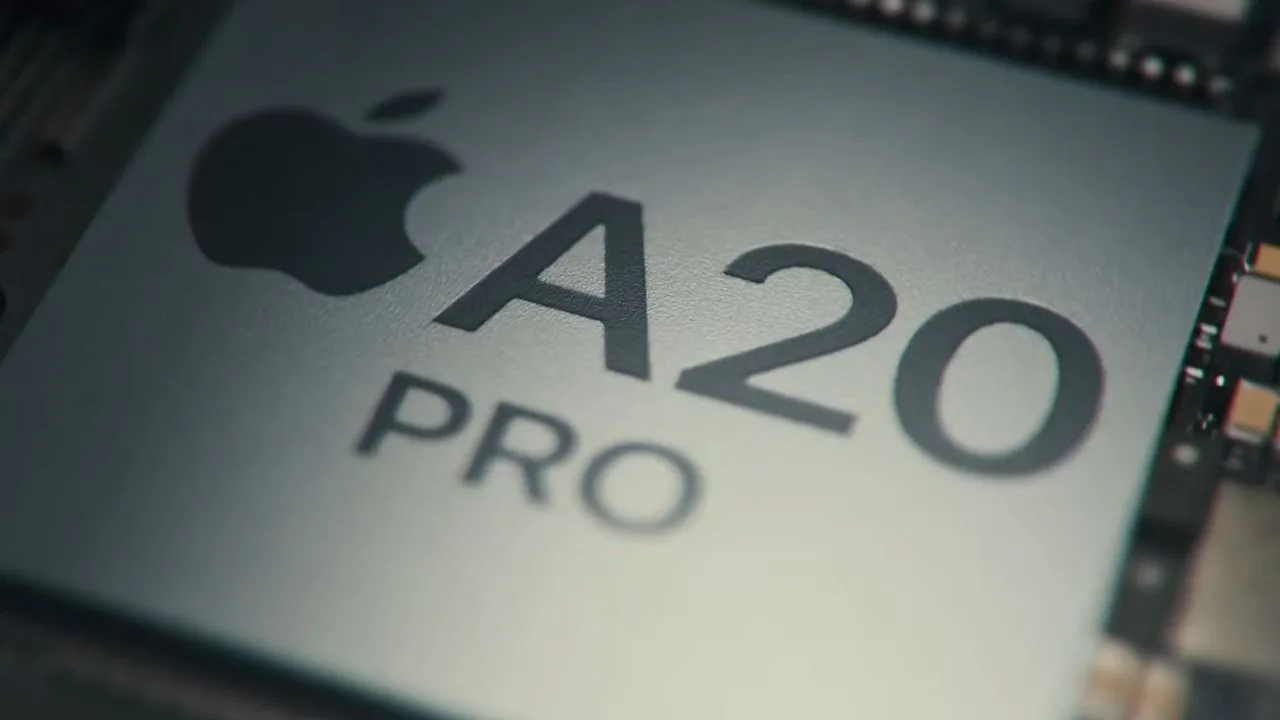
A preliminary Geekbench 7 result for the A20 Pro processor used by Apple in its new iPhone models has set a record among mobile processors. The processor scored 4,006 points in the single-core test. It scored 11,460 points in the multi-core test. The single-core score indicates speed when performing a single task, while the multi-core score reflects overall performance in parallel workloads. However, this is an early test entry, and the result has not yet been confirmed on a commercially available device. The A20 Pro in the test has 2 high-performance cores. Another 4 cores are designed to conserve energy. The fastest cores reach a clock speed of 4.93 GHz. Compared with the A19 Pro, the single-core score increased by 23.3%. The multi-core score rose by 27.1%. Memory data transfer speed is claimed to have increased by 50%. The memory interface—the data pathway between the processor and memory—is also said to be 96-bit. Compared with its mobile rivals, the Snapdragon 8 Elite Gen 5 lagged behind in the single-core test. The A20 Pro’s lead was 31.5%. In the multi-core test, the difference over the same processor was 12.2%. The Xring O3 lagged behind by 33.7% in the single-core test but was 2.7% ahead in the multi-core test. The A20 Pro produced a 76% faster result than the Dimensity 9400 in the single-core test. The difference in the multi-core test was 48%. Compared with the Tensor G5, the single-core advantage was 99%. In the multi-core test, it was 96%. The single-core difference over the Kirin 9050 Pro was 290%. Its advantage in the multi-core test was 139%.
 According to the result, the AMD Ryzen 9 9950X3D lagged behind in single-core performance. The difference was 26%. The Intel Core i9-14900KS also produced a weaker result in the same test. The advantage here was 32%. Desktop processors, however, remained considerably faster in multi-core workloads. In the single-core test, the A20 Pro had a 7% advantage over the Apple M5. The Apple M4 lagged behind by 20%. The difference over the Apple M3 was greater at 43%. The picture changed in the multi-core test: the A20 Pro lagged behind the Apple M5 by 39%. It trailed the Apple M4 by 27%. The difference from the Apple M3 fell to 5%.
 The information states that the A20 Pro was made using TSMC’s N2 technology. It is presented as the first 2 nm smartphone processor. The previous A19 Pro is manufactured using N3P technology. The new architecture’s 2 large cores are designed for more demanding computations and work with faster memory. The transition to 2 nm technology in manufacturing makes it possible to fit more transistors into a smaller area. For now, these figures apply only to the processor’s main computing component. Results for the graphics component and the NPU, the separate unit that handles artificial intelligence computations, have not been disclosed. It has also not been confirmed that the preliminary test was conducted on an actual device powered by the A20 Pro. It therefore remains unknown whether the record result will be replicated in the iPhone models that go on sale.
The A20 Pro in the test has 2 high-performance cores. Another 4 cores are designed to conserve energy. The fastest cores reach a clock speed of 4.93 GHz. Compared with the A19 Pro, the single-core score increased by 23.3%. The multi-core score rose by 27.1%. Memory data transfer speed is claimed to have increased by 50%. The memory interface—the data pathway between the processor and memory—is also said to be 96-bit. Compared with its mobile rivals, the Snapdragon 8 Elite Gen 5 lagged behind in the single-core test. The A20 Pro’s lead was 31.5%. In the multi-core test, the difference over the same processor was 12.2%. The Xring O3 lagged behind by 33.7% in the single-core test but was 2.7% ahead in the multi-core test. The A20 Pro produced a 76% faster result than the Dimensity 9400 in the single-core test. The difference in the multi-core test was 48%. Compared with the Tensor G5, the single-core advantage was 99%. In the multi-core test, it was 96%. The single-core difference over the Kirin 9050 Pro was 290%. Its advantage in the multi-core test was 139%. According to the result, the AMD Ryzen 9 9950X3D lagged behind in single-core performance. The difference was 26%. The Intel Core i9-14900KS also produced a weaker result in the same test. The advantage here was 32%. Desktop processors, however, remained considerably faster in multi-core workloads. In the single-core test, the A20 Pro had a 7% advantage over the Apple M5. The Apple M4 lagged behind by 20%. The difference over the Apple M3 was greater at 43%. The picture changed in the multi-core test: the A20 Pro lagged behind the Apple M5 by 39%. It trailed the Apple M4 by 27%. The difference from the Apple M3 fell to 5%. The information states that the A20 Pro was made using TSMC’s N2 technology. It is presented as the first 2 nm smartphone processor. The previous A19 Pro is manufactured using N3P technology. The new architecture’s 2 large cores are designed for more demanding computations and work with faster memory. The transition to 2 nm technology in manufacturing makes it possible to fit more transistors into a smaller area. For now, these figures apply only to the processor’s main computing component. Results for the graphics component and the NPU, the separate unit that handles artificial intelligence computations, have not been disclosed. It has also not been confirmed that the preliminary test was conducted on an actual device powered by the A20 Pro. It therefore remains unknown whether the record result will be replicated in the iPhone models that go on sale.