
16:45Machine-translated from Azerbaijani by AIRead in Azerbaijani
Apple Unveiled a Tool on September 9 That Detects AI Editing, but It Will Not Work in China
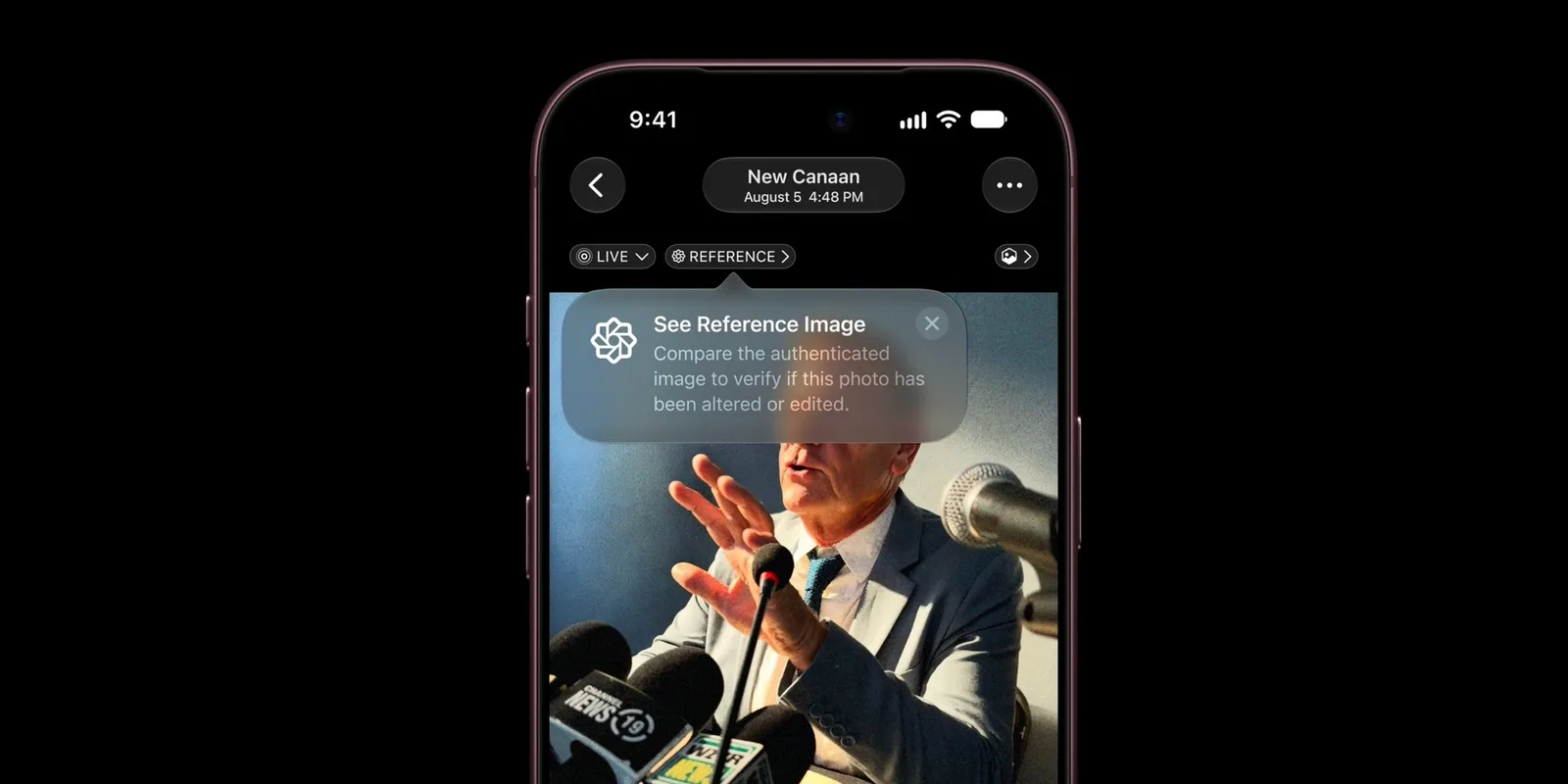
At an event held on September 9 at 21:00 Baku time, Apple introduced the new Reference Image feature for the iPhone 18 Pro and iPhone 18 Pro Max. The feature makes it possible to check whether a photo has subsequently been altered using artificial intelligence (AI). The company also showed its first foldable smartphone model, the iPhone Duo, at the event.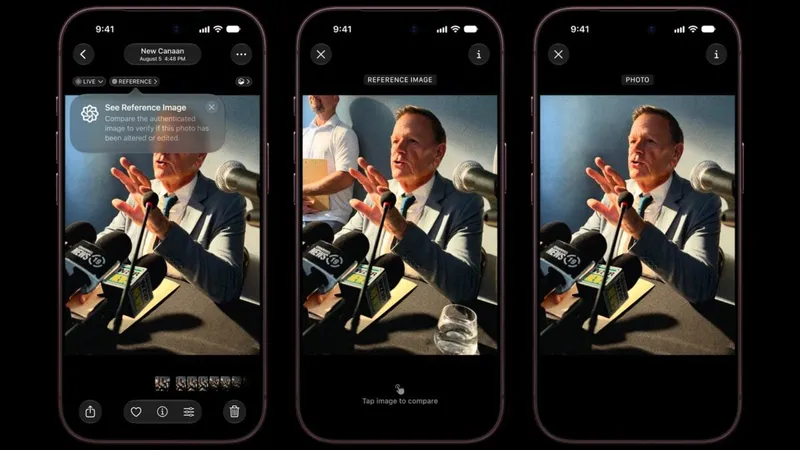 When a photo is taken in Reference mode, the main camera’s new sensor generates signed data for every pixel it sees. This data is processed by the Apple Private Cloud Compute service. A cryptographic signature and an immutable reference image are then created for digital verification. This means that even if the regular photo is edited, the camera’s original record is preserved separately. The reference image opens alongside the regular photo in the Photos app and serves as a digital negative. Users can see what the camera originally captured and compare it with the edited version. Because the digital signature is attached to the photo, the image can also be sent to others together with its verification data. Apple is opening the feature’s API capabilities to developers in iOS 27, iPadOS 27 and macOS 27. This will allow other apps to display and verify reference images as well. Because of regulatory requirements, the feature will initially not work in China. In the European Union, it will not initially be possible to capture such images. However, compatible systems will be able to open and process them. The company will use information added to files to identify images that have been generated or edited with artificial intelligence. SynthID will also be implemented in the future. An invisible digital mark will be embedded in images created with the Image Playground, Extend and Spatial Reframe tools in Apple Intelligence. SynthID, developed by Google DeepMind, adds such a mark to images, audio, text and video. The standard is already used in Google’s artificial intelligence products. OpenAI also applies it to images generated through ChatGPT, Codex and the API. The iPhone 18 Pro also has a 48 MP main Fusion camera. Apple describes it as one of its biggest camera upgrades in recent years. The camera’s variable aperture adjusts the amount of light entering the lens. This will give users greater control over the final image. The upgrade is expected to be particularly useful for nighttime photography. A new mechanism consisting of 6 special blades has been developed for this aperture. Each laser-cut blade is thinner than a human hair and is made from a special polymer composite. A new rotor mechanism moves the blades. The system also uses a specially designed lens. This setup precisely adjusts the amount of light entering the camera to suit the shooting conditions.