
19:08Machine-translated from Azerbaijani by AIRead in Azerbaijani
Cody Wilson Shows Off 3D-Printed Gun He Says Was Designed by AI
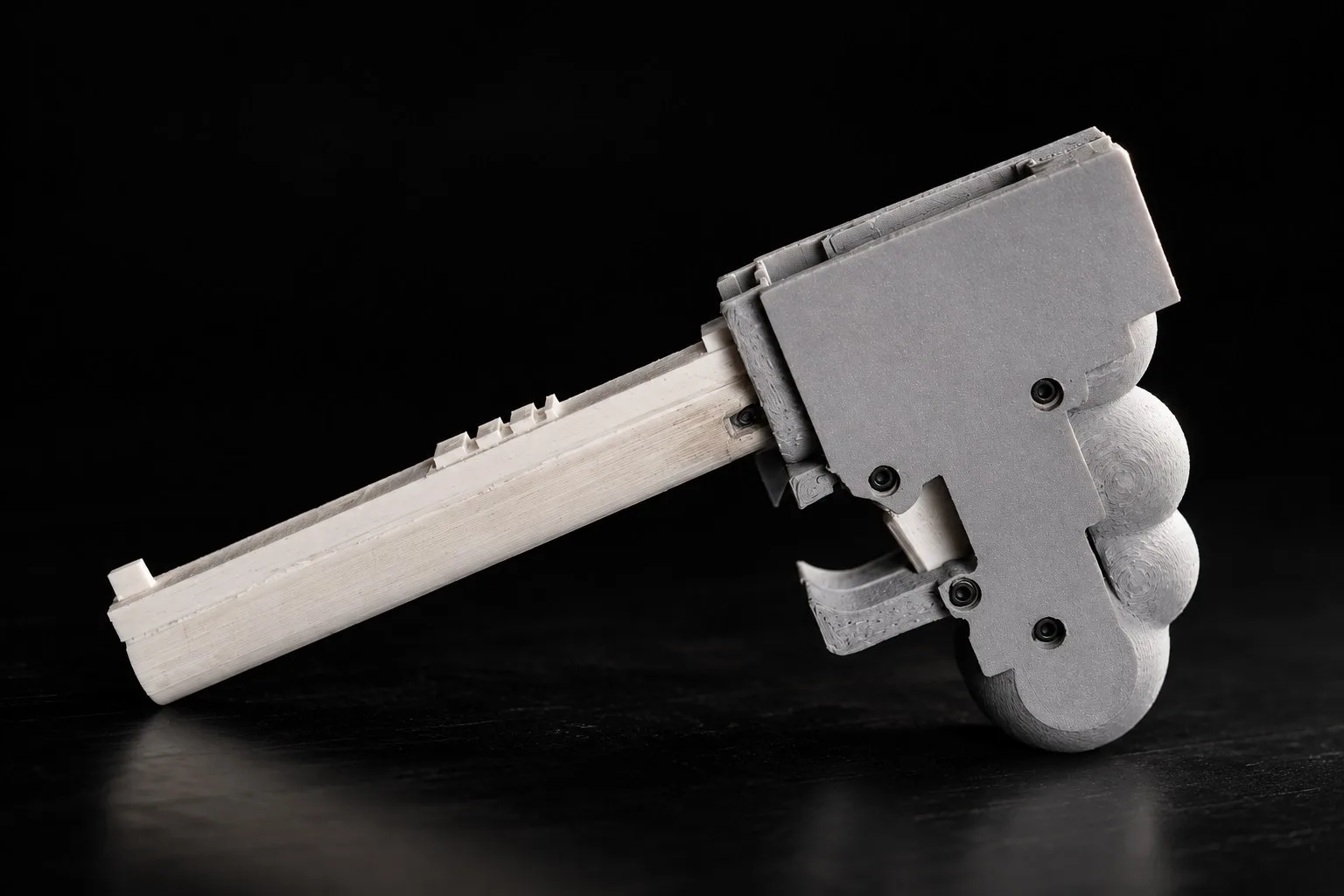
Gun rights activist Cody Wilson has unveiled a 3D-printed gun called “WASP” that he claims was designed by artificial intelligence. Wilson calls it the first weapon created by AI. The .22-caliber model fires 1 shot at a time and uses real, lethal ammunition. The gun has no serial number. According to Wilson, the design was created by a custom AI model called “GatGPT.”
“WASP” was tested in Austin, Texas. For safety, the gun was secured to a special stand. On the first attempt, the firing mechanism failed to discharge the round. The gun fired on subsequent attempts, and 2 of the 3 shots in the test were successful. One bullet hit the cardboard target, while the other passed slightly above it.
“GatGPT” was trained on numerous gun files from “DEFCAD,” the platform run by Wilson. A user asked the system to create a new design based on an existing handgun design. The AI suggested changes and checked the parts during the conversation. The “Defense Distributed” team printed the final model in the office in about 6 hours. The service is currently available only to a limited number of users.
Experts identified several serious flaws in the “WASP” design. The trigger guard is incomplete, the grip has an unusual shape, and the sights are also believed to be nonfunctional. Firearms historian Ashley Hlebinsky compared the model’s appearance to incomplete images generated by AI. Jonathan Ferguson said the gun can fire, but it is difficult to hold comfortably and aim. In his view, the model is also technically weak.
The gun safety organization “Everytown” believes that systems like this reduce the technical knowledge required to make 3D-printed guns. As a result, an inexperienced user could obtain a design for a working gun by entering a few prompts. Laws passed in New York and California require future 3D printers to include software that recognizes gun parts and stops them from being printed. However, it remains unclear whether such software will correctly recognize new and unusual designs.
Wilson also released the “Hochulization” tool in August, which changes a file’s digital fingerprint. He claims that by the end of September, files had been modified more than 26,000 times using this method. Under US federal law, the main components of firearms sold by licensed manufacturers must have serial numbers. Wilson considers gun files to be computer code protected by freedom of speech. He believes “GatGPT” will improve as it learns from more data.