
11:17Machine-translated from Azerbaijani by AIRead in Azerbaijani
DESI Astronomy Instrument Creates Largest 3D Map of the Universe
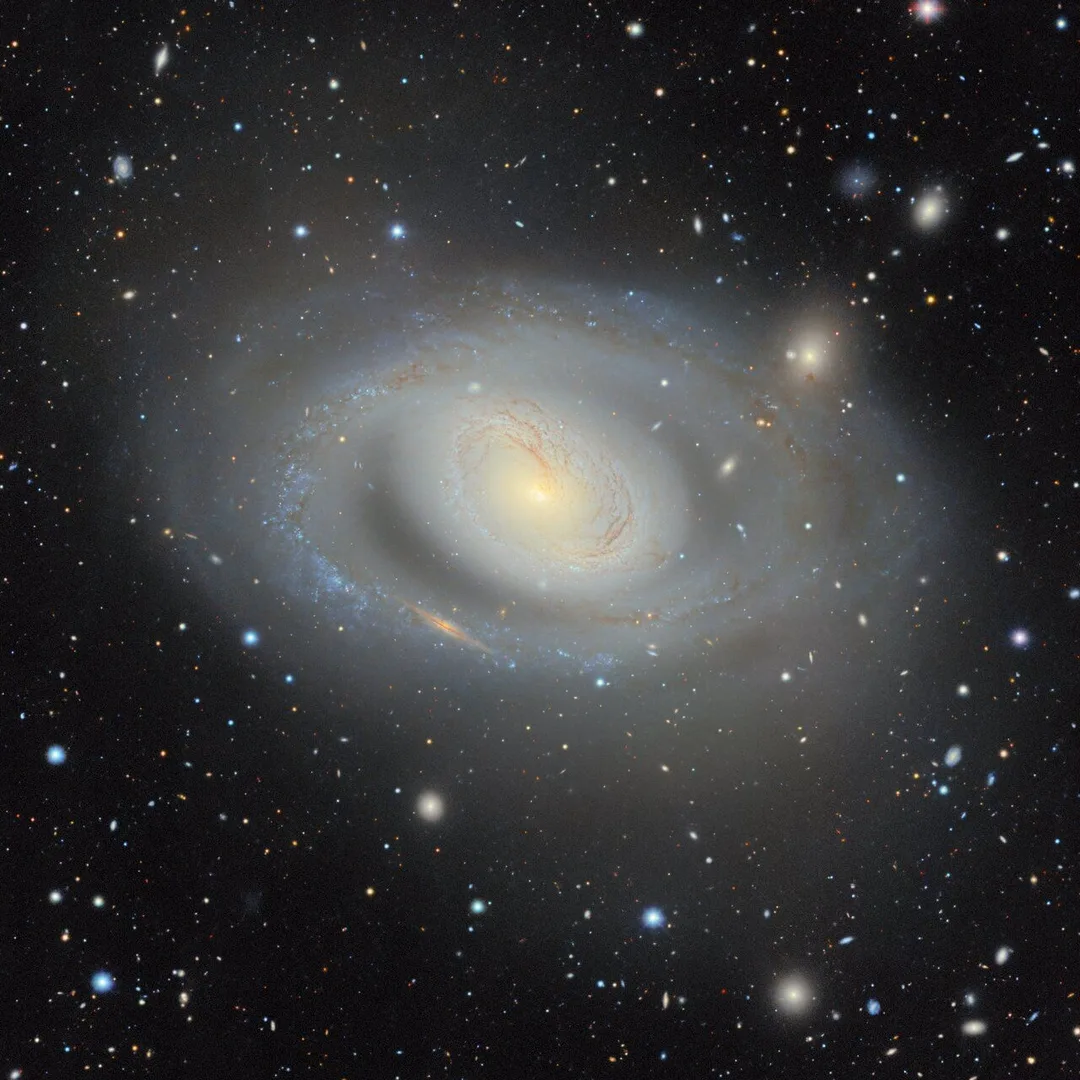
The DESI instrument, installed in Arizona's Sonoran Desert, has mapped space over the past 5 years. The result is the largest 3D map of the universe ever created. The project's main goal is to investigate dark energy, which is thought to be causing the universe to expand at an accelerating rate. The latest version of a free online tool called DESI Legacy Imaging Surveys has also been launched for viewing the collected images. However, what dark energy is remains unknown.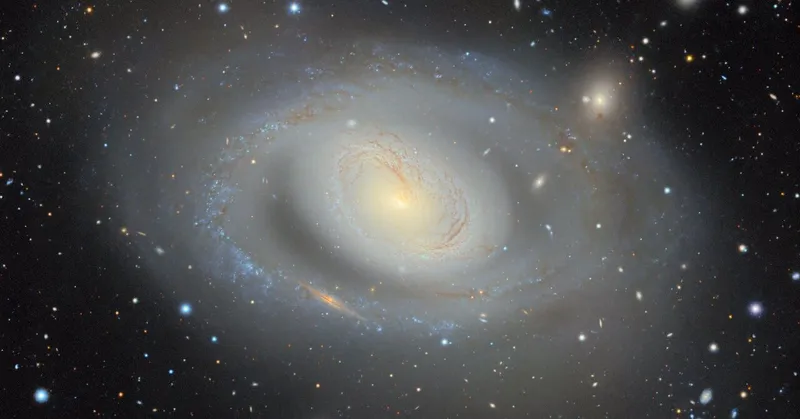 The map consists of 5.6 trillion pixels. It records approximately 4 billion celestial objects, including stars, galaxies, black holes and asteroids. The data covers about 75% of the entire sky. The map combines observations made in visible light and the near-infrared range, which the human eye cannot see. The blank areas on the map are mainly caused by stars, cosmic dust and other matter in the Milky Way obscuring deep space. Because our galaxy is shaped like a flat disk, it appears as a dense band of stars in the night sky. To reduce this obstruction, the researchers aimed the instrument's 5,000 mechanical eyes above and below the galaxy. This produced clearer images of deep space. The final observation phase lasted 5 years, but preparations for the project took 13 years in total. More than 160 scientists participated in collecting the data. More than 1,800 scientific papers based on the project's data have already been published. When studying celestial objects, astronomers often begin by viewing an image of the object in the Legacy Imaging Viewer service. DESI researchers previously released another map showing the distances of 47 million galaxies and quasars. That map made it possible to reconstruct 11 billion years of the universe's history and track the effects of dark energy. Scientists cannot observe this invisible force directly. They therefore study its effects by measuring how quickly celestial objects are moving away from us. Data collected during the first 3 years of observations was analyzed together with supernova observations and background radiation left over from the Big Bang. The results indicate that dark energy may not be a constant force and could gradually weaken over time. However, there is no definitive conclusion yet. A comprehensive analysis of the full 5 years of data is scheduled for publication in 2027. DESI observations will serve as a reference and source of comparison for future space research, such as NASA's new Nancy Grace Roman Space Telescope project. Scientists also plan to use artificial intelligence models to examine this massive database, measured in petabytes, more quickly. The collected images are thought to contain many objects and phenomena that have yet to be discovered.