
13:31Machine-translated from Russian by AIRead in Azerbaijani
Global Smartphone Sales Fall to 14-Year Low

The global smartphone market has faced one of its deepest crises in recent years, posting a record decline in shipments in the third quarter of 2026. According to preliminary data from Counterpoint Research, device shipments plunged 20% compared with the same period last year, marking the lowest third-quarter result since 2012.
Experts identify the prolonged crisis in the semiconductor industry, caused by the continuing rise in the cost of DRAM and NAND flash memory, as the key destabilizing factor. The increase in production costs directly affected end consumers: since the beginning of 2026, average retail prices for mobile devices worldwide have soared by approximately 20%. Faced with sharply rising device prices, users began postponing purchases of new gadgets en masse or shifted to the market for more affordable refurbished models.
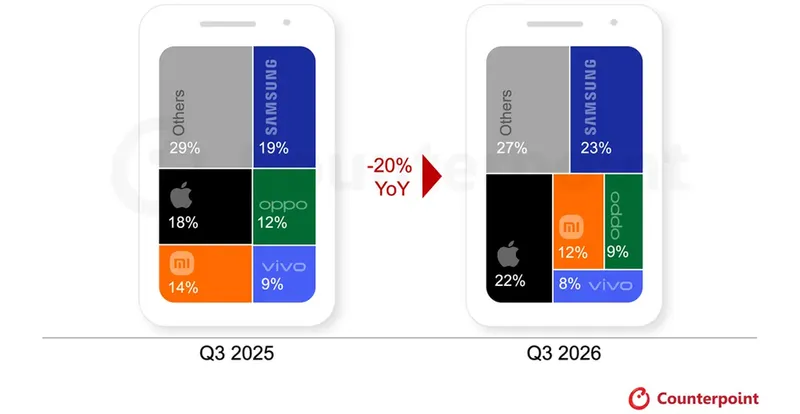
Despite the overall decline in shipment volumes, the largest players managed to strengthen their positions thanks to steady demand in the upper price segment. South Korean corporation Samsung remained the global industry leader, with its market share rising to 23% from 19% a year earlier, even despite a 3% year-over-year decline in shipments. US-based Apple firmly secured second place with a 22% share, up from 18%, surpassing the 20% threshold in the third quarter for the first time in its history. The leaders’ stability is explained by the fact that buyers of premium devices were less sensitive to economic changes, while demand for budget devices declined sharply.
At the same time, Chinese technology giants, which traditionally dominate the affordable and mid-range device segments, bore the brunt of the downturn. Xiaomi was hit hardest, with its shipments falling by more than 30% and its market share dropping to 10% from the previous 14%. The OPPO and Vivo brands also suffered significant losses: each saw shipments decline by more than 20%, reducing their shares of the global market to 9% and 8%, respectively. To maintain business margins amid component shortages and high costs, Chinese manufacturers have been forced to radically revise their product ranges, reduce their presence in low-margin segments, and steadily raise prices.
Counterpoint Research analysts forecast that the market situation is unlikely to improve by the end of this year: brands will continue abandoning inexpensive product lines in favor of flagship models, while consumers in the budget segment will face another wave of price increases.