
21:11Machine-translated from Azerbaijani by AIRead in Azerbaijani
Google’s First Data Center Satellite Sent Into Orbit Wrote a Haiku Using AI
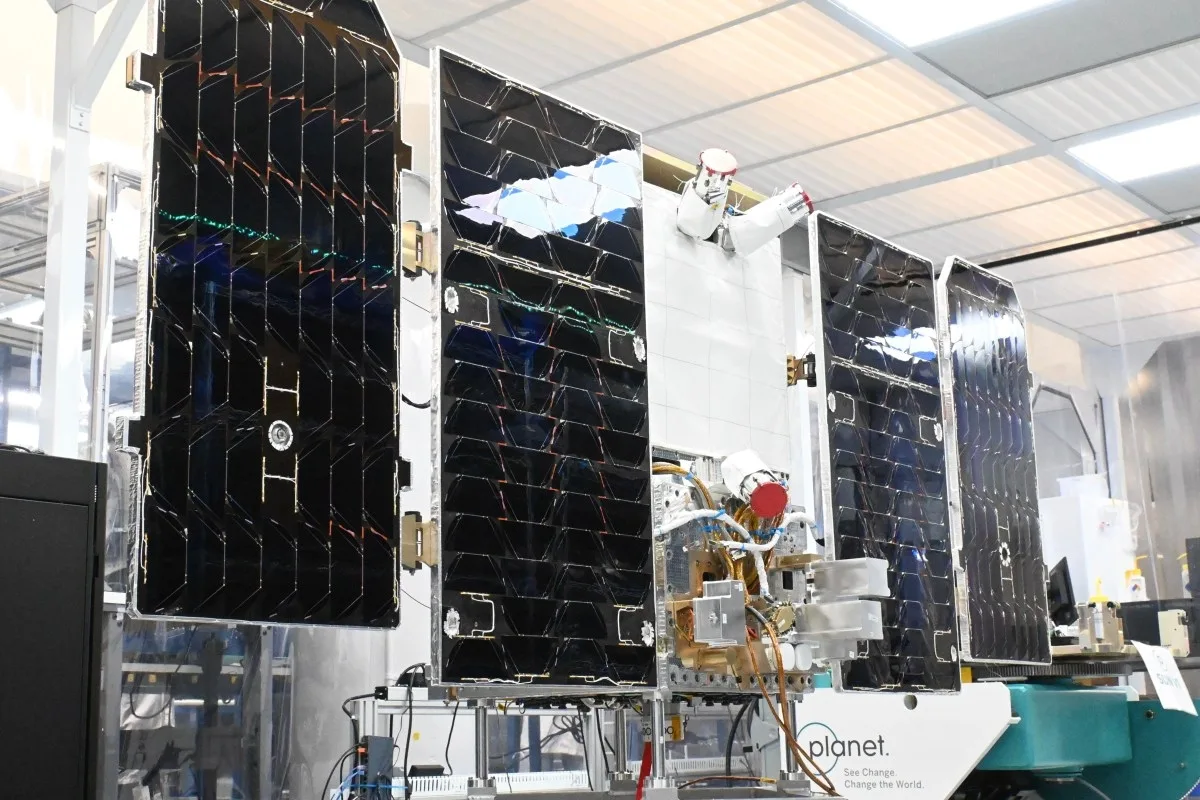
Google has sent its first data center satellite into orbit as part of Project Suncatcher. The spacecraft was launched into space earlier this month aboard SpaceX’s Falcon 9 rocket. More than 100 other spacecraft were also on that flight. After preliminary checks lasting about 3 weeks, the satellite established contact with a ground station and began carrying out tasks. Google said the spacecraft is operating normally. The satellite carries 1 Google-made TPU, a specialized chip designed for artificial intelligence computing. The spacecraft generates up to 1 kW of electrical power. Because the chip consumes a great deal of energy, it can operate for only about 20 minutes at a time. This limitation makes both computing and communication with Earth more difficult. The project’s goal is to eventually build a network of satellites flying close together and process large numbers of artificial intelligence queries in orbit. The Gemma 4 model preloaded on the satellite was developed by Google DeepMind. In the first test, engineers asked the model to write a haiku about space. The model wrote a short poem that likened Earth to a blue marble and spoke of a silent flow of data and starlight. In subsequent tests, it produced other poems and provided information about the orbital conditions around the satellite. The next phase will test how well the TPU withstands extreme temperature changes and space radiation. Although the company has tested the chips in particle accelerators on Earth, tests conducted in orbit will provide more accurate results. Radiation can corrupt data by altering bits in memory, the smallest units of data. Conventional monitoring systems may not detect this. In tests on Earth, the risk was low when obtaining a response from an existing model but higher when training the model. If the current TPU passes the tests successfully, 2 more satellites are planned to be sent into orbit in 2027. Those spacecraft will generate more power. Optical communication between the satellites, meaning high-speed data transmission by laser, will also be tested. Such a link could distribute computations among several satellites. SpaceX is also considering laser communication, but its satellites are expected to be too far apart to process data together. The project’s expansion depends on the Starship heavy-lift rocket becoming fully and rapidly reusable. Alphabet has a significant investment in SpaceX, and both sides will need this rocket for orbital data centers. According to calculations by Project Suncatcher researchers, Starship must complete 1,800 flights to achieve the cost reductions attained with previous rockets. Google aims to make this infrastructure economically viable in the 2030s.