
08:35Machine-translated from Azerbaijani by AIRead in Azerbaijani
Humanoid Robots’ RAM Needs Are Growing: Memory Device Prices Could Rise
Micron predicts that demand for memory and data storage products will continue to grow in the coming years. According to a statement issued by the company following its results for the fourth quarter of fiscal 2026, the supply-demand balance in the DRAM and NAND markets is expected to be tighter in 2027 and 2028 than in 2026.
Although the company plans to invest in new DRAM production capacity, it says it is currently impossible to predict when supply will fully meet growing demand. Micron expects its revenue and profit figures to rise after the first quarter of fiscal 2027, while increases in memory product prices are expected to continue at a more moderate pace.
Micron will also increase its investments to expand its production capabilities. The company plans capital expenditures of 25 billion dollars in the first half of fiscal 2027. Investments are expected to be even higher in the second half of the year.
A significant portion of the funds will be directed toward building new cleanrooms. Through this initiative, Micron aims to increase its production capacity starting in late 2028. The company also says it has 26 long-term “take-or-pay” agreements covering more than 35 percent of its expected revenue through 2030. Under these agreements, customers commit to purchasing a predetermined volume of products.
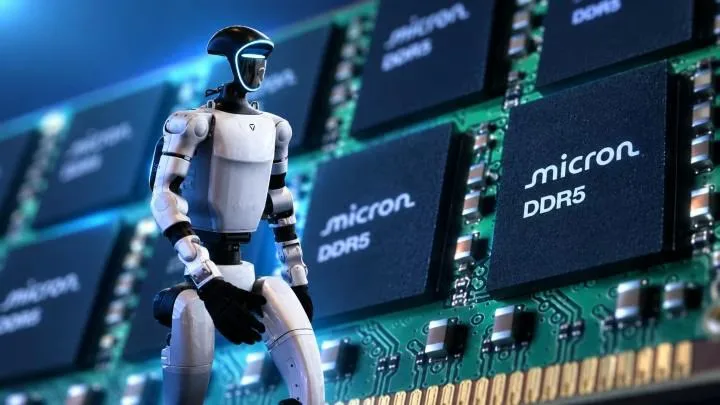
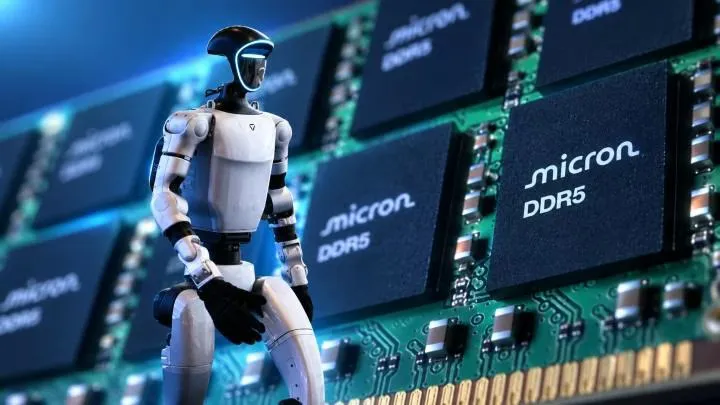
One of the most notable points in Micron’s statements is the new memory demand that humanoid robots will create. According to the company’s estimates, a humanoid robot could require approximately 200 GB of DRAM and several TB of NAND storage in the future.
Such high memory capacity is expected to be needed for robots to perceive their surroundings in real time, run artificial intelligence models, and process large volumes of data received from sensors. Micron believes that this field, known as physical AI, will become one of the major sources of demand for memory and data storage products by 2030.
According to Morgan Stanley’s forecast cited in the source, annual shipments of humanoid robots could range from 250 thousand to 1.2 million units in 2030. If the upper end of the forecast materializes and each robot uses the 200 GB of DRAM projected by Micron, the total DRAM demand from these devices alone could amount to approximately 240 million GB, or 240 PB.
This calculation does not include NAND storage. If several TB of data storage capacity is used in each humanoid robot, the production of millions of robots could also create additional demand in the NAND market.
Micron’s forecasts indicate that the mass production of humanoid robots could affect not only the robotics sector but also the global memory market in the future. However, the figure of 200 GB of DRAM is not the standard memory capacity of current robots, but the company’s forecast for future humanoid robots.