
16:00Machine-translated from Azerbaijani by AIRead in Azerbaijani
IMF: AI Downturn Could Cut Global GDP by 0.4% by 2028
The International Monetary Fund (IMF) has warned that a sharp downturn in the artificial intelligence sector could affect the entire global economy. According to the organization’s latest Global Financial Stability Report, the global economy is becoming increasingly dependent on money invested in this field. If earnings expectations weaken, global GDP could decline by 0.4% and investment by 1.3% by 2028. Consumption is also expected to fall by 0.6%.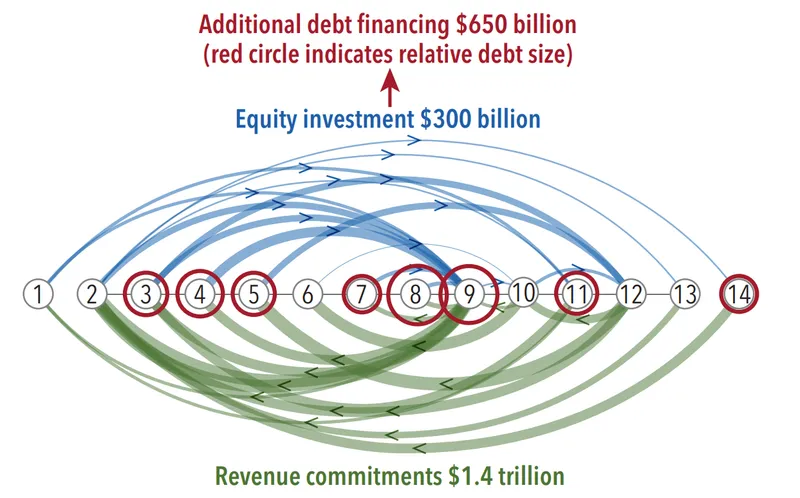 The IMF has examined 14 publicly disclosed transactions since 2023. In these deals, $300 billion (approximately AZN 510 billion) was invested in AI companies with weaker financial positions. In addition, $650 billion (approximately AZN 1.105 trillion) was borrowed. Those funds generated $1.4 trillion (approximately AZN 2.38 trillion) in revenue from services and chip orders. The concentration of funds in a small number of companies could result in greater losses if a failure occurs. The report also identifies borrowing in financial markets as one of the main risks. Hedge funds are investing more with borrowed money and buying stocks on credit. As a result, their losses could grow more rapidly when prices fall. The share of individual companies’ stocks in leveraged ETFs, or exchange-traded funds, has reached 28%. A sharp downturn could force the funds and the institutions that lend to them to sell, thereby accelerating losses. Another risk is the rapidly growing share of large cloud infrastructure companies in the debt market. These companies’ share of investment-grade bond issuance has reached 10%. In 2024, that figure was less than 1%. Although demand for computing power remains high, heavy spending on equipment is reducing the cash held by companies. As a result, they have to borrow more to continue new projects. At the same time, according to the IMF, investment in artificial intelligence is currently supporting the global economy and financial markets. This support is even more important at a time when the war in Iran has increased energy prices and heightened uncertainty over economic policy. A global stress test showed that banks could generally remain resilient even if an energy crisis, high inflation, and a market downturn occurred simultaneously. However, excessive borrowing could amplify the impact of a potential shock.
The IMF has examined 14 publicly disclosed transactions since 2023. In these deals, $300 billion (approximately AZN 510 billion) was invested in AI companies with weaker financial positions. In addition, $650 billion (approximately AZN 1.105 trillion) was borrowed. Those funds generated $1.4 trillion (approximately AZN 2.38 trillion) in revenue from services and chip orders. The concentration of funds in a small number of companies could result in greater losses if a failure occurs. The report also identifies borrowing in financial markets as one of the main risks. Hedge funds are investing more with borrowed money and buying stocks on credit. As a result, their losses could grow more rapidly when prices fall. The share of individual companies’ stocks in leveraged ETFs, or exchange-traded funds, has reached 28%. A sharp downturn could force the funds and the institutions that lend to them to sell, thereby accelerating losses. Another risk is the rapidly growing share of large cloud infrastructure companies in the debt market. These companies’ share of investment-grade bond issuance has reached 10%. In 2024, that figure was less than 1%. Although demand for computing power remains high, heavy spending on equipment is reducing the cash held by companies. As a result, they have to borrow more to continue new projects. At the same time, according to the IMF, investment in artificial intelligence is currently supporting the global economy and financial markets. This support is even more important at a time when the war in Iran has increased energy prices and heightened uncertainty over economic policy. A global stress test showed that banks could generally remain resilient even if an energy crisis, high inflation, and a market downturn occurred simultaneously. However, excessive borrowing could amplify the impact of a potential shock.