
09:25Machine-translated from Azerbaijani by AIRead in Azerbaijani
Intel Unveils AI Processor With 480 GB of Memory for Data Centers
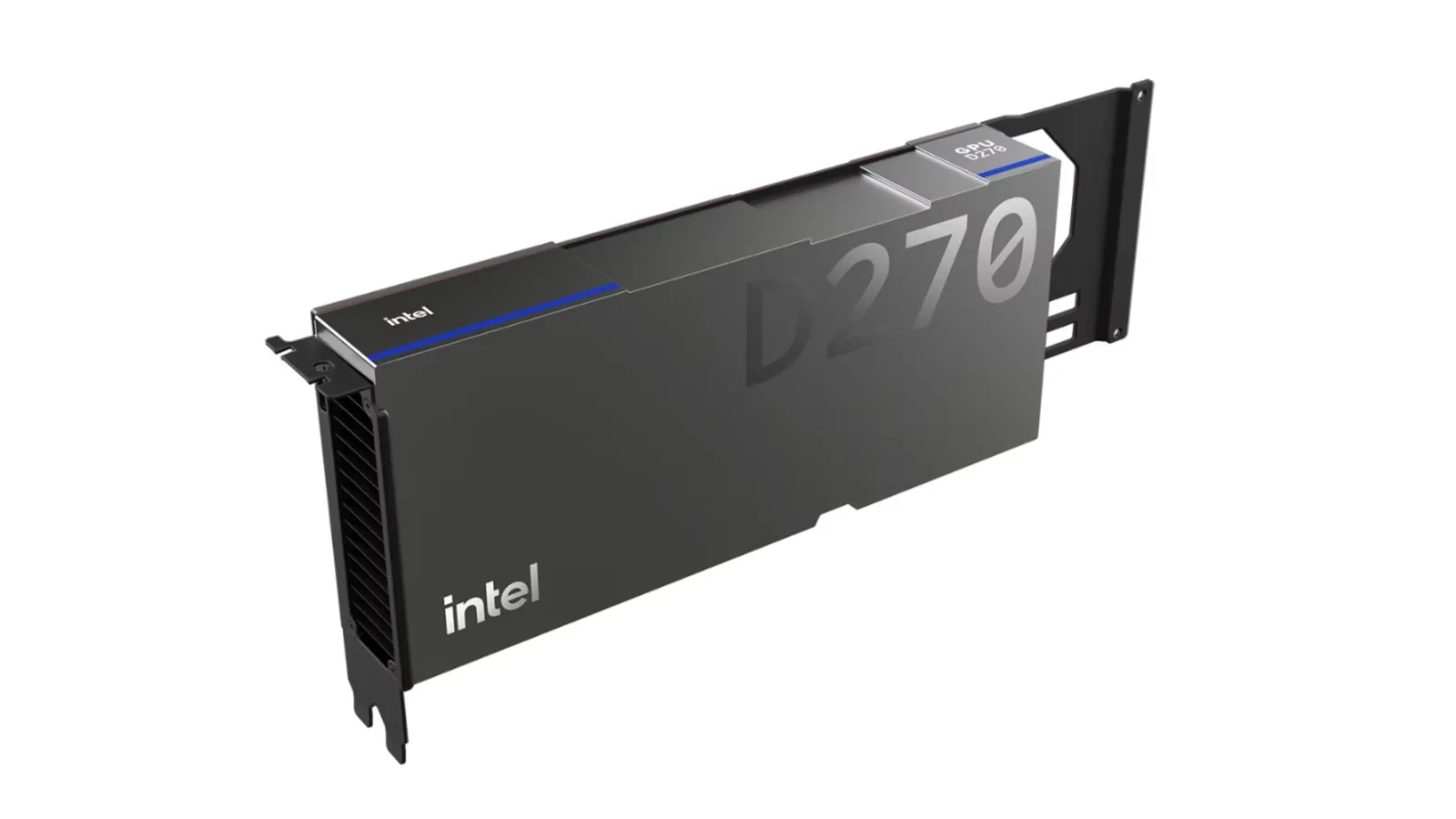
Intel showcased its Intel GPU D-series accelerator, designed for artificial intelligence (AI) tasks, at the Open Compute Project Global Summit. The new graphics processor is equipped with 480 GB of LPDDR5X memory. It is designed primarily to enable existing AI models to respond to requests. This is considered a record amount of memory among data center GPUs. For comparison, the Nvidia Blackwell Ultra B300 has 288 GB of HBM3e memory. Intel chose the more energy-efficient LPDDR5X memory instead of the GDDR7 used in modern graphics cards. The accelerator can run a large language model with up to 300 billion parameters on a single card. A system with 8 GPUs can run models with more than 1 trillion parameters. Such systems are intended for answering long queries, processing numerous requests simultaneously, enterprise AI services, and robotics. According to the company, the new processor delivers 1.3 petaflops of performance in FP8 computations. FP8 is a numerical format that accelerates AI operations and reduces memory usage. The memory data transfer rate is 1.5 TB/s. However, how quickly requests are processed does not depend solely on memory capacity. Computing power, software, and the type of task also play a role. The new accelerator consumes 350 W and has a standard PCIe card form factor. Because it is air-cooled, it should be easier to install in data centers without specialized equipment. Intel also promises software compatibility across its GPU platforms. The accelerator will work with Xeon processors, while task and data flow management will be handled by the central processor. The Intel GPU D-series is not a conventional gaming graphics card. It is designed for enterprises to run large language models in data centers. With its high memory capacity and relatively simple installation, Intel plans to make the process of using AI models to answer requests more accessible and system expansion more cost-effective. The price and release date of the Intel GPU D-series have not yet been announced.