
09:12Machine-translated from Azerbaijani by AIRead in Azerbaijani
JAXA Launches MMX Mission to Bring Back Samples from Phobos
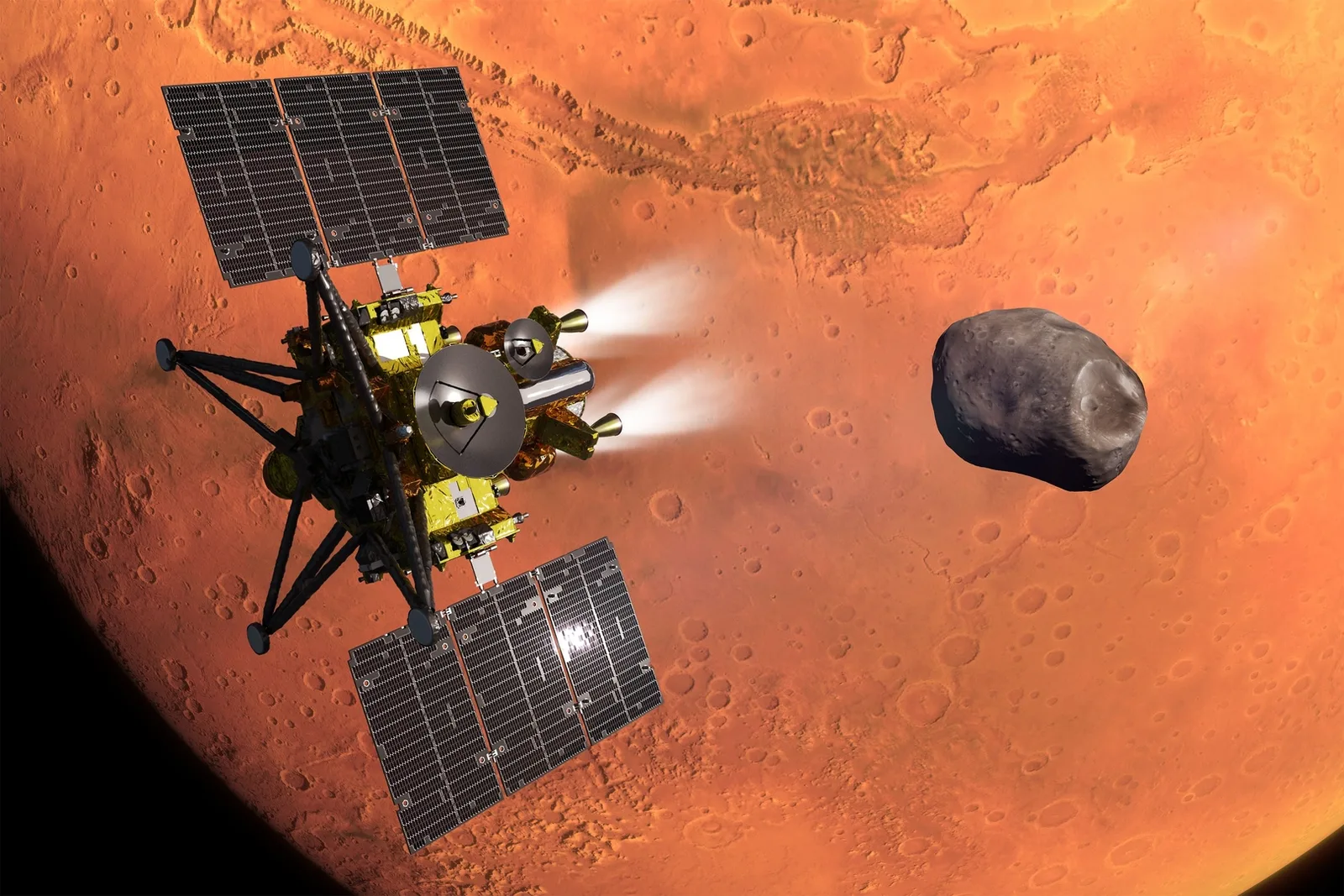
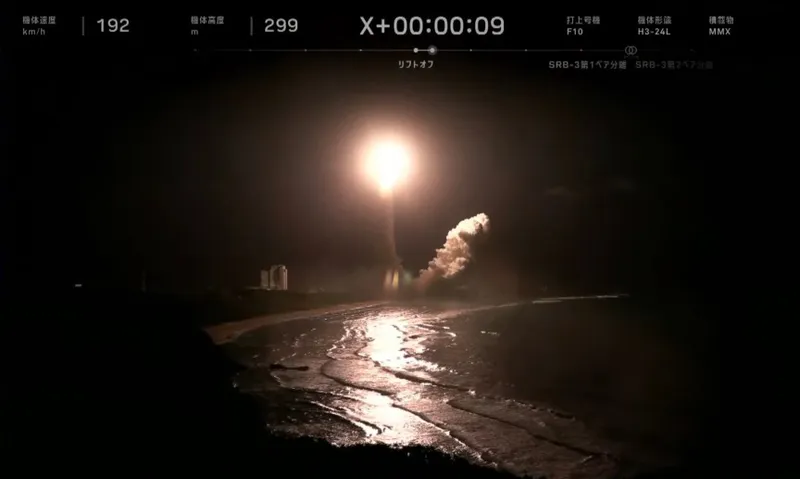
The Japan Aerospace Exploration Agency (JAXA) has successfully launched the Martian Moons eXploration (MMX) mission from the Tanegashima Space Center. The spacecraft will study Mars’s moons Phobos and Deimos. It will attempt to collect samples from Phobos and return them to Earth. If the mission succeeds, this will be the first time samples from a natural satellite other than the Moon have been brought to Earth. After a flight of about 10 months, the spacecraft is scheduled to reach Mars in August 2027. MMX will study Phobos for nearly 3 years and observe Deimos without landing. The spacecraft is expected to leave the Martian system in November 2030, with the samples due to reach Earth in July 2031. Scientists still do not know exactly how Phobos and Deimos formed. According to one hypothesis, they are asteroids captured by Mars’s gravity. Another hypothesis suggests that the moons formed from debris scattered into orbit after Mars collided with a large celestial body. The MEGANE instrument will measure neutrons and gamma rays coming from Phobos. Scientists will use this data to try to determine which elements are present on the moon’s surface. MMX will first land a small rover on the surface of Phobos. The rover will closely examine suitable landing sites. The main spacecraft will then land at least once. If conditions are suitable, a second landing will also be attempted to collect samples from a different location. The mission will use 2 separate sample collection methods for redundancy. The goal is to collect at least 10 grams of material.
 Scientists estimate that about 1% of the sample may be of Martian origin. Dust and rock fragments ejected from Mars are believed to have fallen onto the surface of Phobos. This material could help scientists understand how the planet changed over billions of years and whether it was suitable for life in the past. This possibility further increases the mission’s importance because NASA’s Mars Sample Return project was effectively halted in January.
 Since the 1980s, 3 Russian probes sent to Phobos have failed. JAXA delivered samples from the asteroid Itokawa to Earth with Hayabusa in 2010 and samples from the asteroid Ryugu with Hayabusa2 in 2020. Some of the specialists who worked on those missions also took part in developing the MMX project. NASA, the European Space Agency, and the space agencies of Germany and France are participating in the mission. The mission will also test several technologies that are important for future human spaceflight. These include round-trip travel to Mars, robotic sample collection, and communications from deep space. However, MMX may not be the first spacecraft to return from the Martian system in 2031. China’s Tianwen-3 mission, scheduled for launch in 2028, also aims to deliver samples collected from Mars to Earth in 2031.
After a flight of about 10 months, the spacecraft is scheduled to reach Mars in August 2027. MMX will study Phobos for nearly 3 years and observe Deimos without landing. The spacecraft is expected to leave the Martian system in November 2030, with the samples due to reach Earth in July 2031. Scientists still do not know exactly how Phobos and Deimos formed. According to one hypothesis, they are asteroids captured by Mars’s gravity. Another hypothesis suggests that the moons formed from debris scattered into orbit after Mars collided with a large celestial body. The MEGANE instrument will measure neutrons and gamma rays coming from Phobos. Scientists will use this data to try to determine which elements are present on the moon’s surface. MMX will first land a small rover on the surface of Phobos. The rover will closely examine suitable landing sites. The main spacecraft will then land at least once. If conditions are suitable, a second landing will also be attempted to collect samples from a different location. The mission will use 2 separate sample collection methods for redundancy. The goal is to collect at least 10 grams of material. Scientists estimate that about 1% of the sample may be of Martian origin. Dust and rock fragments ejected from Mars are believed to have fallen onto the surface of Phobos. This material could help scientists understand how the planet changed over billions of years and whether it was suitable for life in the past. This possibility further increases the mission’s importance because NASA’s Mars Sample Return project was effectively halted in January. Since the 1980s, 3 Russian probes sent to Phobos have failed. JAXA delivered samples from the asteroid Itokawa to Earth with Hayabusa in 2010 and samples from the asteroid Ryugu with Hayabusa2 in 2020. Some of the specialists who worked on those missions also took part in developing the MMX project. NASA, the European Space Agency, and the space agencies of Germany and France are participating in the mission. The mission will also test several technologies that are important for future human spaceflight. These include round-trip travel to Mars, robotic sample collection, and communications from deep space. However, MMX may not be the first spacecraft to return from the Martian system in 2031. China’s Tianwen-3 mission, scheduled for launch in 2028, also aims to deliver samples collected from Mars to Earth in 2031.