
12:59Machine-translated from Russian by AIRead in Azerbaijani
Kazakhstan Launches Starlink Mobile Satellite Service
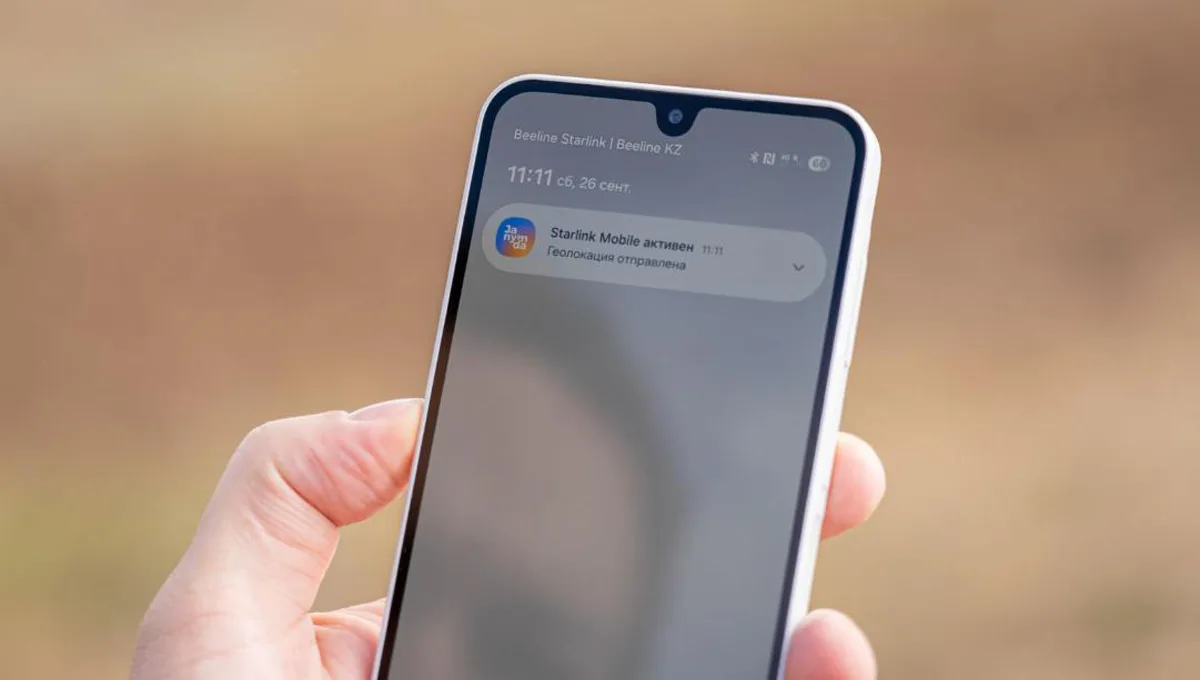
Kazakhstan has launched Starlink Mobile satellite service using Direct to Cell technology, which allows a compatible smartphone to connect to a satellite outside terrestrial coverage. The project was implemented with support from the Ministry of Artificial Intelligence and Digital Development of the Republic of Kazakhstan in cooperation with Beeline Kazakhstan and Starlink Mobile.
The official Beeline Kazakhstan website published the connection requirements and a list of the service’s available features. A compatible Android smartphone with 4G, a Beeline SIM card, and a sufficiently unobstructed view of the sky are required to connect. Beeline specifies another practical requirement: there should be no large buildings or other objects capable of interfering with the satellite connection within a radius of approximately 50 meters. Users will be able to send and receive messages and use basic internet services in areas where terrestrial mobile coverage is completely unavailable.
The introduction of Starlink Mobile resulted from agreements reached during President Kassym-Jomart Tokayev’s official visit to the US in 2025.
“In the fall of 2025, during President Kassym-Jomart Tokayev’s official visit to the US, Kazakhstan reached an agreement to introduce Starlink Mobile satellite service (Direct to Cell). Today, we can see this agreement becoming a reality. Kazakhstan became the first country in Central Asia where Direct to Cell underwent practical testing and is now progressing to the level of a user service. It is important to us that advanced technologies not only become part of international agreements but also begin operating here in Kazakhstan and delivering tangible benefits to people,” said Zhaslan Madiyev, Deputy Prime Minister and Minister of Artificial Intelligence and Digital Development of the Republic of Kazakhstan.
At the same time, the satellite network does not eliminate the need to build conventional infrastructure. The Ministry’s official materials describe Direct to Cell as a supplement to terrestrial communications in hard-to-reach areas.