
09:48Machine-translated from Azerbaijani by AIRead in Azerbaijani
Meta Lets Users Exclude Smart Glasses Images From AI Training
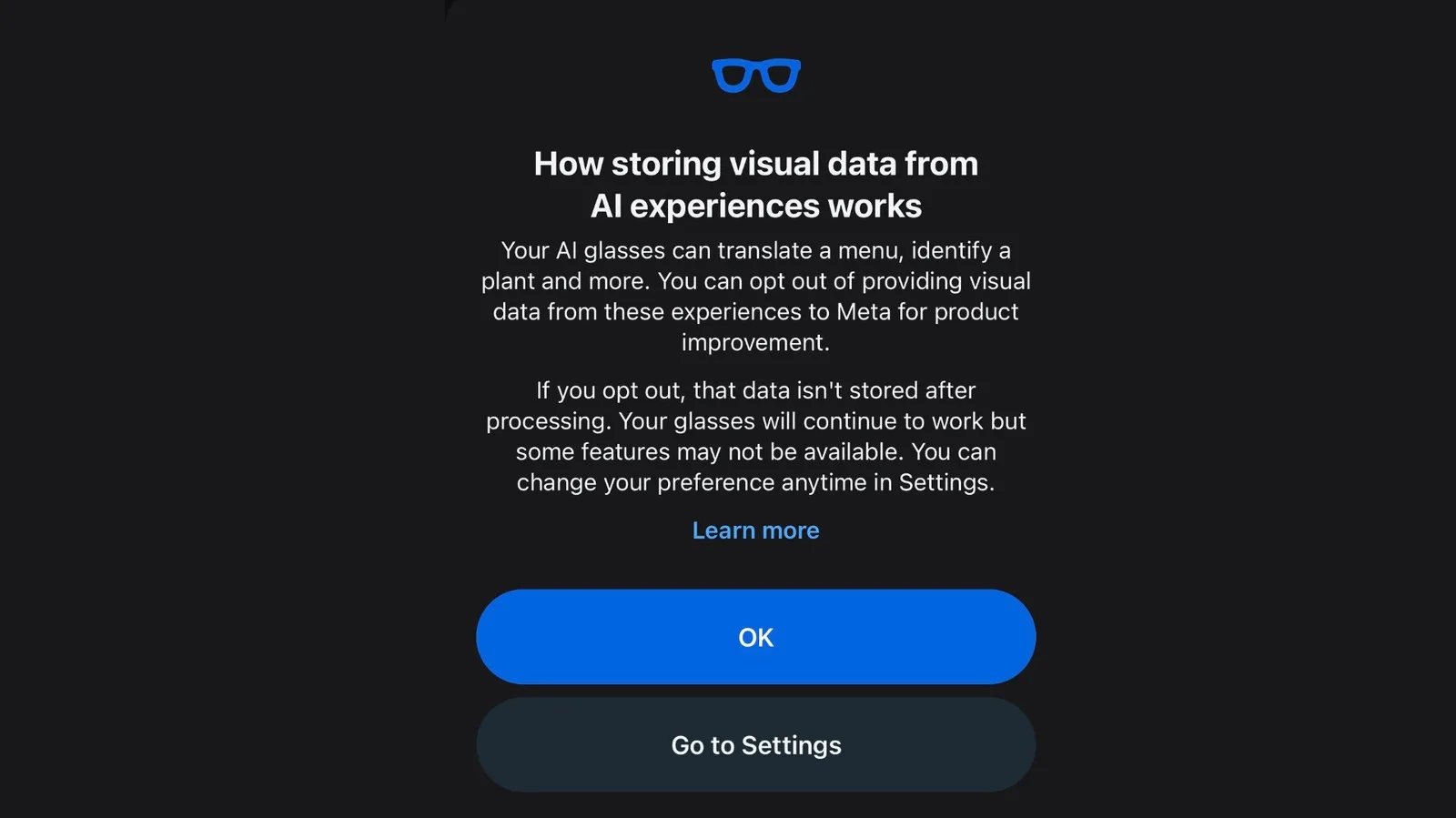
Meta is introducing an option to prevent images collected by its smart glasses from being used to train artificial intelligence (AI) models. The option is being added to the Meta AI app gradually, and users are being notified. If a user does not consent, images obtained by AI features are not retained after processing.

To change the setting, users must go to the glasses settings in the app, open the Meta AI section and then turn off the option to store visual data. The glasses must be taken out of their case and connected to the phone. People with multiple pairs of glasses must repeat these steps separately for each device.
Meta warns that some features, such as visual reminders, may not work if the option is turned off. For example, users will not be able to create a reminder to buy a product they are looking at the following week. Images collected by the Live AI feature may be used for AI training automatically or with the help of employees. Photos and videos taken by users themselves while the LED light is on are not included in this group.
At the Meta Connect event, the company also unveiled new smart glasses without a camera that are designed only for audio functions. The model, which is not yet on sale, has 6 microphones but no built-in means of recording its surroundings. The glasses are considerably lighter than other models. Users can listen to music and answer calls without touching their phones.
The new glasses will also work with the Muse system, which performs tasks on the user’s behalf. The feature, which is not yet available to everyone, understands voice commands, sends emails and reads to-do lists aloud. Users will also be able to select a digital avatar representing the assistant. During testing, however, the system interpreted a conversation with another person as a command, causing confusion.
The company has also developed separate camera-free glasses for people with hearing difficulties. The model, which has been in development for approximately 5 years, will sell for 150 dollars (approximately 255 AZN). By comparison, some hearing aids can cost as much as 1600 dollars (approximately 2720 AZN). The glasses focus on the voice of the person in front of the wearer or amplify all surrounding sounds. Approximately 50 million people in the U.S. reportedly experience some degree of hearing loss.