
23:09Machine-translated from Azerbaijani by AIRead in Azerbaijani
Musk Says Cats Are a Problem for Tesla Robotaxis
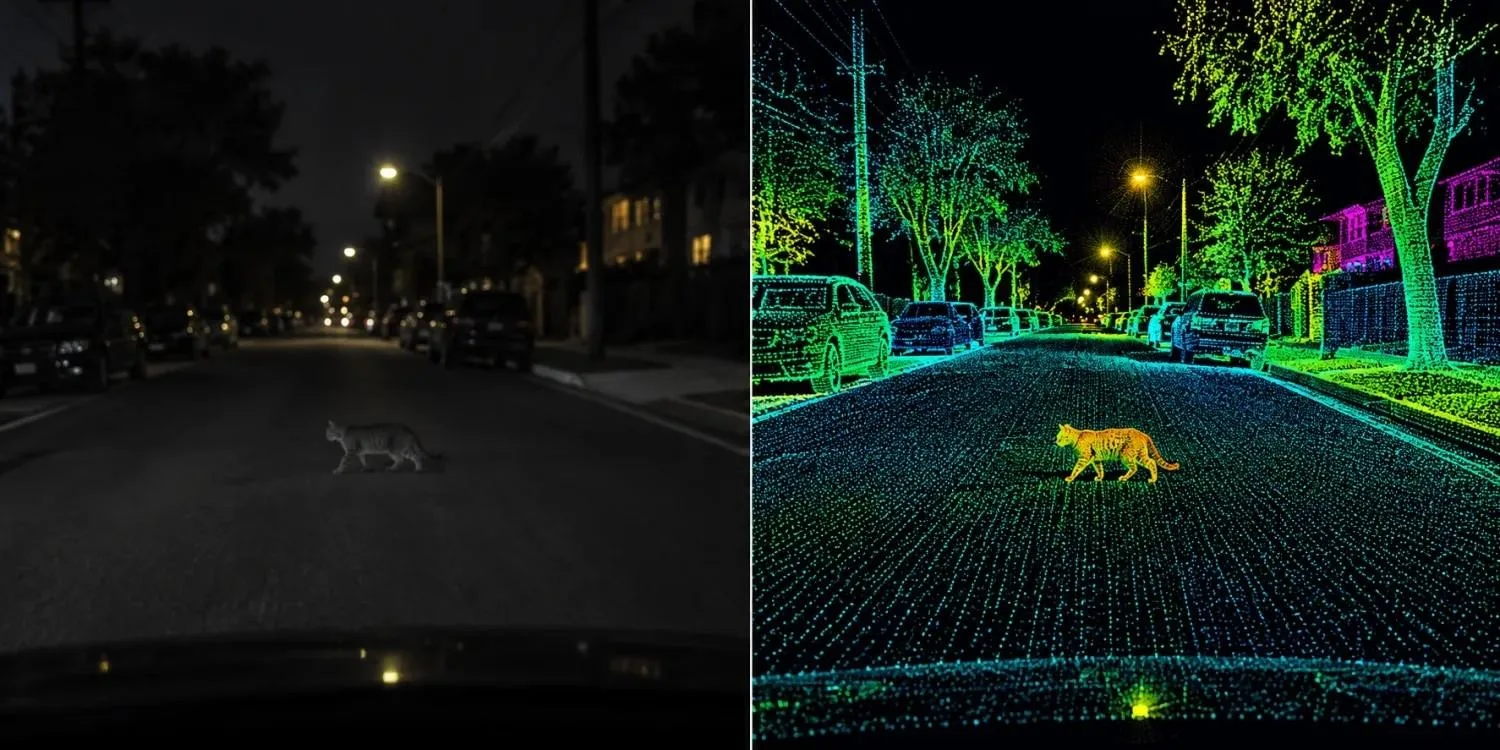
Tesla has extended the operating hours of its Robotaxi service in Austin until 23:00. Elon Musk said one of the main obstacles to operating the service later at night is detecting small animals in low-light conditions.
He said on X that it is particularly difficult to identify “gray kittens on gray asphalt in the dark.” In such a situation, the low contrast between the object and the background creates a challenging scenario for Tesla’s camera-based autonomous driving system.
The issue has once again brought attention to the camera-based autonomous driving approach that Tesla has long championed. A camera’s ability to capture images depends on ambient lighting and the contrast between an object and its background. As a result, small objects that are similar in color to asphalt may be more difficult to detect in the dark.
Tesla does not use lidar sensors. The company began removing radar sensors from its vehicles in 2021 and ultrasonic sensors in 2022. Elon Musk has repeatedly said that a system based on cameras and artificial neural networks should be sufficient for general-purpose autonomous driving.
Musk previously called lidar “a fool’s errand” and claimed that lidar-based systems would not succeed. In 2025, he argued that data from additional sensors such as lidar and radar could conflict with camera data and could negatively affect safety in certain situations.
Lidar operates differently from a camera. The system sends laser pulses into the surrounding environment, measures how long they take to return, and determines the distance and three-dimensional shape of objects. Because radar uses radio waves, it can also serve as an additional source of data that complements cameras in low-light conditions.
Waymo, one of Tesla’s main competitors, uses a different approach. The company’s sixth-generation autonomous driving system reportedly has 13 cameras, 4 lidars and 6 radars. The goal is to combine data from various sensors to identify the surrounding environment more accurately at night, in fog, in bright light and under other challenging conditions.
However, using different sensors together does not completely prevent all accidents either. In autonomous driving, the key issue is not only the number and type of sensors, but also how the system processes the data it obtains and how appropriately it responds to unexpected situations.
The Tesla Robotaxi service currently operates on a limited scale. The service, which launched in Austin in June 2025, later had its operating hours changed. It is currently permitted to operate until 23:00, and according to Musk’s statement, work is continuing on detecting objects in low-light conditions so that nighttime operations can be extended further.