
20:06Machine-translated from Azerbaijani by AIRead in Azerbaijani
NASA Publicly Releases More Than 800 GB of Artemis II Mission Data
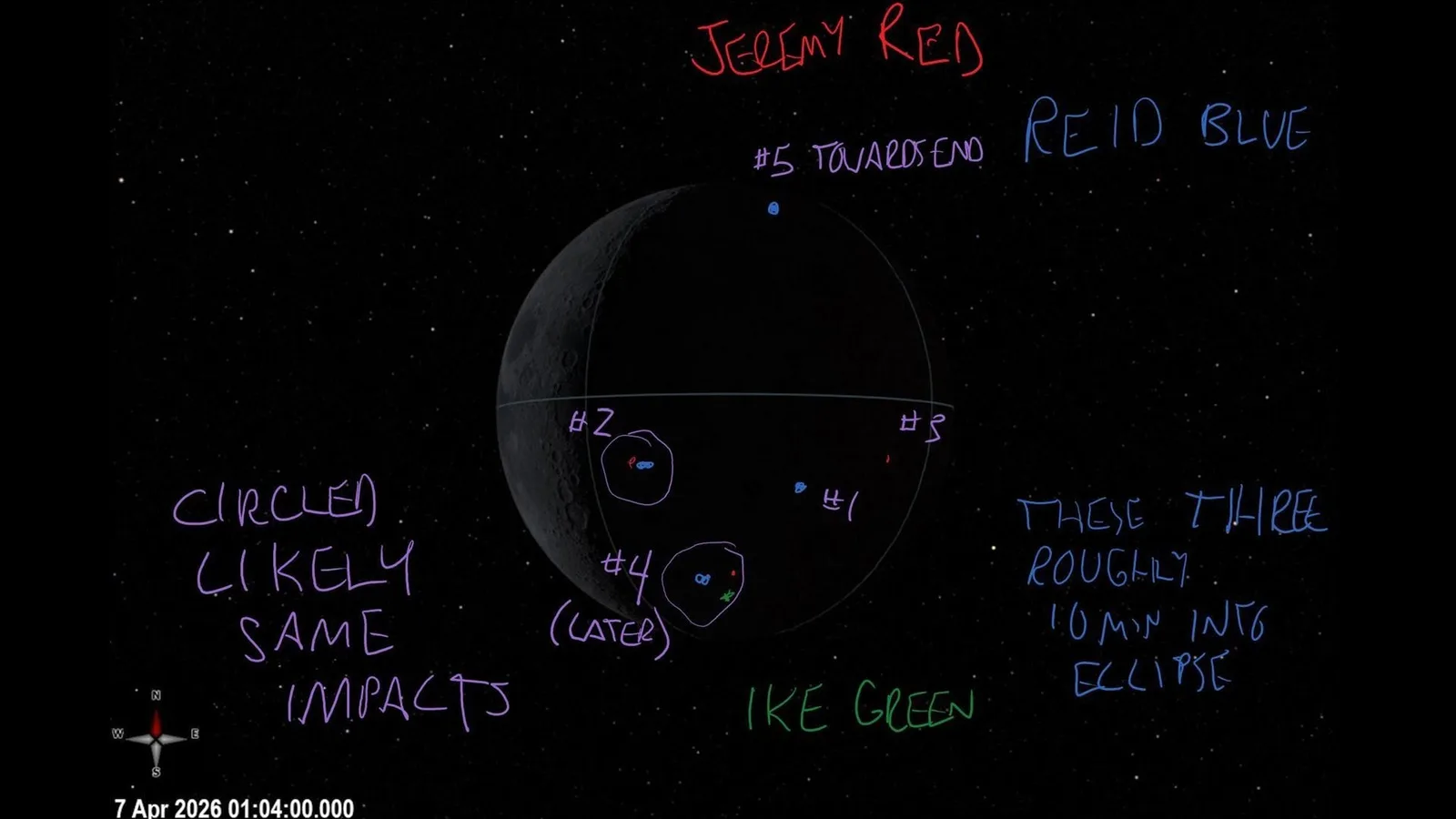
This week, NASA publicly released online more than 800 GB of scientific data collected during the Artemis II mission. The archive created for the mission includes images, videos, audio recordings and crew notes. These materials make it possible to closely examine the scientific work and the crew's observations. The archive is one of the most extensive collections of materials showing the public how the historic flight unfolded. The archive contains more than 11,000 photos and videos. It also includes over 8.5 hours of audio recordings. The astronauts added their own notes to some of the materials. In one image, the crew marked the location of impact flashes they saw on the far side of the Moon. The collected materials provide a more detailed understanding of the observations made during the mission. One of the most notable parts of the archive is a video in which the crew shares the observation with the ground team in Houston. An impact flash is a brief light visible at the moment a space object strikes the lunar surface. Such flashes have been observed before. However, the examples recorded on the far side of the Moon may be among the faintest events ever discerned by the human eye. The reactions of the astronauts and the ground team can also be heard in the video. Along with the archive, NASA also released 3 documents that make it easier to use the data. They are titled “Artemis II Preliminary Lunar Science Report,” “Artemis II Lunar Science Operations Report” and “Artemis II Lunar Science Data User Guide.” The documents explain the preliminary scientific findings about the Moon and how scientific work was conducted during the mission. They also provide instructions for using the data in the archive. Thus, along with the raw files, the technical documents needed to understand them have also been released.