
18:23Machine-translated from Azerbaijani by AIRead in Azerbaijani
Phison unveils 2 SSD projects: one with an AI chip, the other with built-in cache
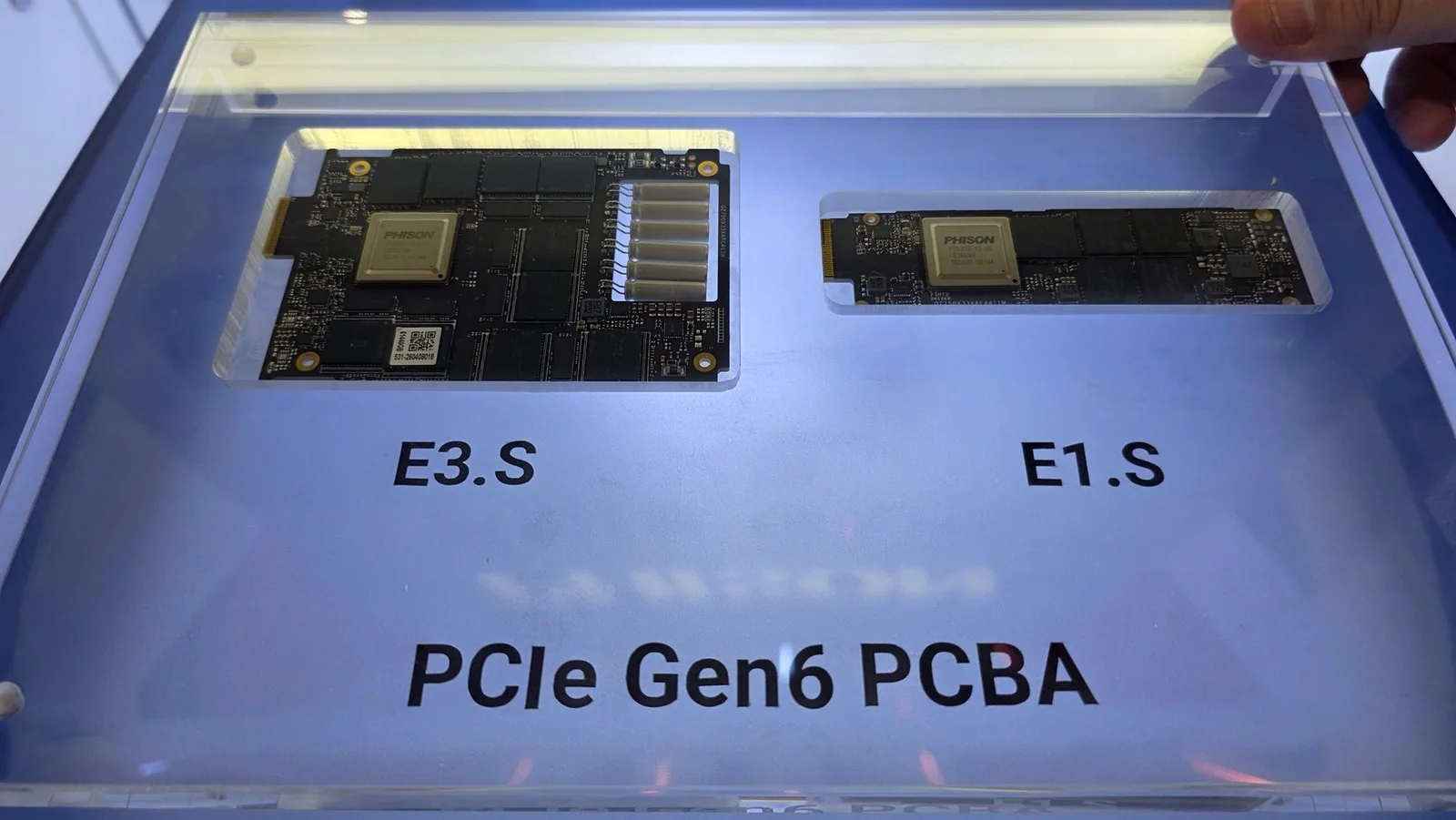
Phison showcased 2 new SSD projects designed for businesses and servers at Supercomputer 2026. One model has a built-in NPU, or artificial intelligence chip, that processes data directly on the storage device. The other SSD combines fast pSLC cache with high-capacity QLC memory on the same controller chip. Both products are still being developed and will be released after they are finalized. The SSD designed for artificial intelligence has 64 GB of memory. The memory's data transfer rate is 130 GB/s. The device can run PyTorch, vLLM, OpenVINO and llama.cpp tools directly on the SSD. This means the server does not send all the data to the processor and receives only the final result from the SSD. According to Phison, the amount of data transferred could be reduced by 10-100 times for suitable tasks. Phison reported a figure of 36,800 DMIPS for computing performance. However, this is a processor measurement method dating back to the 1980s. NPU performance is usually measured in TOPS, or trillions of operations per second. Therefore, the reported figure does not clearly indicate how powerful the SSD is for artificial intelligence workloads. It is also unclear how the server will connect to the drive's computing functions. The second SSD, called Mixed Media, has a 16-channel controller chip. Part of the QLC memory operates in the faster and more durable pSLC mode, serving as cache. The rest retains high capacity. The operating system sees these areas as separate NVMe storage partitions. Frequently written data can be directed to the pSLC portion, while primarily read data can be directed to the QLC portion. This configuration could reduce the need for separate cache SSDs. As a result, all the drive bays in the server could be reserved for primary storage. According to Phison, if 1 device fails in a 24-drive system, 4% of the cache would be lost. In a similar system with 4 separate cache drives, the loss could reach 25%. On the other hand, when a single SSD fails, part of both the primary storage and the cache is lost at the same time. The projects are also being compared with the Phison X3 enterprise controller chip. The PCIe 6.0-based X3 promises a speed of 28 GB/s for sequential data transfers. It is expected to perform 6.8 million input/output operations per second. The company previously said it planned to have test samples ready by the end of 2026. Mass production was planned to begin in mid-2027. However, the latest presentation provided no exact sales date for either the X3 or the 2 SSD projects.