
13:18Machine-translated from Azerbaijani by AIRead in Azerbaijani
Pikio Si Oblik Bicycle Helmet Tops Safety Test
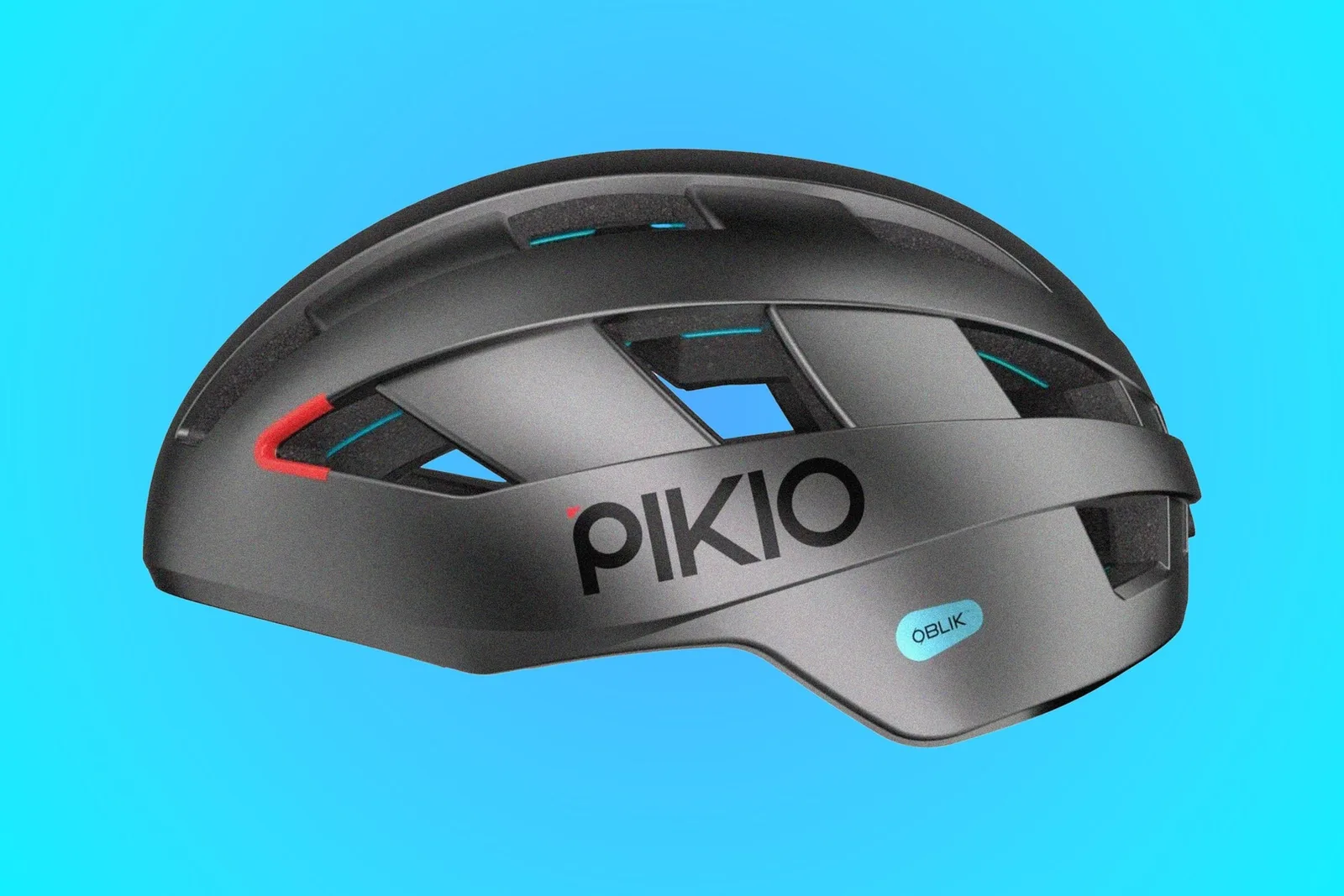
The “Pikio Si Oblik” road cycling helmet developed by “Pikio,” a startup based in Vancouver, Canada, topped the “Virginia Tech” safety test with a score of 4.61. In the STAR rating, a lower score indicates better protection. Helmets scoring below 10.1 receive 5 stars. The previous leader, the “Canyon Deflectr,” scored 6.82. The “Pikio Si Oblik” scored 2.21 points, or approximately 32%, lower.
For many years, bicycle helmets were tested mainly on how well they protected the head from direct impacts. The US Consumer Product Safety Commission also uses the same method. However, sudden head rotation during an impact stretches the brain inside the skull and increases the risk of concussion. For this reason, “Virginia Tech” launched STAR tests measuring both direct and rotational impacts in 2018. Of the 30 models in the initial tests, only 4 received 5 stars. Of the 272 models tested in 2025, 167 achieved this result.
Conventional bicycle helmets contain expanded polystyrene foam known as EPS beneath a thin plastic shell to cushion impacts. In the “Oblik” system, this foam is not a single layer but is divided into sections that move independently. These sections are connected to the underlying layer by elastic ties. During a strong impact, they can shift or break away. Together with foam of varying densities, this structure helps reduce both direct impacts and the rotational force transmitted to the head.
“Pikio” founder Daniel Abram describes the new system as the result of 18 years of research into impact protection and helmet design. Abram previously worked at “Simon Fraser University” on the “BrainShield” system, which was developed to reduce rotational force. He later founded “BiaGuard.” In 2022, he sold the patents to “MIPS” for approximately $1 million (1.7 million manat). By comparison, “MIPS” uses a slip layer that moves during the first 5–10 milliseconds of an impact. This layer slides 10–15 millimeters in an effort to reduce rotational effects.
The “Pikio Si Oblik” sells for $379 (approximately 640 manat). The model costs $219 (approximately 370 manat) more than the “Canyon Deflectr RLS,” which placed 2nd in the STAR test. The main reason for the high price is the complex manufacturing process. A conventional bicycle helmet is made from 8–10 parts, while this model has approximately 80 components. The medium-sized version weighs 279 g. The helmet has 17 air vents to keep the head cool.
EPS foam is crushed during a serious impact. Therefore, such helmets must be replaced after an accident. When “Pikio” takes back a damaged helmet for examination, it offers a 30% discount on a new product. So far, 4 helmets have been returned to the company and replaced with new ones. The main challenge for a little-known brand is earning buyers’ trust. “Pikio” plans to unveil another design at the beginning of the new year.