
15:05Machine-translated from Azerbaijani by AIRead in Azerbaijani
Qobuz Adds Labels to AI-Generated Songs
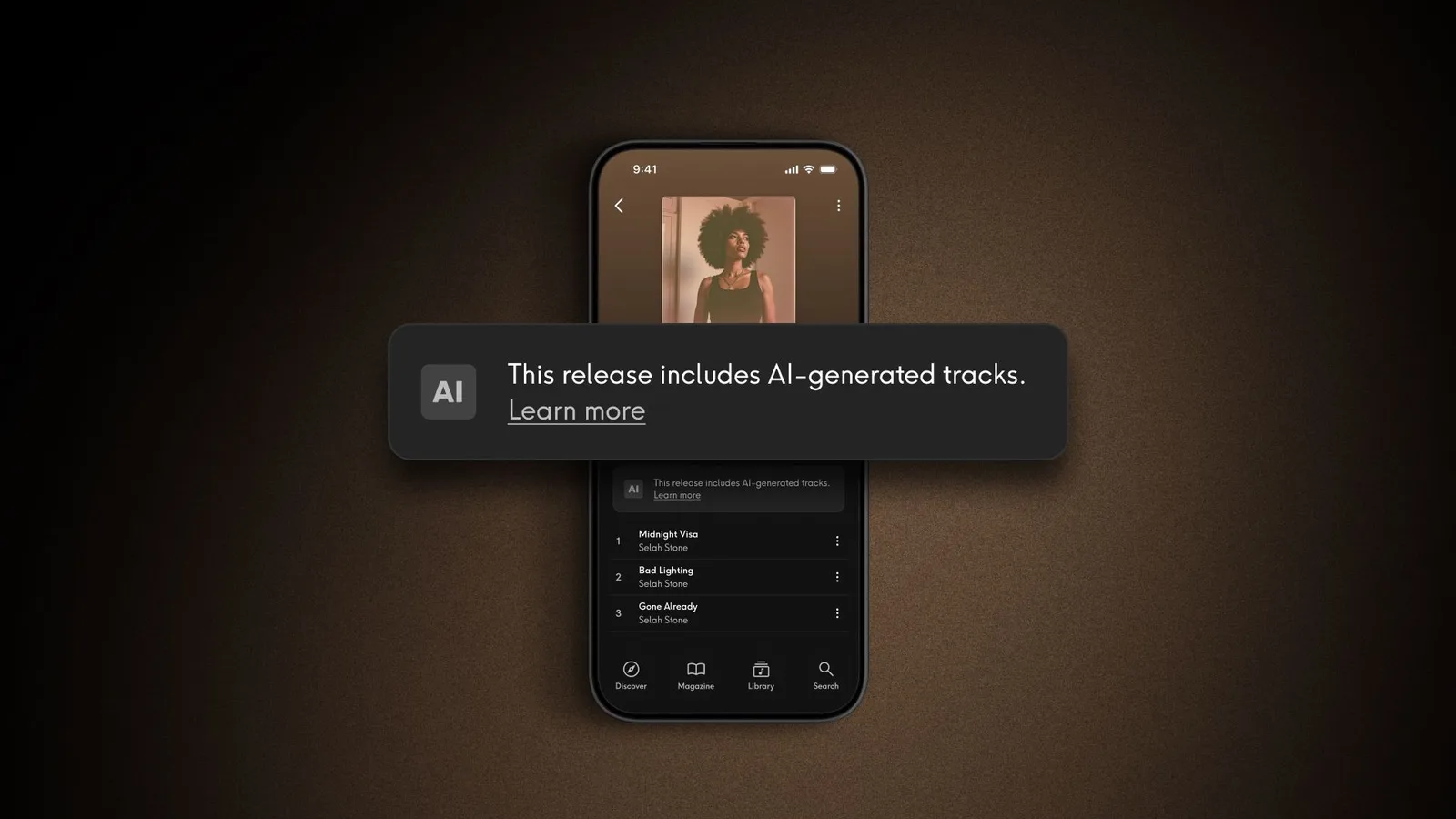
Qobuz is beginning to add a special label to music it identifies as AI-generated. The label will clearly show listeners that a song was created using artificial intelligence. It will not apply only to works by virtual performers. Songs by real artists who use artificial intelligence may also be labeled. Unlike Spotify’s voluntary AI character badge, Qobuz’s label is based on the platform’s own review. According to the company’s figures, AI-generated music does not attract much interest. Such tracks account for just 0.38% of all plays on Qobuz. In other words, only 1 in every 263 plays is an AI-generated song. This result shows that isolated reports about the success of AI performers do not reflect the overall situation. More than 1 in 3 AI-generated albums has never been played even once. This amounts to about 4 million songs. Qobuz has removed those tracks from its catalog. Although such works filled the platform’s catalog, they failed to attract actual listeners. The figures show that a large share of mass-produced AI music has gone unnoticed.
 In addition, 60% of AI music is demonetized by Qobuz’s anti-fraud system. Even when those tracks are played, their creators receive no payment. The review is based on the rules of the artificial intelligence charter the company announced in February. The system attempts to identify music generated automatically solely to make money. Other music services are taking similar steps. Tidal does not pay royalties for AI music. Deezer has created a filter that removes such tracks from search results. Spotify has also integrated Meta’s AI agent Muse into its service. The tool allows users to manage the song queue and playlists with voice commands, create new playlists and schedule music playback.
According to the company’s figures, AI-generated music does not attract much interest. Such tracks account for just 0.38% of all plays on Qobuz. In other words, only 1 in every 263 plays is an AI-generated song. This result shows that isolated reports about the success of AI performers do not reflect the overall situation. More than 1 in 3 AI-generated albums has never been played even once. This amounts to about 4 million songs. Qobuz has removed those tracks from its catalog. Although such works filled the platform’s catalog, they failed to attract actual listeners. The figures show that a large share of mass-produced AI music has gone unnoticed. In addition, 60% of AI music is demonetized by Qobuz’s anti-fraud system. Even when those tracks are played, their creators receive no payment. The review is based on the rules of the artificial intelligence charter the company announced in February. The system attempts to identify music generated automatically solely to make money. Other music services are taking similar steps. Tidal does not pay royalties for AI music. Deezer has created a filter that removes such tracks from search results. Spotify has also integrated Meta’s AI agent Muse into its service. The tool allows users to manage the song queue and playlists with voice commands, create new playlists and schedule music playback.