
09:29Machine-translated from Azerbaijani by AIRead in Azerbaijani
RAMDeck Wants to Run Large AI Models on Old Devices
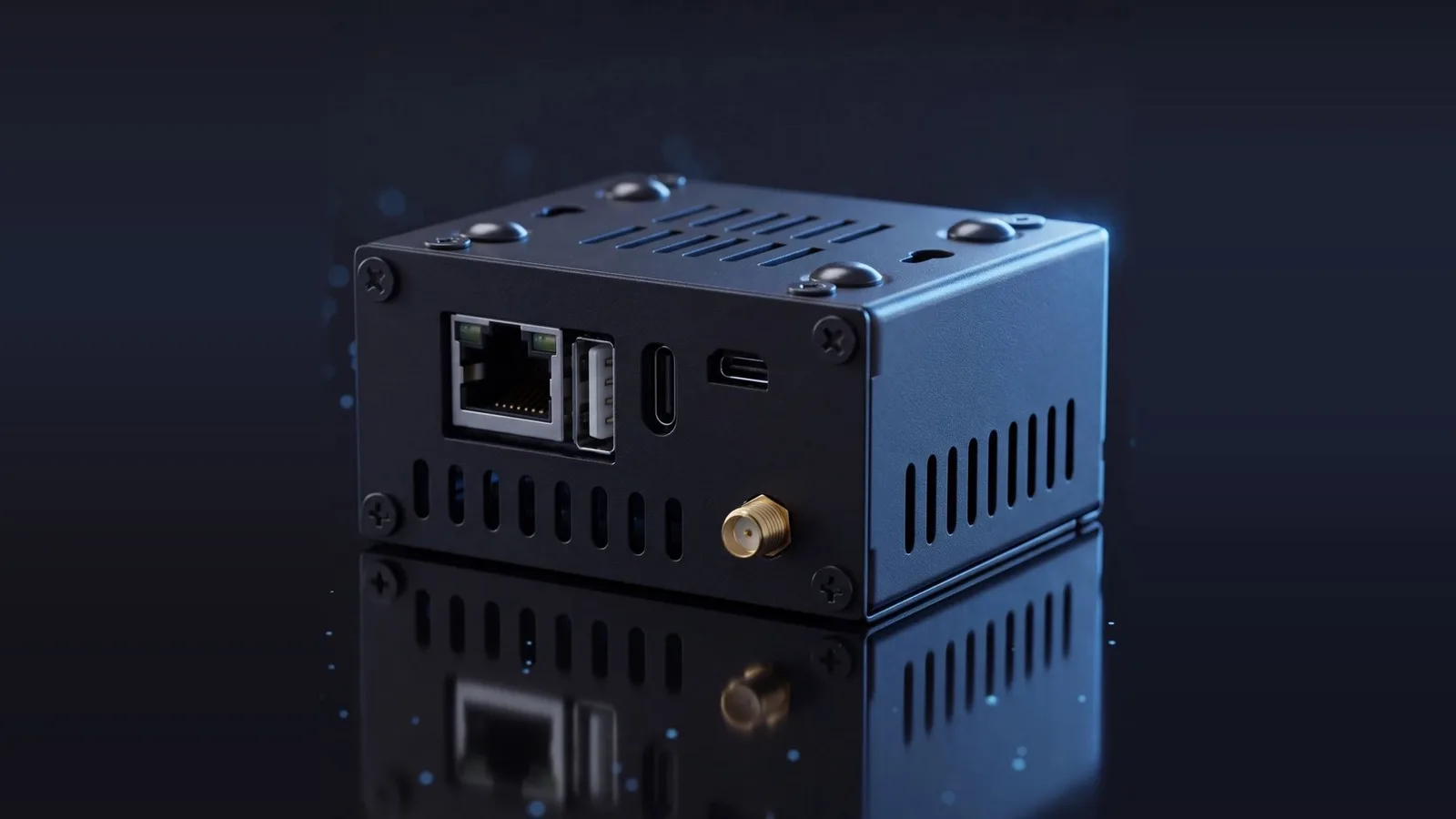
“TradeMAV” has begun raising funds for a small networking device called “RAMDeck” that is designed to run large artificial intelligence models at home. The device connects “Windows,” “macOS,” and “Linux” computers, as well as “Android” phones, over a home network. Parts of an AI model are distributed among these devices, with each device storing its share in memory. This makes it possible to use hardware in the home to run a model that does not fit into the memory of a single device. Early backers can pay $109 (about 190 manat) for “RAMDeck.” The campaign’s funding goal is $10,000 (about 17,000 manat), and the campaign will end on November 8, 2026. The project has emerged at a time when the price of DDR5 memory has reached 486% of its July 2025 level. According to “TradeMAV,” the price of a 64 GB DDR5 memory kit rose from $191 (about 320 manat) to $1,118 (about 1,900 manat) in 1 year. “RAMDeck” does not technically combine the memory in different devices into one large pool of memory. Instead, the model’s layers are stored on separate computers. As each token, meaning a small piece of text, is generated, only intermediate results are sent over the network. The system is based on the RPC mechanism of the free and open-source “llama.cpp” software. RPC allows devices on the network to pass computing tasks to one another. “TradeMAV” has added features to this technology such as automatic device discovery and assigning model layers to a faster graphics processing unit (GPU). It is also possible to resume work after a failure and control the system from a dashboard. There is also an application programming interface (API) compatible with “OpenAI” systems. However, “RAMDeck”’s processor, memory, ports, and power consumption have not yet been disclosed. Users familiar with terminal commands can also try the same method for free with the “llama.cpp” and “exo” software. The highest speeds were recorded mainly with an “RTX 3060” graphics card and models that process only some of their parameters for each token. The “Qwen3-Coder 30B” model generated 39 tokens per second when a mini PC and an “M4 Mac mini” worked together. The 40-billion-parameter version of the “Qwen3-Coder-Next” model achieved 16 tokens per second. A 7-billion-parameter model reached 43 tokens per second on an “RTX 3060.” Speeds dropped significantly for models that process all parameters at the same time. A 27-billion-parameter model generated 1.92 tokens per second across 4 devices. “OpenAI”’s “gpt-oss-120b” model achieved 1.37 tokens per second across 6 devices. In another system, a 120-billion-parameter model was run across 5 devices. After 7 minutes of initial preparation, the model reached 3.1 tokens per second. Based on the results, “RAMDeck” is aimed more at increasing total memory capacity than delivering high speeds. As with other crowdfunding projects, there remains a risk of delays or that the product may not be delivered at all.