
15:12Machine-translated from Azerbaijani by AIRead in Azerbaijani
Scientists create cyborg cockroach that searches for people in rubble and administers medicine
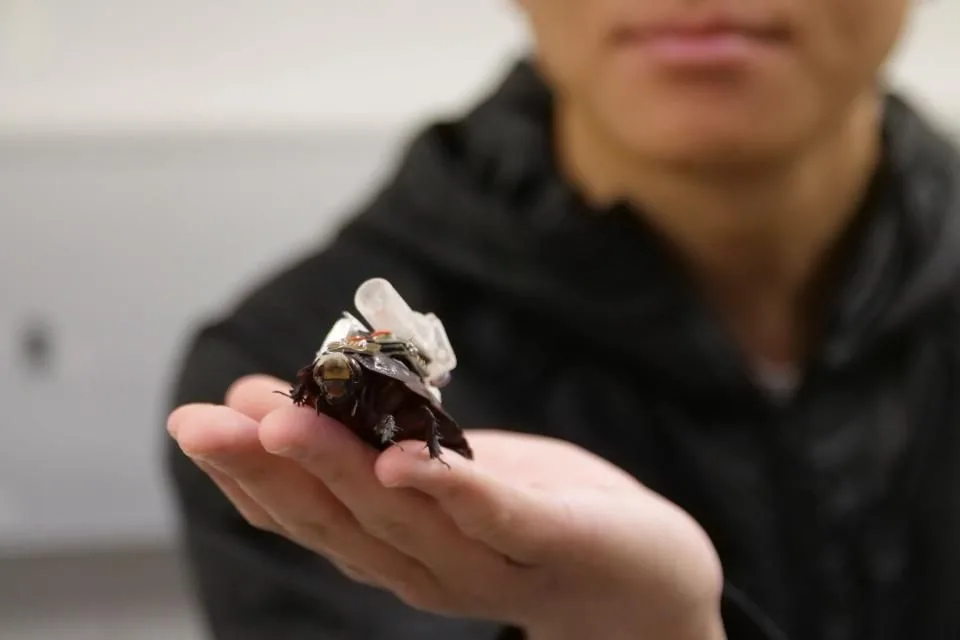
Small robots can enter places in disaster zones that are dangerous for people. However, to move through narrower gaps, scientists have developed a cyborg cockroach. “Paraborg,” created by the University of Queensland and the University of New South Wales, is designed to search for victims and provide them with first aid. Controlled by small chips, the insect can move through rubble, transmit camera footage, and administer medicine. The results of the study were published in the journal “Advanced Science.”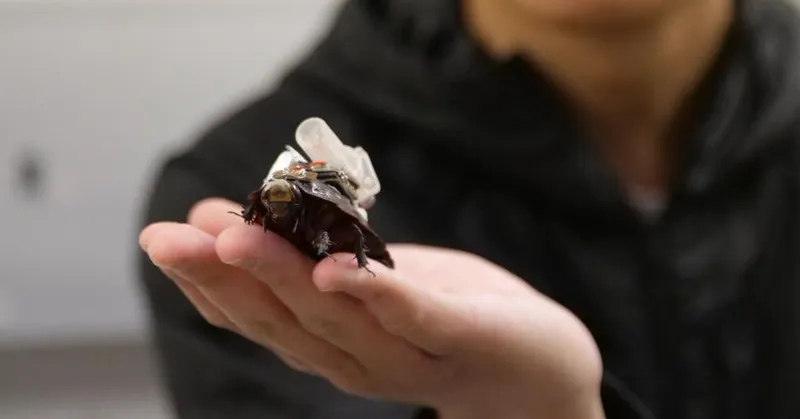 The project used a giant burrowing cockroach native to northern Queensland. This insect can reach 87 mm in length and weigh 40 g. Because the cockroach can carry 1.5 times its own weight, the scientists developed 2 versions of it. One was equipped with a camera, while the other had an automatic medicine injection mechanism. The needle system added approximately 15 mm to the cockroach’s height and 17 g to its weight. Despite this, the insect’s movement did not deteriorate noticeably. The equipment was attached to the cockroach while it was under anesthesia. After the devices were removed, the insects resumed their normal lives. Electrodes were attached to the cockroach’s antennae and to the paired sensory organs behind its abdomen—the cerci. These tips sent weak electrical signals to the insect. Sending a separate signal to each antenna changed the direction in which the cockroach moved. A signal sent to both cerci regulated its walking speed. Frequencies ranging from 10 Hz to 40 Hz were used in the trials. Signals exceeding the 50 Hz threshold lost their effect after a while. The needle device is a small mechanism that moves a syringe. When a command is sent, the seal between the compartments containing citric acid and baking soda opens. When the substances mix, a chemical reaction occurs and produces carbon dioxide. This gas pushes the syringe plunger forward, allowing the medicine to be administered to the target. During the trial, the scientists remotely controlled one of the cockroaches from the starting point through 3 checkpoints. The insect then injected a simulated target. Injections delivered to the target from distances of up to 150 mm had a success rate of approximately 95%. The overall success rate for all tasks performed from the start through the administration of the medicine was 72%. In another trial, the cockroach with the camera found the target, while the cockroach carrying the needle device administered the medicine. Scientists have previously developed cyborg insects capable of climbing vertical walls. However, large cockroaches are considered more suitable for carrying specialized rescue and medical equipment. The current experiment did not test real disaster conditions such as rubble, uneven surfaces, and changing environments. If sufficient resources are allocated, such insect teams are expected to be usable in real operations within 5 to 10 years.