
15:35Machine-translated from Azerbaijani by AIRead in Azerbaijani
Scientists Teach 5-Ton John Deere Loader to Perform Acrobatics
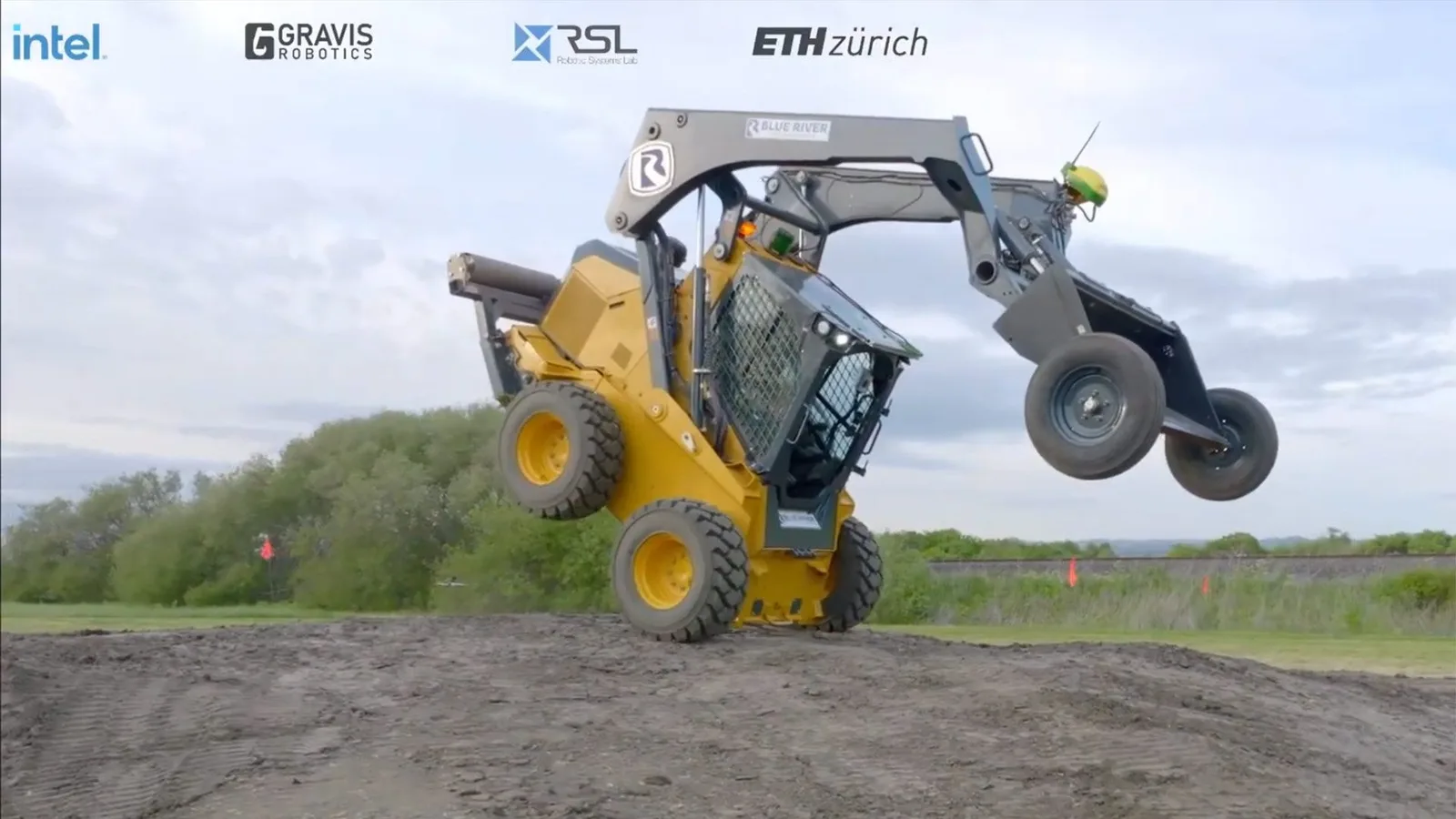
Researchers from the US and Switzerland have taught a 5-ton “John Deere 332G” loader to perform complex acrobatic maneuvers on its own. Demonstration videos of the AI-controlled machine were released on November 17, 2026. The study, titled “Heavy Metal Acrobatics,” could open up new possibilities for the automated control of heavy machinery.
In the demonstration, the “John Deere 332G” moves forward and backward on 2 wheels, spins, and maintains its balance. At the same time, the machine also controls its lift arm and bucket. The loader travels over uneven ground and completes the maneuver without tipping over. According to the researchers, only a small number of highly skilled operators have been able to perform such maneuvers until now.
The system is based on a method in which artificial intelligence learns the correct actions through trials and outcomes. Physical modeling and neural networks were also used. Because training the machine directly would be dangerous and impractical, the training was first conducted in a precise virtual environment. The resulting control model was then transferred to the real loader.
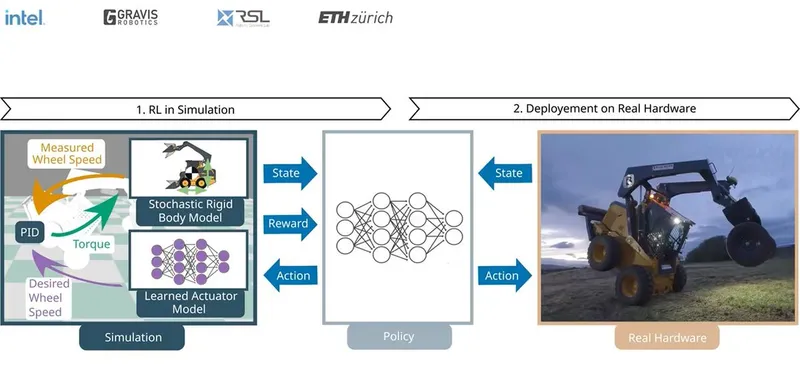
The virtual tests took into account the control system and real-world movements of the “John Deere 332G” model. If this environment is not designed to match the real machine closely enough, the learned maneuvers will not work in practice. The experiment showed that the control model developed in the virtual environment also works on heavy machinery. This reduces the need to put the machine at risk repeatedly during real-world tests.
The main goal of the study is to lay the groundwork for heavy machines to control rapid and complex movements on their own. This approach could be used in construction, mining, and material handling in the future. According to the scientists, automated control could eventually be safer, faster, and more efficient than a human operator. For now, the results show that the technology can perform complex maneuvers on real heavy machinery.