
16:29Machine-translated from Azerbaijani by AIRead in Azerbaijani
Silicon Motion Unveils 28 GB/s Controller for 512 TB SSDs
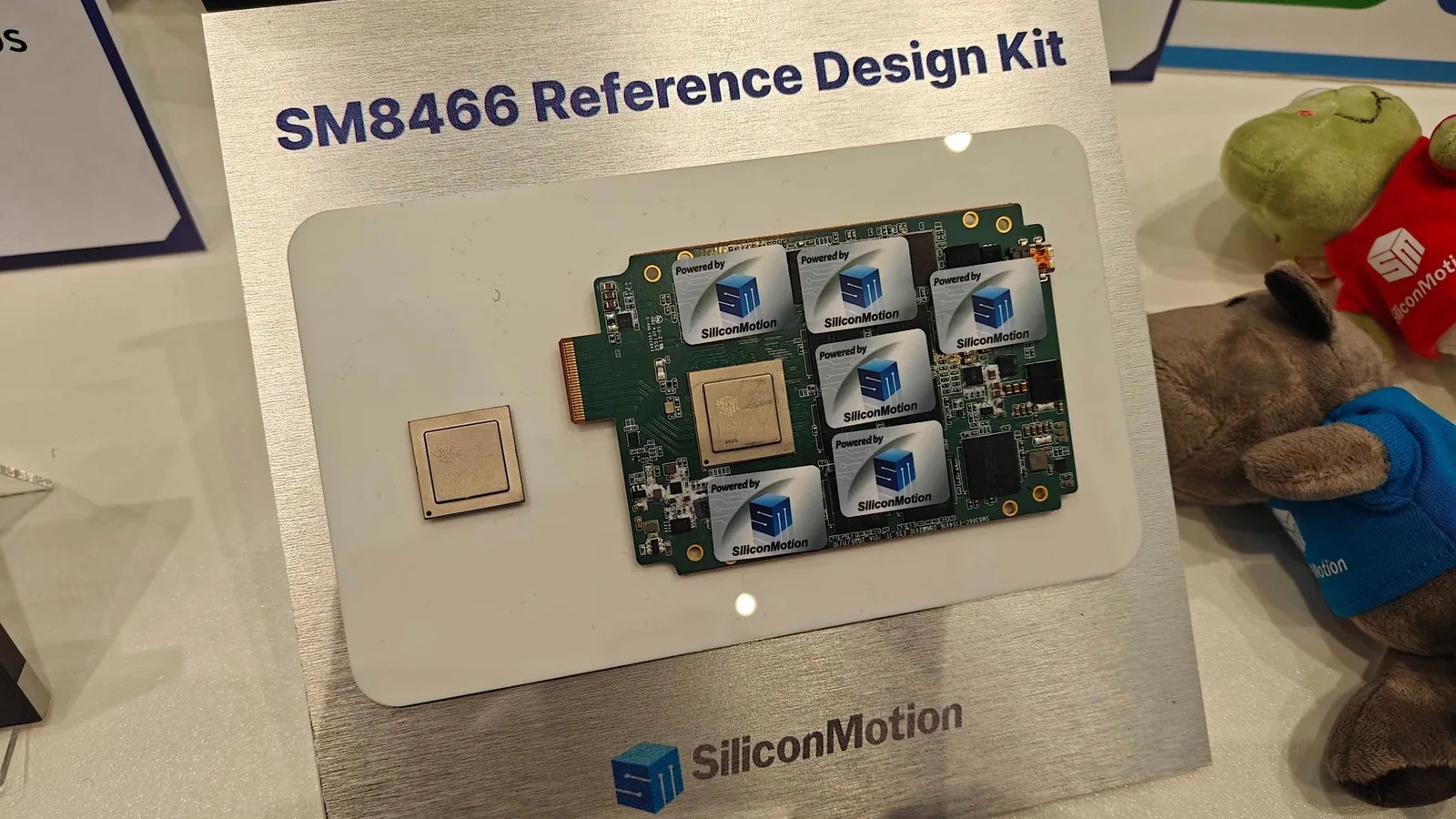
Silicon Motion unveiled its MonTitan SM8466 SSD controller for data centers for the first time at the SC26 conference in Chicago. The PCIe 6.0-enabled chip is intended for next-generation storage systems used by enterprises and large cloud service providers. The controller’s final design was recently completed, and test samples are expected to be ready soon. SSDs based on this chip are scheduled to go on sale in late 2027 or early 2028.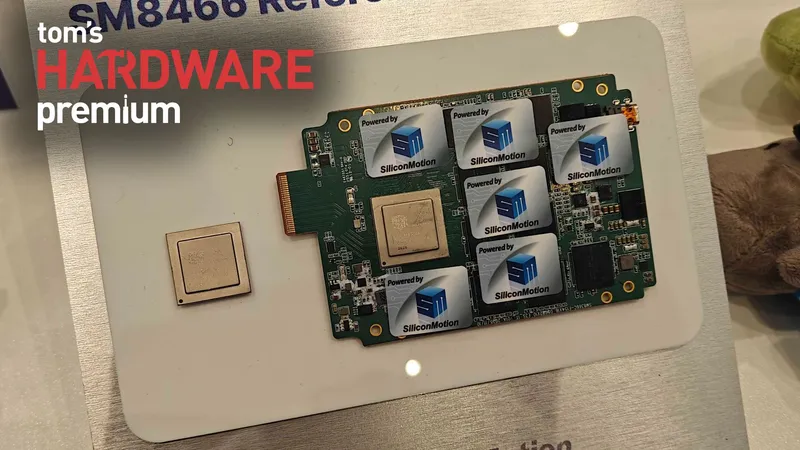 The SM8466 uses a PCIe 6.x x4 connection and 16 NAND channels. The controller can reach speeds of 28 GB/s in sequential data transfers. When working with small data blocks, it performs 7 million input/output operations per second. SSD capacities can be 512 TB or more. The controller also complies with the NVMe 2.0 and OCP NVMe 2.5 standards. Silicon Motion has created separate transmission paths for commands and addresses sent to NAND memory in an architecture called SCA. This allows several operations to be performed simultaneously, speeds up data transfers and reduces latency. PerformaShape 2 technology seeks to maintain stability by individually adjusting the speeds of applications running in parallel. The previous generation had 256 quality-of-service profiles, while the new one has 512. This prevents a single workload from consuming all of an SSD’s resources.
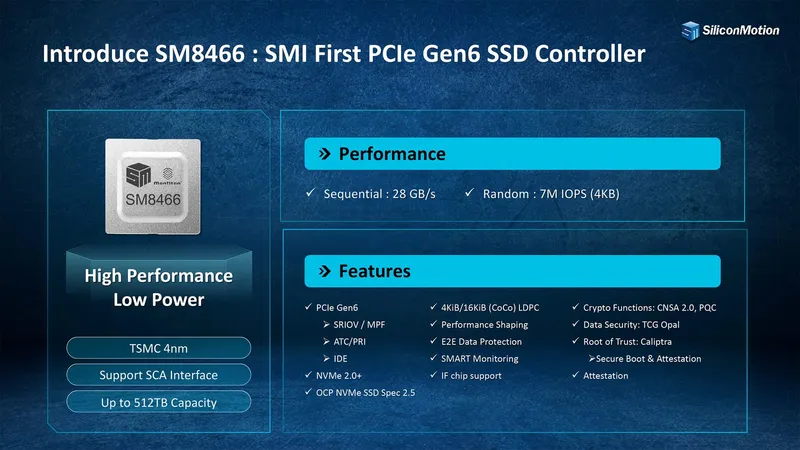 PerformaShape 2 simultaneously manages speed limits across several input/output metrics. This approach allocates SSD resources more precisely among different applications. The controller also supports the NVMe TP4176 proposal, which was developed to standardize performance management. If the standard is adopted, compatible system software will be able to configure these rules directly without a custom driver. This feature could be useful in cloud systems running numerous virtual machines. The controller uses LDPC with 4 KiB codewords and 16 KiB CoCo technology to detect and correct data errors. It includes SR-IOV and MPF functions for virtual systems and SMART diagnostics for monitoring the device’s condition. Its security features include Secure Boot, AES-256 encryption, TCG Opal compliance and firmware authenticity verification. These functions are intended to maintain consistent performance, reduce latency and protect data in high-capacity SSDs.
The SM8466 uses a PCIe 6.x x4 connection and 16 NAND channels. The controller can reach speeds of 28 GB/s in sequential data transfers. When working with small data blocks, it performs 7 million input/output operations per second. SSD capacities can be 512 TB or more. The controller also complies with the NVMe 2.0 and OCP NVMe 2.5 standards. Silicon Motion has created separate transmission paths for commands and addresses sent to NAND memory in an architecture called SCA. This allows several operations to be performed simultaneously, speeds up data transfers and reduces latency. PerformaShape 2 technology seeks to maintain stability by individually adjusting the speeds of applications running in parallel. The previous generation had 256 quality-of-service profiles, while the new one has 512. This prevents a single workload from consuming all of an SSD’s resources. PerformaShape 2 simultaneously manages speed limits across several input/output metrics. This approach allocates SSD resources more precisely among different applications. The controller also supports the NVMe TP4176 proposal, which was developed to standardize performance management. If the standard is adopted, compatible system software will be able to configure these rules directly without a custom driver. This feature could be useful in cloud systems running numerous virtual machines. The controller uses LDPC with 4 KiB codewords and 16 KiB CoCo technology to detect and correct data errors. It includes SR-IOV and MPF functions for virtual systems and SMART diagnostics for monitoring the device’s condition. Its security features include Secure Boot, AES-256 encryption, TCG Opal compliance and firmware authenticity verification. These functions are intended to maintain consistent performance, reduce latency and protect data in high-capacity SSDs.