
19:29Machine-translated from Azerbaijani by AIRead in Azerbaijani
SpaceX and xAI Developing AI System with 72 GPUs
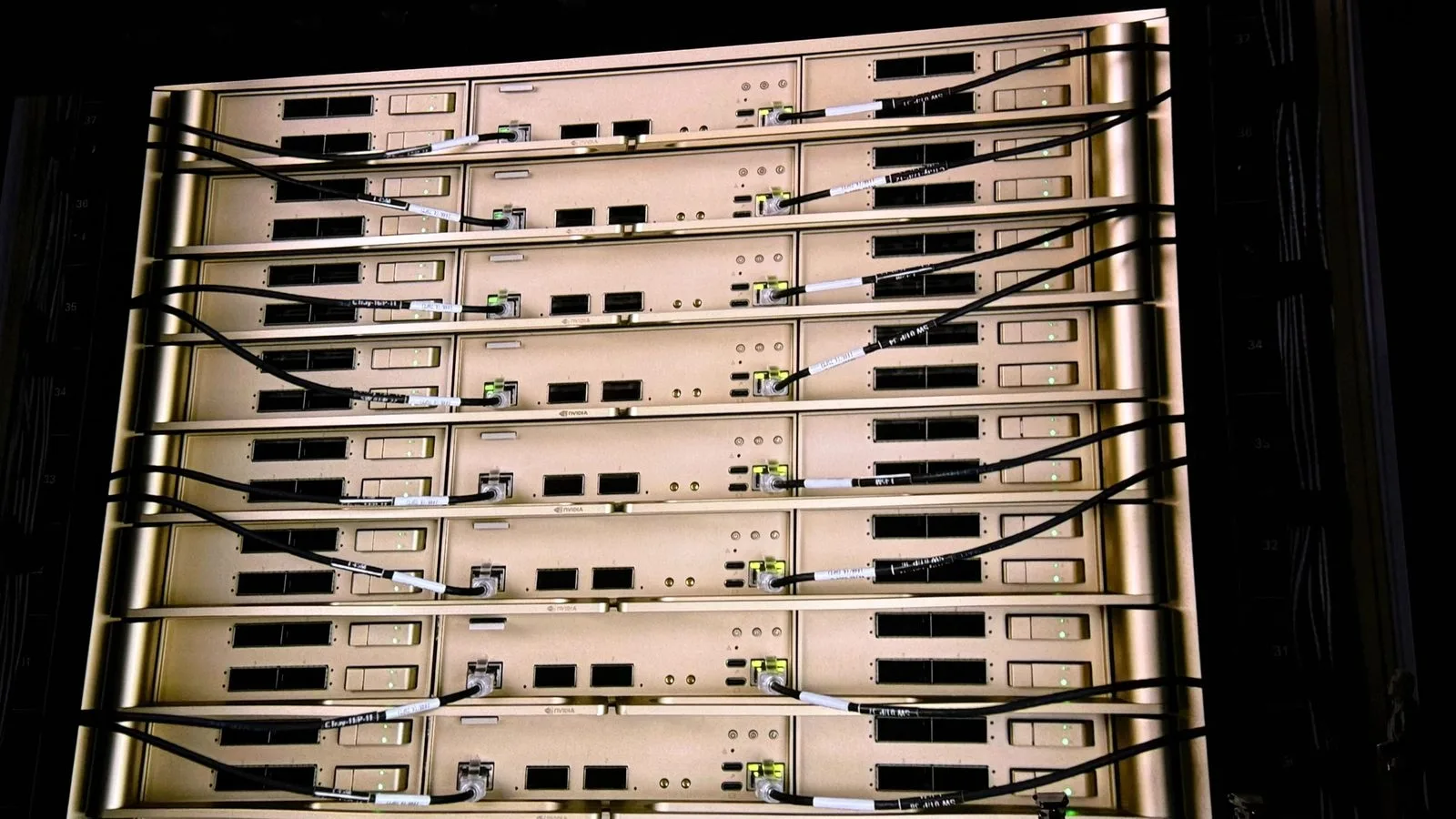
SpaceX and xAI are developing a custom AI system code-named Kessel for data centers. The project is based on the Nvidia Vera Rubin NVL72 platform and could also operate in data centers built in orbit in the future. The system will have 36 Vera CPUs and 72 Rubin GPUs for AI computing. They will be connected by 9 NVLink switch trays. The main innovation is the replacement of numerous high-speed cables with a large printed circuit board.
The 72 GPUs in the Vera Rubin NVL72 platform are housed in a total of 18 compute trays. In the Kessel system, the compute and switch trays will be installed on both sides of a passive PCB midplane. This configuration could simplify assembly by eliminating numerous cable connections. The Nvidia Kyber design, which uses a similar solution, has 576 AI GPUs in 144 packages.
The Kessel system’s main distinguishing feature will be an 84-layer printed circuit board. It will use M10 copper-clad laminate with very low signal loss. The board in the Nvidia Kyber design had 156 layers and was based on M9 laminate. Reducing the number of layers could simplify production, but M10 material is more expensive. Modern high-performance server motherboards typically consist of 15–20 layers. The number of layers in test boards can exceed 20.
Producing such a board is still extremely difficult and expensive. A defect in one of the internal layers could render the entire board unusable and reduce production yield. Although eliminating the cables simplifies assembly, it does not automatically reduce the overall cost. Whether the project will be cost-effective depends on whether the savings on cables and other hardware offset the cost of the complex board.
SpaceX and xAI plan to purchase the CPUs, GPUs, switch chips and networking components directly from Nvidia. Other components will be sourced from third-party suppliers. This approach could make it easier to adapt the hardware for operation in orbit and provide greater control over the supply chain. At the same time, the companies will bear greater responsibility for design, testing, manufacturing quality and component procurement.