
18:00Machine-translated from Azerbaijani by AIRead in Azerbaijani
SpaceX Wants to Turn Starlink Into a Mobile Carrier — Satellites Will Connect Directly to Regular Smartphones
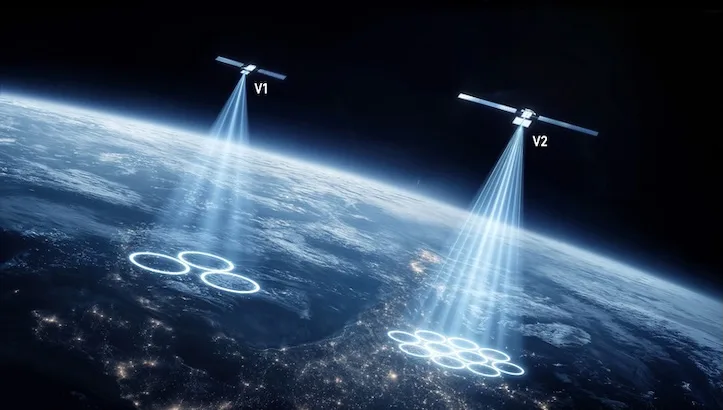
SpaceX plans to develop Starlink not only as a satellite internet service but also as a major player in the mobile communications market. The company has taken two important steps toward expanding the Starlink Mobile project: it has agreed to acquire licenses for low-frequency radio spectrum in the US and received permission from the US Federal Communications Commission (FCC) to launch next-generation satellites.
SpaceX’s agreement calls for the acquisition of licenses covering a total of up to 14 MHz of spectrum in the 800 MHz band. The main advantage of these frequencies is that signals can pass through walls and other obstacles more effectively. As a result, Starlink Mobile could provide more reliable connectivity inside buildings and in areas where traditional mobile networks perform poorly. Another important factor is compatibility: most modern smartphones already support this frequency band. However, the agreement to acquire the licenses is still awaiting final approval from the FCC.
Under SpaceX’s plan, Starlink Mobile will combine satellite infrastructure with terrestrial mobile networks. Each frequency band will have its own role: the 2 GHz band will provide greater data transmission capacity, while 800 MHz will provide broader coverage.
In this way, the company aims to create a unified network that works outdoors, inside buildings and in places beyond the reach of traditional mobile communications. If the project succeeds, Starlink Mobile could become a major communications service competing with conventional mobile carriers in the US. For now, however, the plans cover only the US market. New satellites promise more than 100 times the capacity.
The FCC has authorized SpaceX to place up to 15,000 next-generation Gen2 satellites optimized for the 2 GHz band into orbit. According to the company, these satellites could provide more than 100 times the data transmission capacity of the current generation. One of the most important features is that data will be transmitted directly to compatible devices without a dedicated satellite terminal. This approach could allow users to access satellite communications through regular smartphones.
SpaceX previously also announced plans to create an orbital network of one million satellites around Earth. The new steps demonstrate the company’s intention to turn satellite technologies into a large-scale alternative to mobile communications.