
10:24Machine-translated from Azerbaijani by AIRead in Azerbaijani
Tesla Demonstrates Roadster 2 Electric Car’s Lift-Off Test
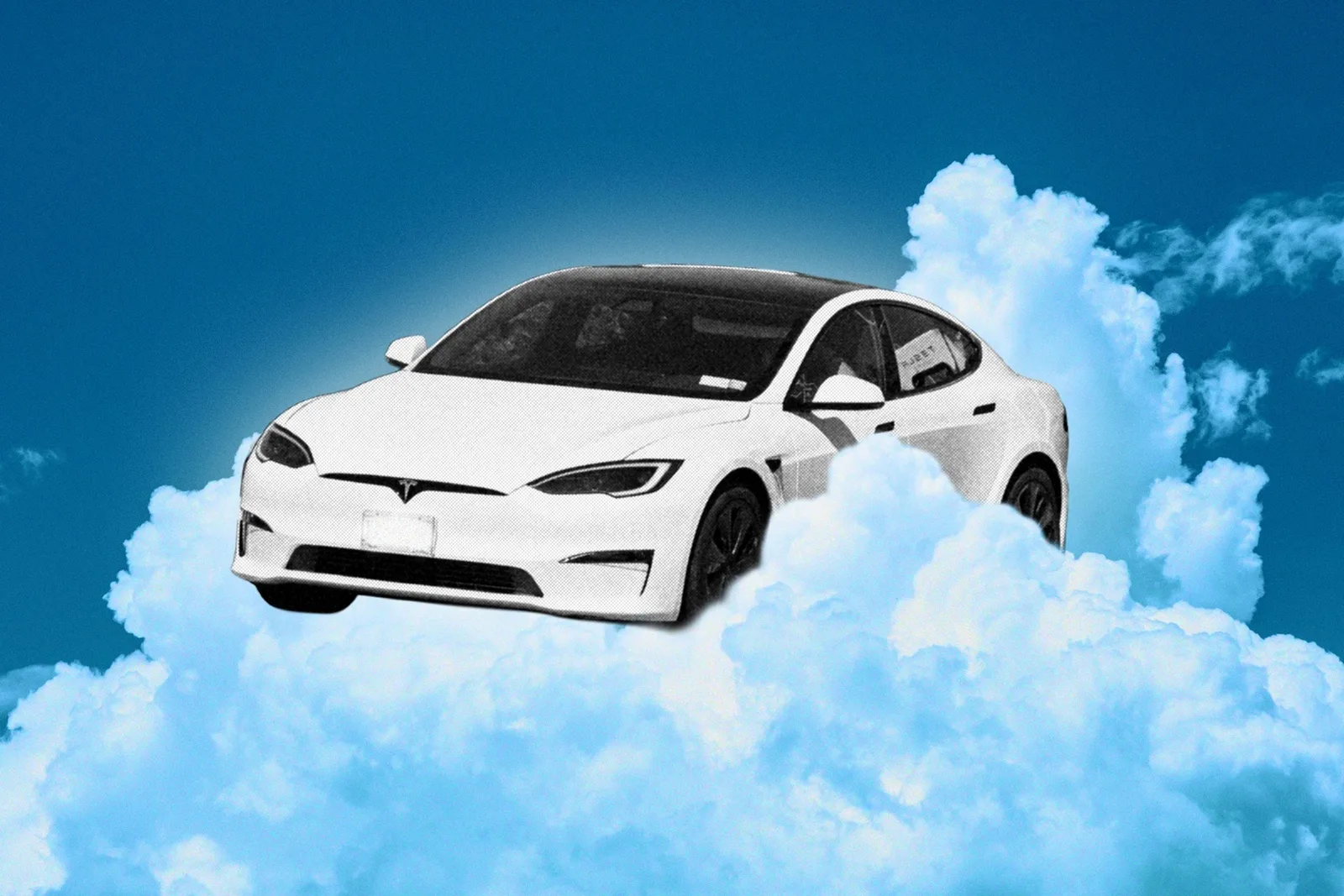
Tesla unveiled a Roadster 2 concept that briefly took off at an event in McGregor, Texas. The 2-seat electric sports car traveled upside down on a semicircular ramp. It then jumped from the top of the ramp and remained airborne for several seconds. The car accelerated on a straight road and passed over parked vehicles, and it also took off from a standstill. For safety, no one was inside the cabin, and all maneuvers were programmed in advance.
Compressed-air thrusters beneath and behind the car lift it into the air and cushion the impact when it lands. The rear thrusters also boost acceleration. During the test, the Roadster 2 reached 97 km/h in 0.81 seconds. Tesla claims this will be the best result among production cars. The air tanks are refilled without consuming fuel. A fan-powered suction system keeps the car upside down on the ramp.
The Roadster 2 is a joint project by Tesla and SpaceX, both led by Elon Musk. Chief designer Franz von Holzhausen said the car was designed in an aerospace style. The model has an angular body and upward-opening doors. The car also has a hard roof and a rear spoiler that deploys when needed. The seats are shaped directly to match the chassis. There is no conventional mechanical connection between the steering wheel and the wheels; steering is handled electronically.
Tesla has not yet announced the car’s price. Production is scheduled to begin in 2028. The new generation of the model was first unveiled in 2017, with initial deliveries scheduled for 2020. Elon Musk said that if the company switches to autonomous models in the future, the Roadster 2 will be the only human-driven car in its lineup. He did not guarantee that the car’s ability to take off would be considered legal everywhere. Musk also acknowledged that the model has not yet been made fully ready in terms of safety.
Additional permits may be required for the car to take off on US roads. The Federal Aviation Administration regulates every device that leaves the ground. Vehicles weighing more than approximately 113 kg must receive official approval. According to experts, certification could take at least 1 year, and a standard driver’s license would not be sufficient. Users may be required to obtain a recreational pilot license. Takeoff and landing may be possible only at an airport, a helipad, or on a large private property.
The US is developing separate rules and testing programs for electric vertical takeoff and landing eVTOL vehicles. These aircraft are intended to carry 4 passengers over distances of approximately 32–240 km. A limited 3-year testing program for them has begun in the country. The main challenge in developing flying cars is weight: a road car must be sturdy, while an aircraft must be made as light as possible. According to aviation experts, if the Roadster 2 reaches mass production, it will be considered a major engineering achievement.