
15:43Machine-translated from Azerbaijani by AIRead in Azerbaijani
Throaty Mumbo Creates a Windows-Like Desktop Environment on the NES
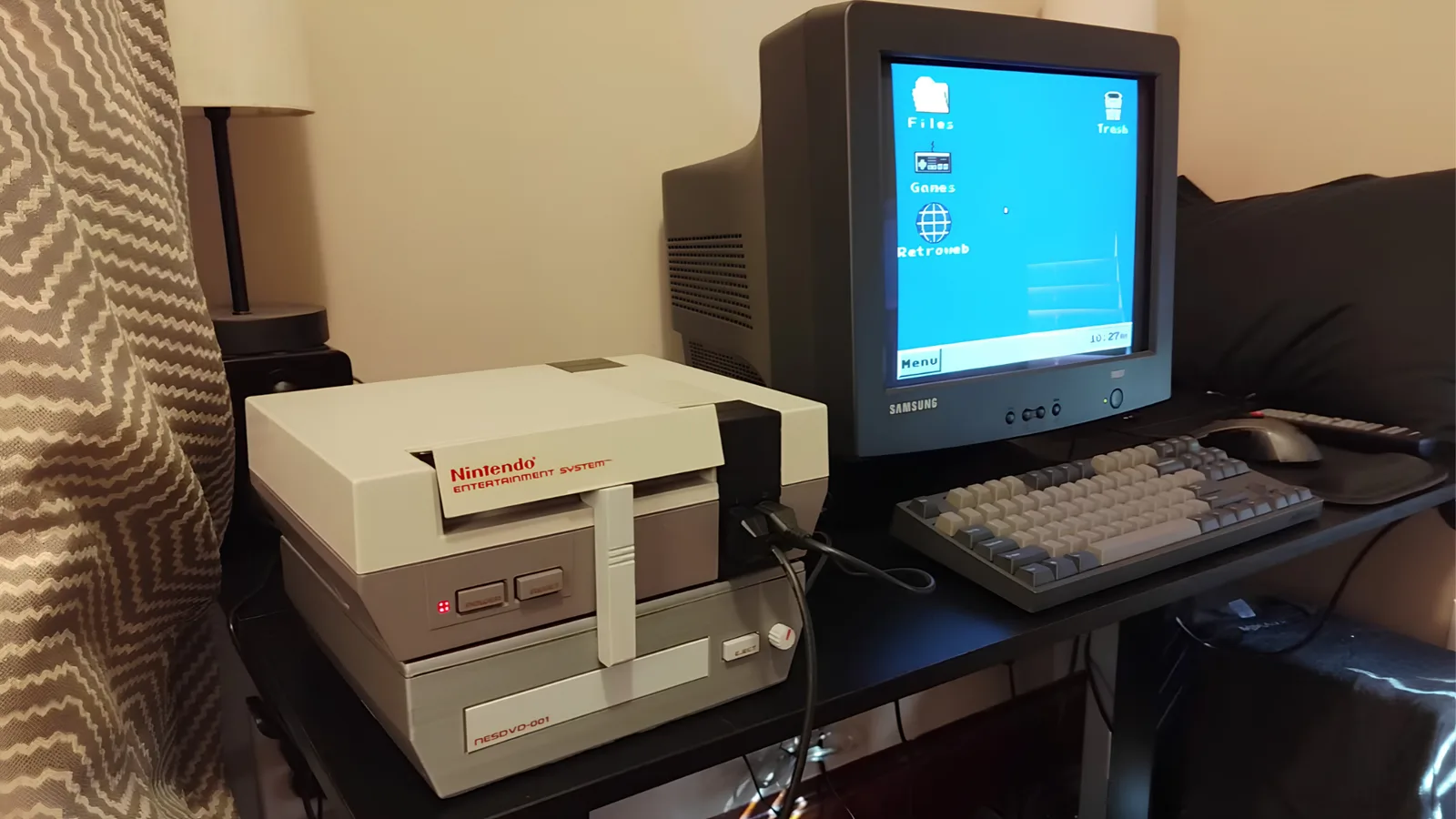
The retro gaming channel Throaty Mumbo has created a Windows-like desktop environment on the NES console. The NESPC project preserves the console’s original hardware while offloading intensive computations to a separate cartridge. For this purpose, the EverDrive N8 Pro cartridge, which features a programmable chip called an FPGA, was selected. The project files and software for additional devices have been made publicly available on GitHub.
Initial tests used ready-made ROM files found online. The version designed to look like Windows 98 included programs such as Paint and Windows Explorer. However, they were merely visual elements and did not work. Because the Linux project NES86 was also very slow, the channel decided to develop its own ROM file for the console.
The NES’s 8-bit 6502 processor was not powerful enough to run an x86 system. The computations were therefore transferred to the more powerful Cyclone IV FPGA chip. The Next186 core also made the system compatible with the Intel 80186. At first, a simple screen operated solely through text commands was developed. The final version can launch games, browse files, and run Minesweeper.
Typing and moving the cursor with a standard NES controller was inconvenient. A keyboard was therefore tested as well. The Family BASIC keyboard proved unusable because it entered several characters each time a key was pressed. Later, USB devices were connected to the console’s controller port using an RP2350 microcontroller and custom software. A keyboard with a USB hub made it possible to use a mouse and keyboard simultaneously.
The newly developed USB connection also recognized MIDI devices, meaning electronic musical instruments. A USB piano keyboard was connected to a simple digital music program, and Mario music in NSF format was played. A 3D-printed NESCD CD drive was also added to the project. The device played music in the background without slowing down the games.
NESCD was later upgraded with a Seeed Studio XIAO ESP32 module and gained Wi-Fi connectivity. The system achieved a download speed of 4 MB/s and an upload speed of 90 KB/s. The NES sends internet requests to a laptop, which then simplifies the pages to suit the low image quality. A direct internet connection is also possible, but using this mode is considerably more difficult.