
10:06Machine-translated from Azerbaijani by AIRead in Azerbaijani
UCLA Scientists Develop Humanoid Robot Powered by an Old Smartphone
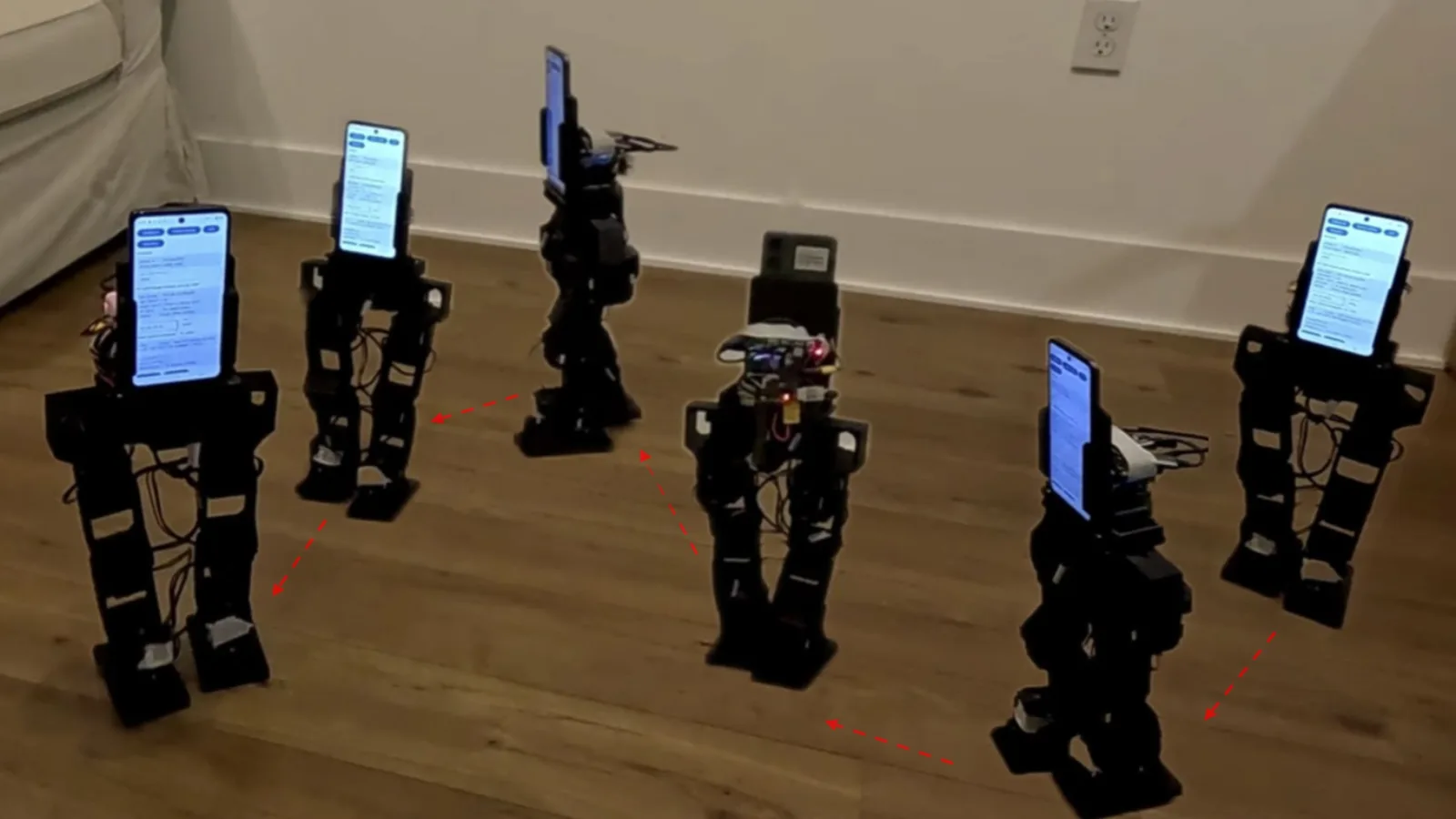
UCLA researchers have developed a humanoid robot called PhoneBot that runs on old, inexpensive smartphones. The phone is used for the robot’s vision, processing sensor data, and controlling its movements. The open-source robot’s hardware costs about $400 (680 manats), excluding the smartphone. This is cheaper than many small research robots. The smartphone is selected separately and can be replaced later. The robot is 483 mm tall and weighs 1.8 kg. Its legs and rotating torso are powered by 13 small servomotors. Each leg has 6 joints that move the hip, knee, and ankle. The remaining 1 joint rotates the torso and smartphone. This means the robot does not need to turn its entire body when pointing the camera at a person. The smartphone’s camera tracks people, while its built-in motion sensor helps the robot maintain its balance and walk as trained. A separate computer on the robot receives commands sent over Wi-Fi and translates them into motor movements. An Honor 9 released in 2017 was used in the tests. In addition, 3 inexpensive Android phones were tested. The cheapest of these phones cost $50 (85 manats), while the most expensive cost $80 (136 manats). All 4 devices performed key tasks such as motion sensing, gait control, human detection, and interaction. The app runs gait algorithms using TensorFlow Lite. The camera detects people and determines their body posture. The robot’s gait was initially trained through trial and error in a virtual environment. The system was rewarded for correct movements and penalized for unstable postures and placing excessive strain on the motors. In initial tests, the robot leaned more heavily on 1 leg. Mirrored examples of right and left movements were therefore added to the training. Across 5 separate training trials, this method significantly reduced the difference between movements on the right and left sides. Joint movements became more symmetrical, while differences in torque and mechanical power between the sides also decreased. In physical tests, PhoneBot walked and stood up from a face-down position. The robot was able to point its camera at people without continuously turning its legs. The main drawback of the current design is its weak servomotors. As a result, the robot cannot carry heavy loads or move quickly. The gait system has been trained to work only on flat surfaces. The robot has no arms for grasping objects, and movement over uneven terrain also remains unresolved. The project’s code and design are open source. The research was published on arXiv, a platform where scientific papers are shared before formal peer review.