
13:57Machine-translated from Azerbaijani by AIRead in Azerbaijani
Unigrid Sodium-Ion Battery Withstands Minus 20 Degrees in Hyundai Test
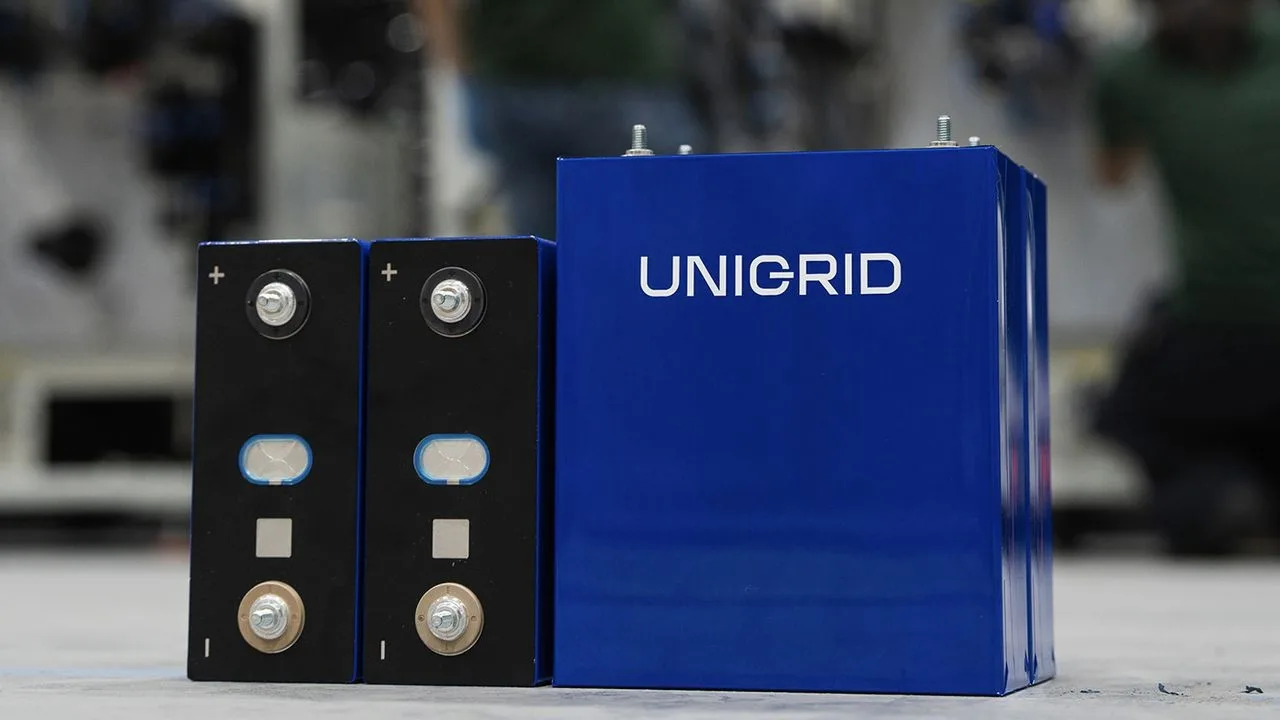
A sodium-ion battery developed by California-based startup Unigrid has passed key safety milestones in Hyundai's technical evaluation program. The results strengthen the potential of the sodium chromium oxide chemistry known as NCO for vehicles and energy storage systems. The company is working to reduce the risk of thermal runaway, which can cause fires in lithium-ion batteries.
During Hyundai's tests, the batteries did not catch fire, and no heat propagation from one cell to another was recorded. Capacity loss remained minimal after repeated charging and discharging cycles. The NCO cells remained operational at temperatures ranging from minus 20 degrees to 60 degrees, although the results still cover only limited scenarios.
In sodium-ion batteries, sodium ions rather than lithium ions move between the positive and negative electrodes. Sodium is a more abundant and widely available raw material, making the key materials cheaper to obtain. However, the battery's overall production cost is currently higher than that of lithium-ion solutions. Its lower energy density also makes the technology better suited to large energy storage systems than to phones and tablets.
CATL, the world's largest battery manufacturer, plans to begin mass production of sodium-ion batteries by the end of 2026. The company has announced agreements with an automaker and a supplier of energy storage stations for power grids. CATL uses Prussian white chemistry instead of NCO. Although this approach is considered cheaper, longer-lasting and suitable for mass production, questions about energy density remain.
In the near term, it appears more realistic for sodium-ion batteries to be used alongside lithium-ion batteries rather than replace them entirely. Experts consider the technology an attractive alternative for stationary storage and price-sensitive transportation. Commercialization will require continued materials research, standardized testing methods and broader testing under real-world conditions.