
16:35Machine-translated from Azerbaijani by AIRead in Azerbaijani
Voyager 1 Will Become the First Human-Made Object to Reach a Distance of 1 Light-Day From Earth
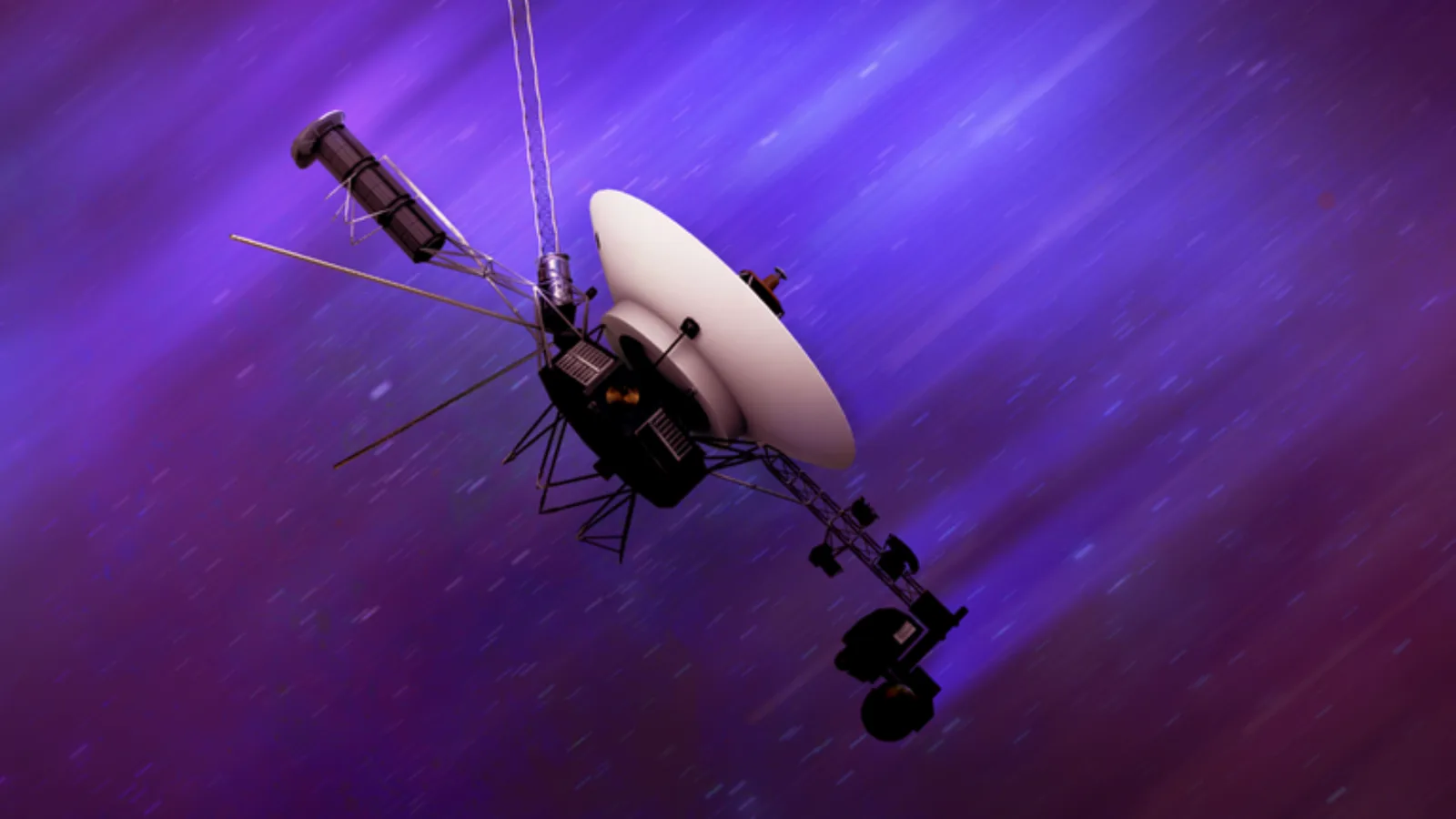
The Voyager 1 spacecraft will become the first human-made object to reach a distance of 1 light-day from Earth at 14:16:07 on November 18, 2026. The spacecraft, which has been traveling for 49 years, will thus set a new record as the most distant human-made object in history. NASA has started a countdown to this historic moment. A light-day is not a measure of time, but the distance light travels in 24 hours.
On that date, Voyager 1 will reach a distance of 26 billion kilometers. For comparison, the Moon is 384,400 kilometers from Earth. The distance between Earth and the Sun is 149.6 million kilometers. The spacecraft is traveling at about 60,900 km/h relative to the Sun. The speed record belongs to the Parker Solar Probe, which reaches about 635,000 km/h.
The mission was originally designed to study Jupiter and Saturn and was expected to last 5 years. Voyager 1 will reach the 1-light-day threshold 49 years, 2 months and 13 days after its launch. This means it will have exceeded its original mission duration by about 10 times. The spacecraft experienced a serious memory failure in 2024, but engineers fixed the problem within several weeks. At the time, it took more than 22 hours for a signal to reach the spacecraft. A round trip for the response required at least 45 hours.
Earlier this year, NASA urgently shut down one of the instruments when the power level unexpectedly dropped. The 3 radioisotope thermoelectric generators that power the spacecraft are expected to operate into the 2030s. Unless a serious malfunction occurs, Voyager 1 will continue its journey through interstellar space and send data back to Earth.
Voyager 1 is currently traveling toward the star Gliese 445 in the constellation Ursa Minor. In the future, the spacecraft is expected to pass within 1.7 light-years of the star. However, its speed is only 0.00564325 percent of the speed of light. At this speed, it would take Voyager 1 more than 300,000 years to reach the star.