
16:18Machine-translated from Azerbaijani by AIRead in Azerbaijani
Xona to Test Centimeter-Accurate GPS Alternative With 6 Satellites
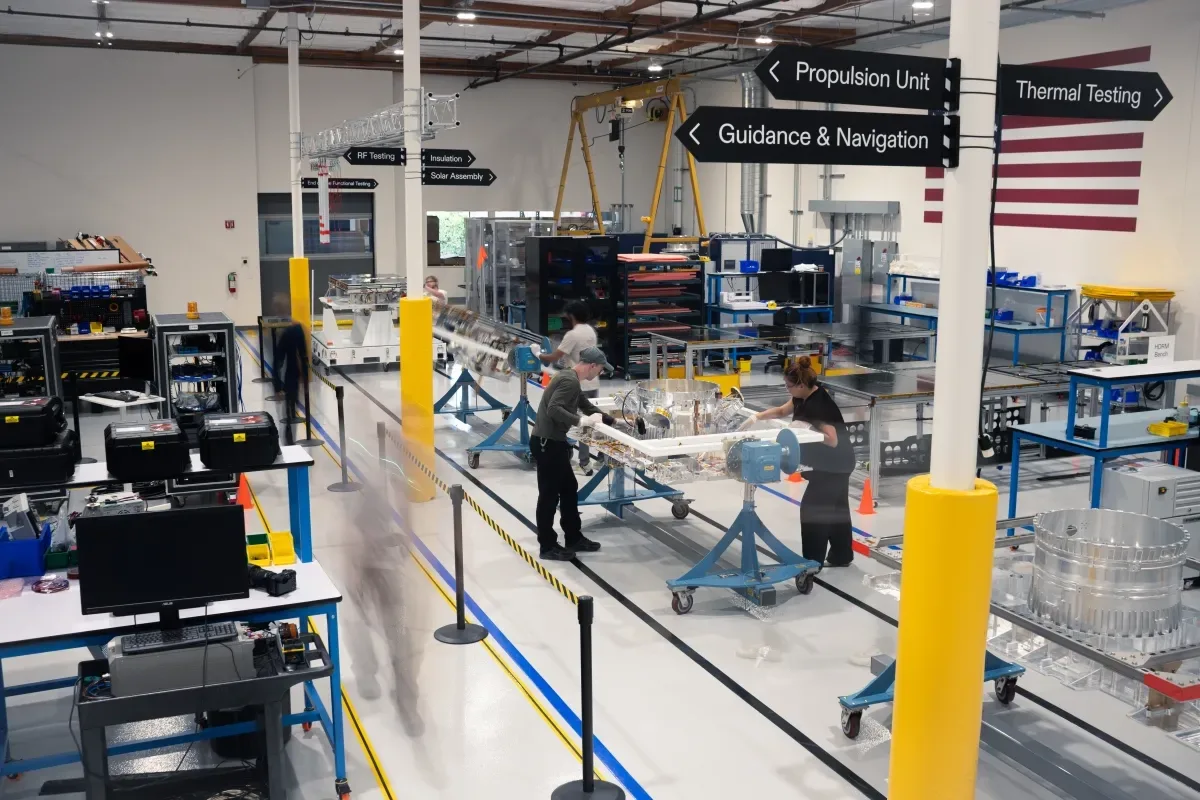
“Xona Space Systems” is preparing to launch “Pulsar,” a commercial alternative to GPS. “SpaceX” will launch 6 of the company’s satellites into orbit this month. The service will then begin beta testing with real customers. Founded by 5 engineers in 2019, the company aims to create a more accurate navigation system that is more resistant to interference. GPS and similar networks in Europe, China and Russia broadcast signals free of charge. However, these signals are relatively easy to block or disrupt with spoofed signals. Moreover, because their accuracy is limited to several meters, they are not sufficient on their own for agricultural robots and self-driving cars. According to “Xona Space Systems,” “Pulsar” will determine positions with centimeter-level accuracy. Its stronger signal will also be receivable inside buildings and in dense urban areas. Of the satellites to be sent into orbit, 4 are similar to the prototype used to test the technology last year. They were developed using the “Aerospace Labs” platform. “Xona Space Systems” manufactured the other 2 satellites itself. These will be the first part of “Pulsar’s” full network of 258 satellites. The company has done away with expensive atomic clocks. Instead, it has built a system that takes advantage of the satellites’ proximity to Earth and their connection to ground-based time sources. “Xona Space Systems” has also made it possible for current GPS receivers to receive “Pulsar” signals with a simple software update. After reaching orbit, the 6 satellites will pass over the mid-latitudes approximately 8 times a day. Real customers will then be able to participate in the tests. “TimeBeat,” which develops electronic timing systems, plans to check and correct the time readings of its devices around the world during the initial test. The company plans to provide full coverage of the US, Europe, Japan and South Korea by 2028. “Xona Space Systems” has raised just over $300 million (approximately 510 million manats) since it was founded. Of that amount, $20 million (approximately 34 million manats) came from the US Space Force. In the future, the technology could be used not only in autonomous transportation but also in aviation and electronic systems that require precise timing.