
08:41Machine-translated from Azerbaijani by AIRead in Azerbaijani
AI Creates a New “Doom Loop” Risk for the Internet
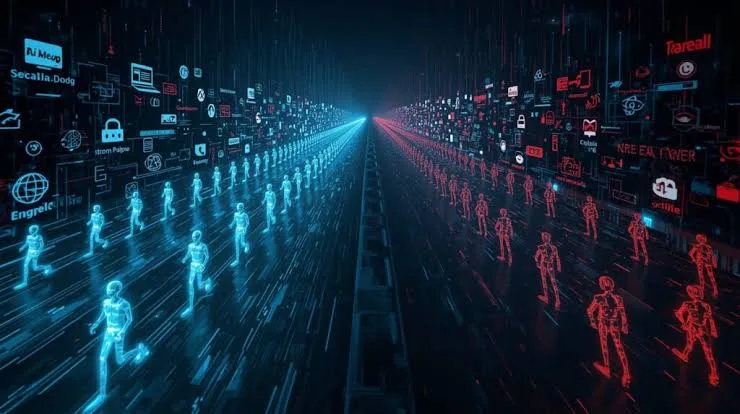
The rapidly growing role of artificial intelligence systems in both producing and consuming online content has sparked new debate about the internet’s future. Recent data shows that bots have overtaken humans in internet traffic, while signs of artificial intelligence are also present in a significant share of new web content. This process is described as a “Doom Loop”—a self-reinforcing negative cycle.
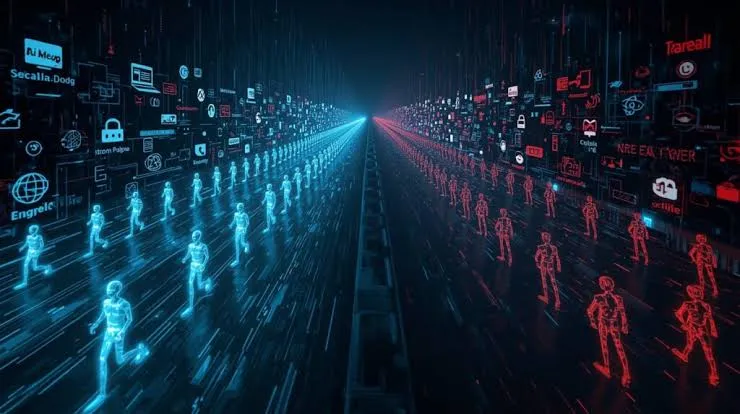
According to Cloudflare’s data as of September 30, bots account for 64.4% of requests sent to websites, while humans account for 35.6%. Bots dominating internet traffic is not an entirely new phenomenon. Search engine indexing bots and various automated services have long generated a large share of internet traffic.
The main change in recent years has been the spread of agent-based artificial intelligence systems. These systems search the internet, visit various pages, and gather information on behalf of users. Although users see only the final answer provided by services such as ChatGPT, Gemini, or Claude, requests made to web pages by artificial intelligence agents in the background generate real traffic.
The change is not limited to who is accessing the internet. According to a Pew Research Center study cited in the source, signs of content written or edited by artificial intelligence were found on more than 35% of web pages published after ChatGPT launched in November 2022.
Artificial intelligence is therefore gathering information from the internet on one hand while playing an increasingly large role in creating new content posted online on the other. This raises the risk that future artificial intelligence models will encounter more content created by other artificial intelligence systems than original material created by humans.
The problem may be further complicated by a “feedback loop.” Artificial intelligence learns from human-produced information on the internet, creates new content based on that information, and the resulting content is posted online again and may enter the databases of future models. As a result, incorrect, inaccurate, or low-quality information may repeatedly be fed back into the system.
Another aspect of the issue is the economic model for producing professional online content. With a traditional search engine, users select a website from the results, and that visit can generate advertising or subscription revenue for the media outlet. With artificial intelligence services, however, users often obtain an answer directly from a chatbot or an artificial intelligence summary provided by a search engine.
Consequently, users may have less need to visit the original source of the information. When declining traffic affects the revenue of publishers and other content producers, there is also a risk that fewer resources will be allocated to producing original material by journalists, editors, researchers, and experts. A smaller supply of high-quality, human-produced content could, in turn, affect the data available to future artificial intelligence systems.
This threat has also been discussed in documents disclosed as part of litigation involving OpenAI and Microsoft. The documents include assessments that artificial intelligence systems could economically weaken online content producers.
In remarks included in the documents, Microsoft Applied Science director Brent Hecht described the large-scale collection of online data by artificial intelligence models as the appropriation of labor on a massive scale and said these systems could pose a serious threat to publishers. Microsoft stated that these views were not the company’s official position and reflected the personal assessment of a particular employee.
In addition, another document identified by the source as a Microsoft document calls the process a “doom loop.” The central problem is the possibility that large language models could weaken their own data sources: artificial intelligence needs high-quality human content, but by presenting that content directly to users, it may also reduce traffic and revenue for the websites that created it.
The court documents also discuss the impact of Google’s artificial intelligence-based search features. According to one expert assessment cited in the source, Google’s artificial intelligence summaries may have led to a 20-60% decline in the referrals some publishers receive from the search engine.
All of this has also brought the “Dead Internet Theory” back into the spotlight. According to this theory, an increasingly large share of online content and interactions is generated by bots and automated systems rather than humans. Current figures do not show that people are withdrawing from the internet, but they do reveal that the role of bots and artificial intelligence systems online is growing rapidly.
The main risk is not that the internet will suddenly “disappear.” The more realistic danger is the weakening economic sustainability of high-quality, reliable content created by humans. If original content declines while the volume of automated content continues to grow, artificial intelligence systems may become increasingly dependent on information created by themselves and other models. This contradiction is precisely what underlies the concept of the “Doom Loop.”