
08:41Machine-translated from Azerbaijani by AIRead in Azerbaijani
Chery Vehicle’s Rear Axle Detaches While Driving
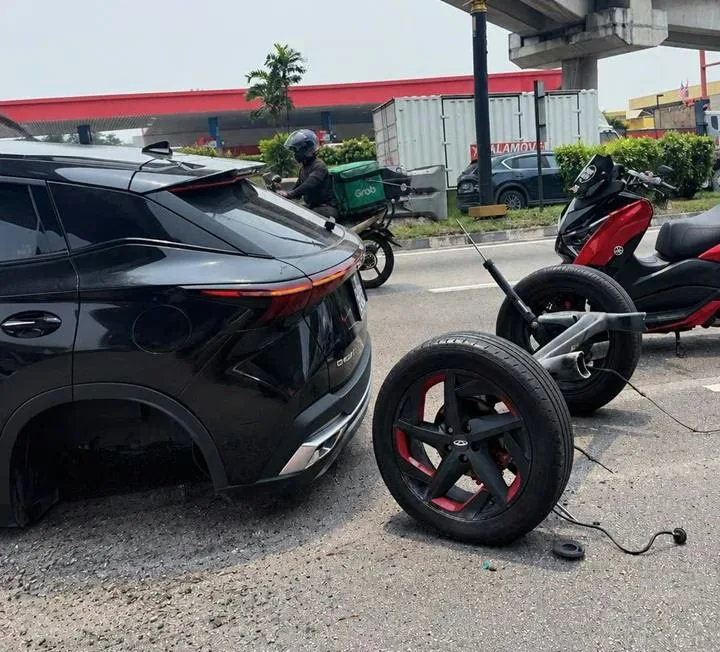
A Chery SUV’s rear axle completely detaching from the body while the vehicle was moving in Malaysia has sparked widespread discussion on social media. The incident occurred near the Aeon Tebrau shopping mall in the country’s state of Johor.
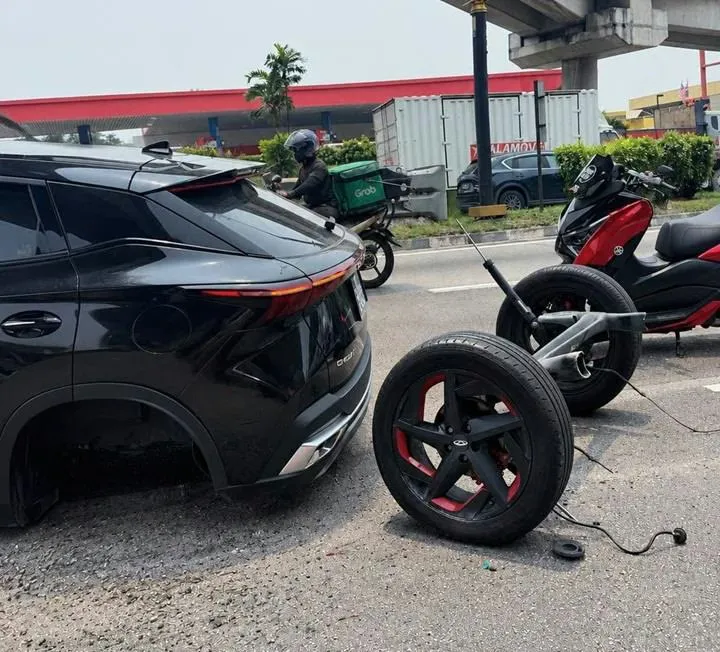
Footage circulating online shows that the axle connecting both rear wheels completely detached from the chassis and was left in the middle of the road. Interestingly, both wheels remained on the detached axle. The vehicle came to a stop without one of the main components of its rear suspension system.
Footage of the incident quickly spread on social media. Some users jokingly called what happened a “wheel release system.” Others said such a failure could be related to a broken rear axle, defects at the suspension arm connection points, or welding problems. However, the exact cause of the failure has not yet been determined.
Photos and videos that were shared show dents on the vehicle’s right rear door and a motorcycle parked nearby. It is not known whether the motorcycle was connected to the incident. A woman and a man seen at the scene in the footage were reportedly uninjured. Johor police have not yet issued an official statement about the incident.
A Facebook user who said he was a friend of the vehicle’s owner shared photos of the incident and criticized the quality of Chinese-made cars. He claimed that although these vehicles are visually appealing, they may have reliability problems. The post prompted numerous comments.
It should be noted that a similar incident involving an axle detaching from a Chery vehicle has been reported before. In April 2024, after the rear axle of a Chery Omoda 5 detached while the vehicle was moving, the company launched a recall and inspection process covering approximately 600 vehicles.
An investigation into that incident found a calibration problem with the factory’s automated welding equipment. A calibration error that occurred after the welding machine’s worn tip was replaced caused the rear axle connection points to be insufficiently strong.
However, structural failures in axle and suspension systems are not unique to Chinese cars. Other major automakers have also conducted recall campaigns over similar safety issues.
For example, Volkswagen previously recalled approximately 4 million vehicles, including the Golf and Tiguan, over the risk of steering mechanism bolts breaking due to corrosion. Tesla recalled approximately 30,000 Model S and Model X vehicles in China because of a defect in a rear suspension arm.
Toyota also issued a global recall for the bZ4X over the risk of wheel bolts loosening and a wheel detaching from the vehicle. Mercedes-Benz implemented a program extending the structural warranty to 20 years for some vehicles over corrosion of the rear subframe and wear on the suspension arms.
The technical cause of the latest incident in Malaysia has not yet been disclosed. Therefore, it is not possible to say whether the failure is related to the manufacturing defect identified in the previous Chery Omoda 5 incident.