
11:49Machine-translated from Russian by AIRead in Azerbaijani
IBM Financial Integrity Day: How AI and Intelligent Technologies Are Changing the Way Financial Infrastructure Is Protected
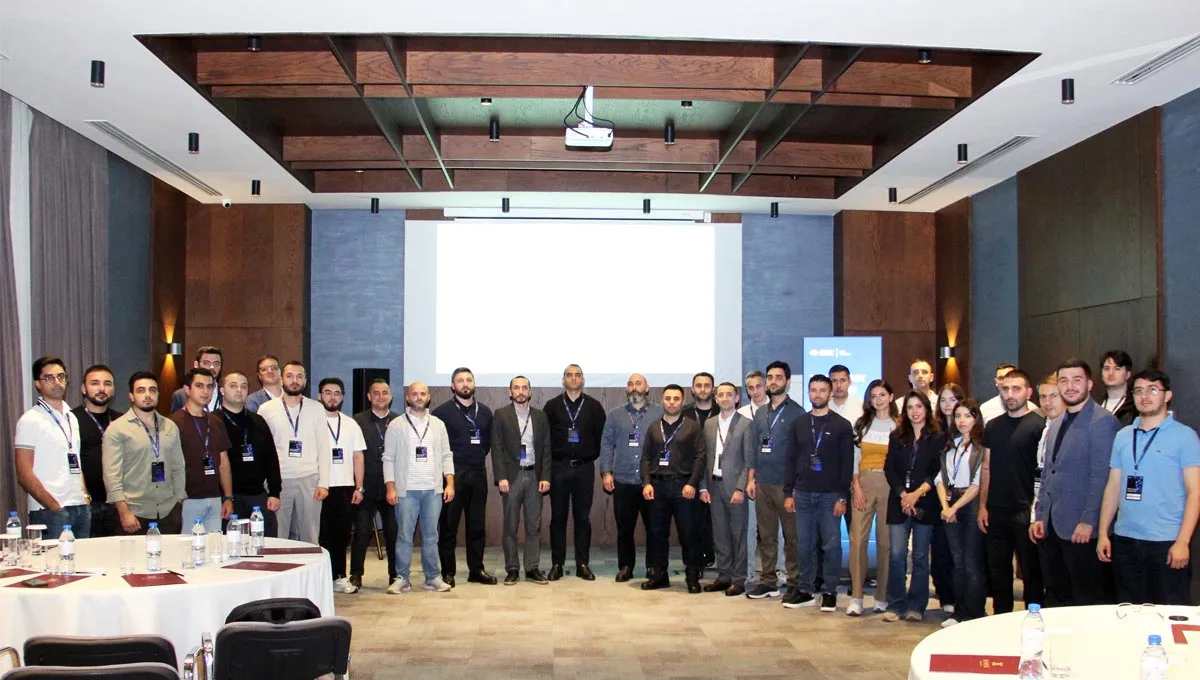
On October 30-31, IBM and R.I.S.K. Company held IBM Financial Integrity Day in Azerbaijan. The event took place at Basqal Resort & Spa and focused on protecting government and financial digital systems from cyberthreats and fraud. Participants discussed the use of artificial intelligence and machine learning to analyze payments, the protection of digital identities and user devices, as well as the management of secrets and critical credentials. The program centered on three IBM solutions: Safer Payments for detecting fraudulent transactions, Trusteer for protecting users and devices, and HashiCorp Vault for centralized secrets management.
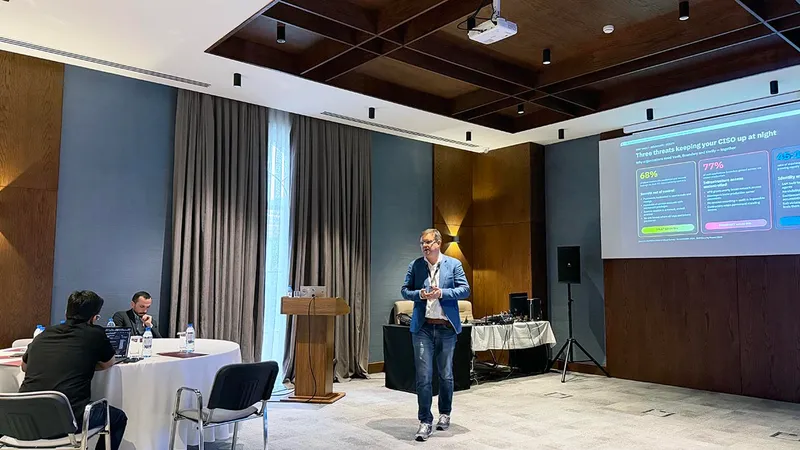
R.I.S.K. Company product manager Ismail Suleymanov opened the event. He welcomed the participants and outlined the meeting’s main topics. Alexey Prasolov, senior sales manager for IBM Automation in Central Asia and the Caucasus, then presented IBM’s technology priorities in hybrid cloud platforms, automation and security.
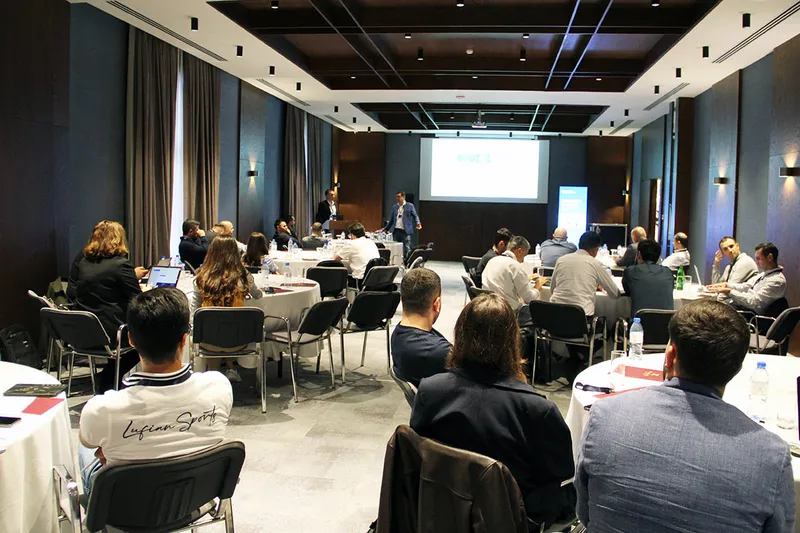
HashiCorp Vault: Secrets and Access Management
During his presentation, A. Prasolov discussed the development of IBM’s portfolio following the acquisition of HashiCorp. In particular, HashiCorp Vault is designed for centralized management of passwords, API keys, certificates and other secrets used by applications and infrastructure systems. One of Vault’s key capabilities is the transition from static to dynamic credentials. The system can issue temporary credentials with limited validity and automatically renew them. This reduces the period during which a compromised secret can be used to access infrastructure and decreases the amount of manual work involved in changing passwords and keys.
Vault Radar was also presented as a tool for detecting secrets that have accidentally ended up in software code. Terraform, in turn, automates infrastructure deployment and management. IBM solutions for privileged access management, identity, data protection and infrastructure monitoring were also briefly reviewed.
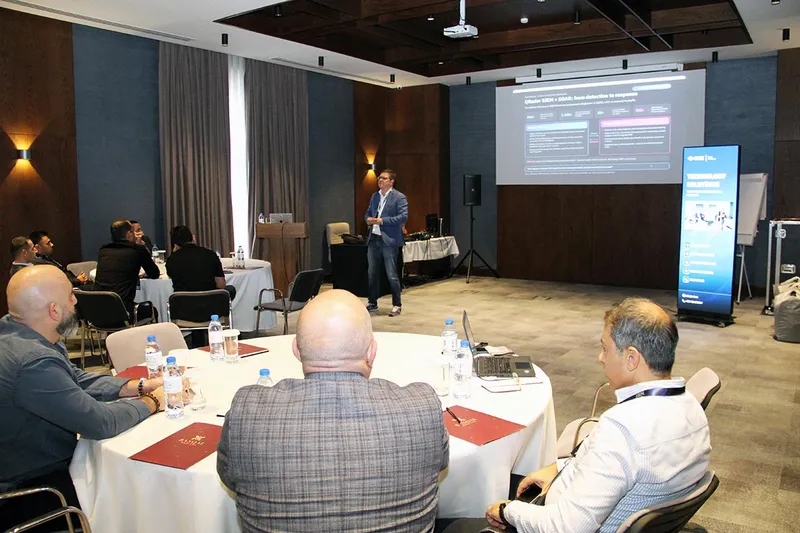
IBM Safer Payments: Real-Time Transaction Analysis
Solidity technical architect Sergey Sopronyuk’s presentation focused on the practical aspects of combating financial fraud. He emphasized that implementing an anti-fraud system is not limited to installing software: the solution must be integrated into the bank’s infrastructure, take its business processes into account and provide the required transaction processing speed.
Transaction analysis considers not only the amount and the sender’s and recipient’s details, but also the time of the transaction, the customer’s activity history, device characteristics, IP address, geolocation and behavioral indicators. According to him, the number of attributes used in IBM Safer Payments projects has grown from 200-300 to 500-600.
Fraud groups adapt to changes in banking applications and payment mechanisms, so preset rules alone are not enough. Machine learning helps identify deviations from customers’ normal behavior. However, AI alone does not guarantee effectiveness. S. Sopronyuk cited input data quality, the difficulty of interpreting results and declining model accuracy as fraud scenarios change among the challenges. In one project in Kazakhstan, a large number of models running simultaneously slowed transaction processing. Analysis showed that some of them could be replaced with simple rules without any loss of functionality.
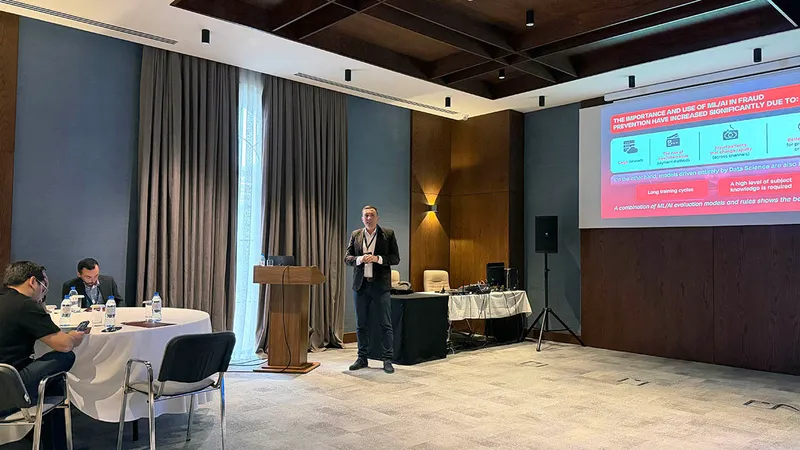
A Unified Platform and a Combination of Models
IBM Safer Payments is designed to detect and prevent fraud across various payment channels. The platform analyzes not only financial transactions but also nonfinancial events—for example, user actions during registration, authorization and connection to banking services. Payment processing data is supplemented by transaction history, device characteristics, IP addresses and geographic parameters. Integration with session monitoring tools makes it possible to assess risk before a decision on the transaction is made.
The platform includes reporting and incident management tools, allows users to configure rules, connect data sources, work with sanctions lists and use machine learning models. Integration with Python and TensorFlow is supported, while a graphical interface enables analysts to develop the anti-fraud system independently.
The presentation also covered Decision Tree, Boosted Trees, Random Forest, neural networks and logistic regression. Decision trees are faster and easier to interpret, while Random Forest and neural networks identify more complex patterns but require additional resources.
It was noted that there is no universal model for all payments and fraud schemes: algorithms are selected based on the specifics of transactions and data and are regularly retrained. The most effective approach combines machine learning, analytical rules and specialist expertise. As an example of scaling, the speaker cited a regional project in which the system uses more than 60 machine learning models and processes about 1,500 transactions per second, with an average processing time of less than 150 milliseconds. The customer’s name was not disclosed.
IBM Trusteer: Digital Identity Protection
Another technical presentation focused on IBM Trusteer, a solution for assessing the security of user devices and detecting signs of compromise. Unlike Safer Payments, which analyzes transactions, Trusteer assesses the device from which a customer accesses a financial service. The solution analyzes the software environment and network connection, detects malware and the use of emulators, checks the reputation of the IP address and takes geographic parameters into account. Data is collected through an SDK integrated into the bank’s mobile application.
An important component of Trusteer is behavioral biometrics. The system analyzes how a user interacts with the application, including typing patterns and speed. Deviations from the usual behavioral profile may indicate that someone other than the account owner is using the device.
Trusteer also helps detect fraud involving social engineering. The presentation examined the possibility of detecting an active phone call during a financial transaction. This is relevant in situations where an attacker convinces a customer to transfer money on their own. Even if the payment is confirmed by the account holder, a combination of contextual and behavioral indicators may point to a suspicious scenario.
Other indicators include visits to phishing sites, the creation of multiple accounts from one device, the use of many banking applications and inconsistencies between network parameters and geolocation. A blocking decision is based not on a single indicator but on an overall risk assessment.
Integration and Data Requirements
The meeting covered IBM Trusteer deployment options and compliance with requirements for processing personal and transaction data. An organization can determine which information may be sent to a cloud environment for analysis and which must remain within its infrastructure. This makes it possible to meet regulatory requirements and internal security policies while using global threat information.
According to the expert, IBM receives information about suspicious devices, network indicators and new types of threats from more than 190 countries. These data help identify indicators that have already appeared in international fraud schemes. Trusteer can work with Safer Payments as well as integrate with other anti-fraud platforms.
IBM Financial Integrity Day concluded with informal networking among participants and representatives of IBM, R.I.S.K. Company and Solidity.