
17:11Machine-translated from Azerbaijani by AIRead in Azerbaijani
Satellite AI Software Developer Satlyt Raises $8 Million
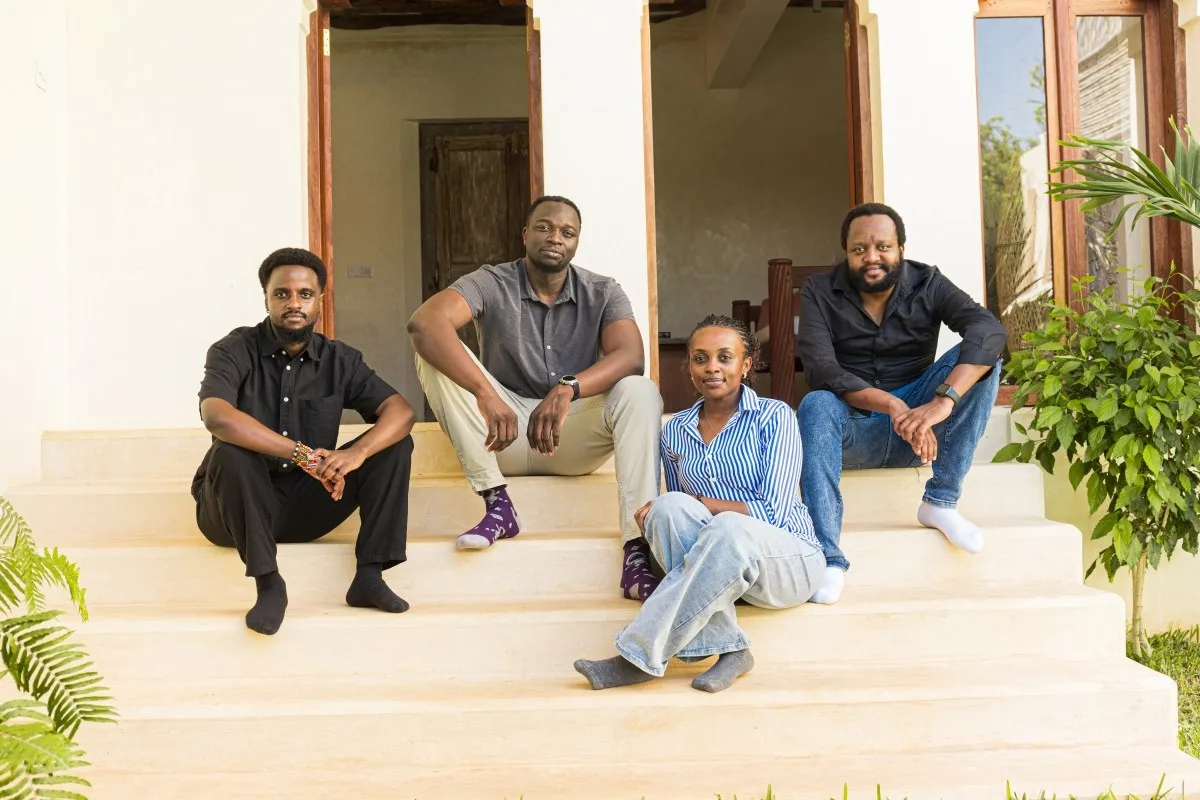
Rama Afullo, who worked as a product manager at “Google” and “SpaceX,” has founded the “Satlyt” startup to run artificial intelligence models on satellites. The company is headquartered in Sunnyvale, California, and Nairobi. The funding round totaled $8 million (approximately 13.6 million manats). “Satlyt” is developing software that distributes major computing workloads among several satellites in orbit. “Satlyt’s” software is scheduled to be sent into orbit aboard a “SpaceX” rocket on October 1. The software will reach orbit on the same launch as “Project Suncatcher,” the first prototype developed by “Google” for its space-based data center. The startup does not want to develop its own satellite. The goal is for the software to run on satellites from different companies, regardless of who owns the hardware. The company has already tested its software on 2 test missions. Earlier this year, the “Gemma” artificial intelligence model developed by “Google DeepMind” was installed on a spacecraft operated by “Momentus.” The model reduced the volume of data sent to Earth about errors in the onboard software by more than 60%. Transmitting data from a satellite to Earth is both expensive and slow. Costs can be reduced when decisions are made directly in orbit. According to Rama Afullo, annual savings for each satellite could reach hundreds of thousands of dollars. On the new mission, “Satlyt’s” software will run on a spacecraft developed by India’s “TakeMe2Space.” The mission has 3 customers. “NASA” will test cloud computing protocols in space. This technology is intended to process data across several systems. “Stellerian” will test image processing for tracking objects in orbit. “TakeMe2Space” also wants to demonstrate that its satellite can run software from other companies. There are currently few powerful GPUs—graphics processors that quickly perform large volumes of calculations—in orbit. For this reason, “Satlyt” has initially focused on tasks that ease satellites’ day-to-day operations. In 2027, the company wants to test connecting 2 separate satellites in a shared computing cloud. If the test succeeds, “Satlyt” will be able to establish a third-party cloud service for satellite manufacturers. Its goal is to operate on 20% of satellites in orbit by the end of the decade. The seed funding round was led by Houston-based “Non Sibi Ventures.” Bernard Harris, one of the company’s partners, worked as a “NASA” astronaut for more than 20 years. According to the investor, “Satlyt’s” success does not depend on the construction of large orbital data centers. An increase in the number of satellites launched into orbit will be enough. Afullo expects nearly all satellite manufacturers to add GPUs and similarly powerful processors to their spacecraft by the end of the decade.