
16:36Machine-translated from Azerbaijani by AIRead in Azerbaijani
Spanish Museum Builds Cray-1 Supercomputer Replica From 30 Mac Minis
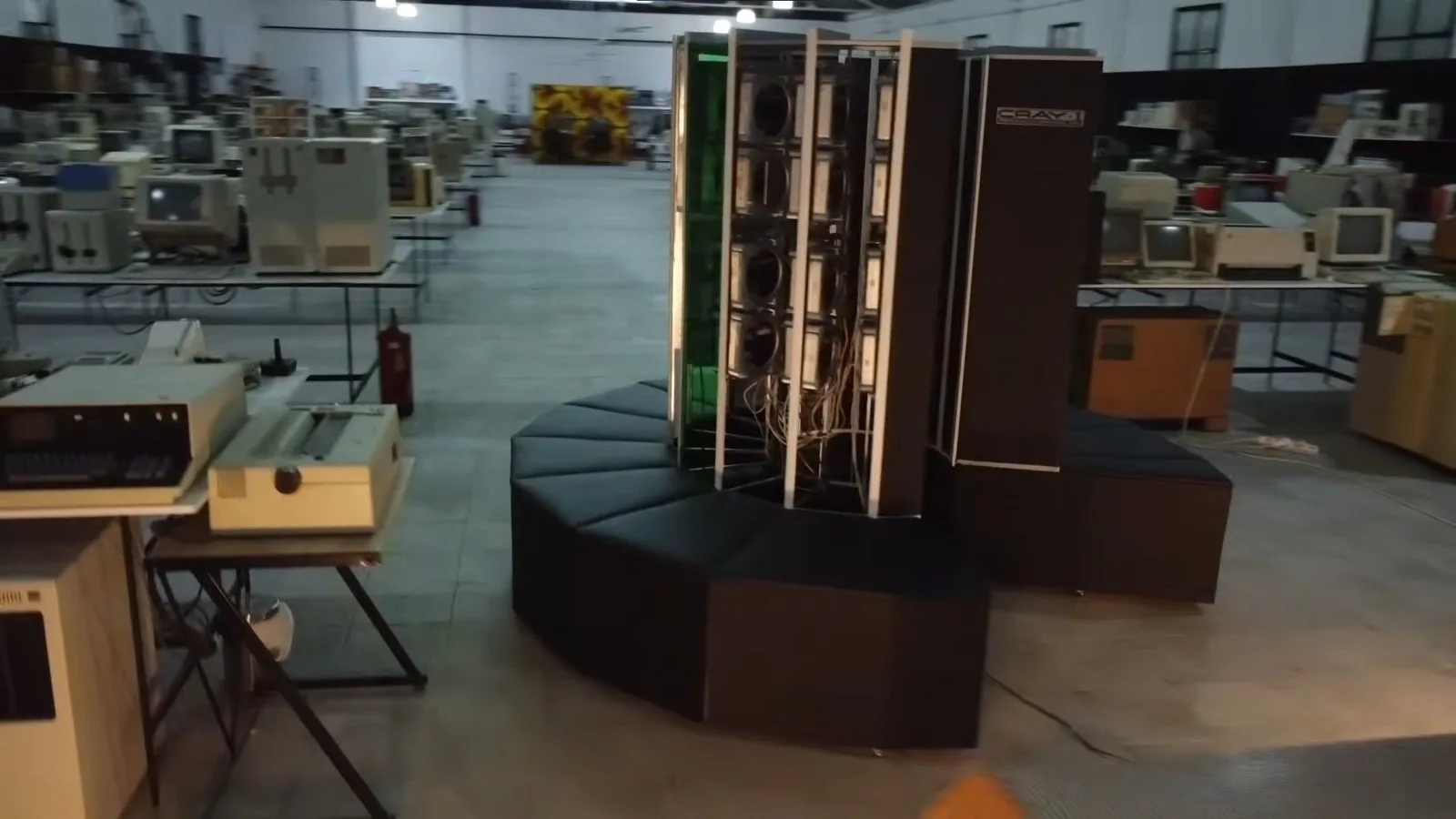
Spain’s Computer History Museum has unveiled a working Cray-1 replica assembled from 30 old Mac Mini computers. The 18-month project is dedicated to the 50th anniversary of the Cray-1’s first launch at Los Alamos and the founding of Apple. With this project, the museum aims to show how far computing technology has advanced over the past 50 years.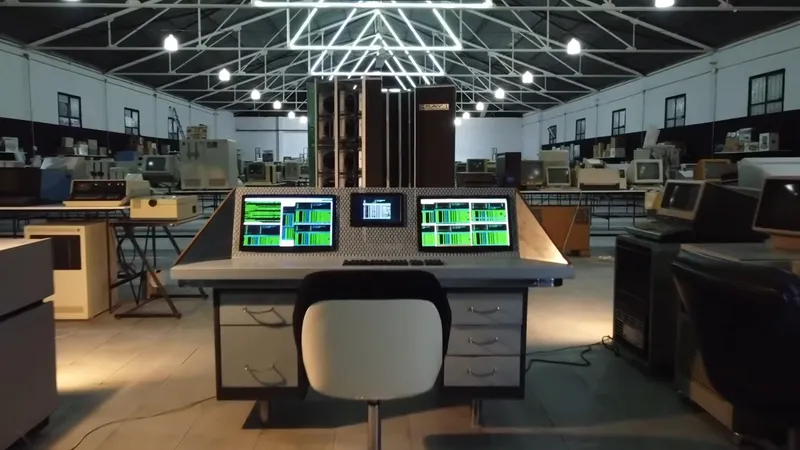 The system was assembled from 25 dual-core i5 computers and five quad-core i7 computers released between 2012 and 2014. Its 70 cores can perform 1.5 trillion mathematical operations per second. In theory, this is 9,375 times the original Cray-1’s performance of 160 MegaFLOPS. However, because one of the quad-core computers has failed, the system currently delivers 1.3 TeraFLOPS. The original Cray-1 is considered the first commercially successful supercomputer. A total of 80 units were sold. The system was used for complex calculations such as weather forecasting, aerodynamics, nuclear physics and structural analysis. Its main advantage was vector processing, which handled many numbers simultaneously. This significantly accelerated calculations. The original machine was cooled using coolant lines and large compressors installed in a separate room. The new replica uses passive cooling based on a convection tower. As a result, the Ethernet switches are the loudest components in the device. Visitors can monitor calculations from a retro control terminal with a large screen and keyboard. The system runs macOS Mojave. MPI technology distributes tasks among several Mac Minis, and the computers perform the calculations simultaneously. In the next phase, the museum plans to launch a crowdfunding campaign and purchase 70-80 M4 Mac Minis for the empty slots. The goal is to add the system to the TOP500 list of the world’s most powerful supercomputers. The current installation is on permanent display and can only be viewed with a guide. The museum is closed during the summer, the Christmas period, and in January and February.
The system was assembled from 25 dual-core i5 computers and five quad-core i7 computers released between 2012 and 2014. Its 70 cores can perform 1.5 trillion mathematical operations per second. In theory, this is 9,375 times the original Cray-1’s performance of 160 MegaFLOPS. However, because one of the quad-core computers has failed, the system currently delivers 1.3 TeraFLOPS. The original Cray-1 is considered the first commercially successful supercomputer. A total of 80 units were sold. The system was used for complex calculations such as weather forecasting, aerodynamics, nuclear physics and structural analysis. Its main advantage was vector processing, which handled many numbers simultaneously. This significantly accelerated calculations. The original machine was cooled using coolant lines and large compressors installed in a separate room. The new replica uses passive cooling based on a convection tower. As a result, the Ethernet switches are the loudest components in the device. Visitors can monitor calculations from a retro control terminal with a large screen and keyboard. The system runs macOS Mojave. MPI technology distributes tasks among several Mac Minis, and the computers perform the calculations simultaneously. In the next phase, the museum plans to launch a crowdfunding campaign and purchase 70-80 M4 Mac Minis for the empty slots. The goal is to add the system to the TOP500 list of the world’s most powerful supercomputers. The current installation is on permanent display and can only be viewed with a guide. The museum is closed during the summer, the Christmas period, and in January and February.