
10:58Machine-translated from Russian by AIRead in Azerbaijani
Sweeping Changes to Technology and Innovation Incentives Approved — Who Will They Affect?
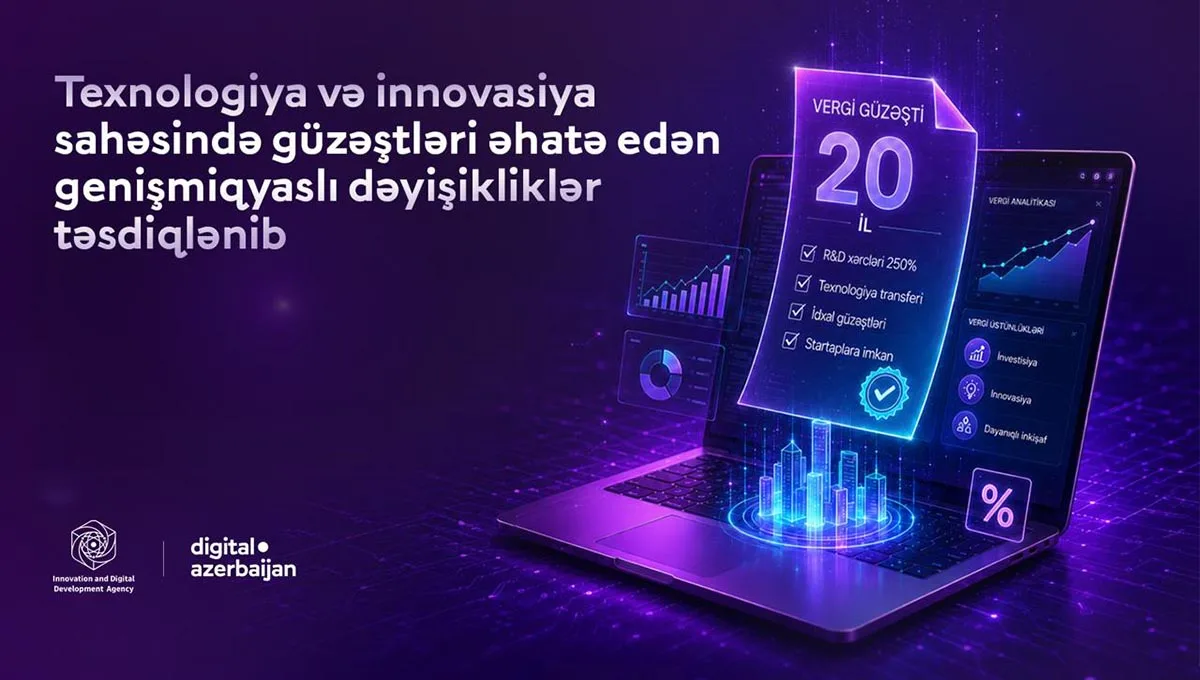
Decrees issued by the President of the Republic of Azerbaijan on October 22, 2026, approved legislative changes aimed at accelerating the development of the digital economy, supporting technology entrepreneurship, attracting international digital professionals to the country, and expanding opportunities for innovative products to participate in public procurement.
The changes cover technology park residency, tax and social insurance incentives, startup financing, the legal status of digital nomads, and mechanisms for procuring innovative products.
Eligibility for technology park residency is expanding
Amendments to the “Model Regulations on Technology Parks” create a legal framework allowing freelancers and digital nomads to operate as technology park residents. Freelancers are individuals who independently provide paid services or perform work under a civil-law contract without hiring employees. Digital nomads are foreign citizens or stateless persons who work remotely in foreign countries using information and communications technologies and earn income exclusively from foreign sources.
In addition to software development and systems integration, the list of activities qualifying for residency will include artificial intelligence, cybersecurity, robotics, cloud technologies, gaming technologies, and other high-tech fields. Opportunities will also be created for people with promising business ideas but limited experience in the relevant fields to obtain technology park resident status.
In addition, the amendments provide for faster expert assessments, clearer regulation of matters related to technology park infrastructure and property relations, and the transition of registration procedures to an electronic format through the “mygov biznes” platform.
These changes will take effect on January 1, 2027.
Tax and social insurance incentives for technology park residents are expanding
For technology park residents that obtain a residency certificate from January 1, 2027, and meet the established criteria, the duration of tax incentives will be extended to 20 years. The incentives apply to income and profits derived from the relevant activities, dividends paid from income generated by those activities, as well as property and land in use. The incentives will also be available to residents operating outside a technology park.
A 0% income tax rate for 20 years is provided for employees of residents who work in the relevant areas of activity.
For new residents, the period during which they may choose the method used to calculate social insurance contributions for employees engaged in the relevant activities will also be extended from 10 to 20 years.
Residents classified as large businesses will be able to use tax incentives if they meet conditions related to export indicators and the receipt of export revenue in accounts in Azerbaijan.
To encourage research and development (R&D), certain operating expenses related to the creation of innovative products may be deducted from taxable income using a coefficient of 2.5. A coefficient of 2 will be applied when calculating depreciation rates for equipment used in this work and accounted for separately.
Relevant tax exemptions will also apply to exports of equipment integrated with software, an innovative product, or know-how created by a resident.
Opportunities for startup financing and access to digital services are expanding
To encourage investment in startups, a portion of investments made by accredited investors may be deducted from taxable income, subject to certain conditions.
In addition, it is proposed that 10-year tax incentives be provided for income derived from crowdfunding and venture capital investments, as well as income provided to technology park residents’ employees under equity participation and share ownership plans.
Payments by startups and technology park residents for cloud services, platforms, software, and API services obtained from nonresidents for their operations will be eligible for tax incentives and value-added tax (VAT) exemptions for 20 years.
Highly qualified migrants will also be exempt from income tax for 20 years on income received from foreign sources under employment contracts with nonresidents located abroad.
A legal framework is being established for digital nomads and highly qualified migrants
Amendments to the Migration Code establish the concept of a digital nomad. This status applies to foreign citizens and stateless persons who work remotely in digital technology, artificial intelligence, cybersecurity, and innovation and receive income from foreign sources.
Mechanisms will be provided for them to obtain a business visa, as well as temporary and permanent residence permits, subject to certain conditions. To obtain a residence permit, a person must be registered with the tax authorities and operate as a technology park resident. Requirements for a stable income from foreign sources are also being established.
The provisions concerning mandatory state social insurance for digital nomads and highly qualified migrants working in fields related to digital technologies are also being clarified.
New mechanisms are being created for the public procurement of innovative products
New mechanisms for purchasing innovative products will be introduced to expand the participation of startups and residents of industrial and technology parks in public procurement.
A separate procurement procedure will apply to purchases of such products worth up to 100,000 manats, provided that price quotations are obtained from at least three suppliers.
For procurements with an estimated value of up to 250,000 manats, a 20% procurement preference will be applied when evaluating bids for innovative products. This preference does not mean an automatic reduction in the contract price; rather, it is an adjustment applied during bid evaluation.
A pilot implementation mechanism is also provided for developing innovative products whose technical specifications cannot be precisely determined in advance and testing them under real operating conditions.
The value of a pilot implementation agreement concluded with each supplier will be up to 1 million manats, and its term will be up to 12 months. The agreements will specify conditions concerning interim results, phased payments, data protection, security, and intellectual property rights.
At the same time, amendments to the Law “On the Regulation of Inspections Conducted in the Field of Entrepreneurship and the Protection of Entrepreneurs’ Interests” prohibit an inspection authority from visiting an entrepreneur’s place of business or carrying out inspection activities as part of the relevant inspection while it is suspended.
It should be noted that the legislative amendments were prepared as part of the implementation of the “Action Plan to Accelerate Digital Development in the Republic of Azerbaijan for 2026–2028,” approved by Order No. 953 of the President of the Republic of Azerbaijan dated February 27, 2026.
The changes are aimed at developing technology entrepreneurship, creating innovative products, attracting investment, and increasing the competitiveness of Azerbaijan’s digital economy.