
00:56Machine-translated from Azerbaijani by AIRead in Azerbaijani
Unusual Project: Gazelles to Be Kept Under Solar Panels
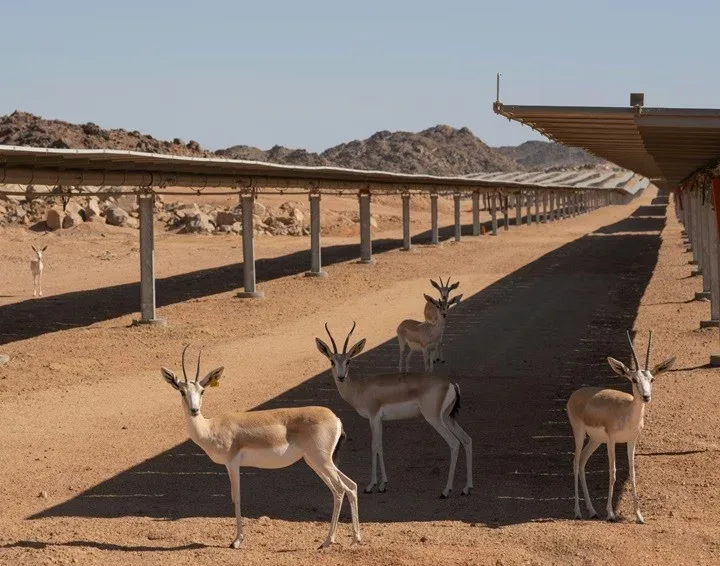
An unusual environmental project is being implemented in Saudi Arabia. A 250 MW solar power plant operating in the country is being used not only to generate electricity but also to breed endangered animals.
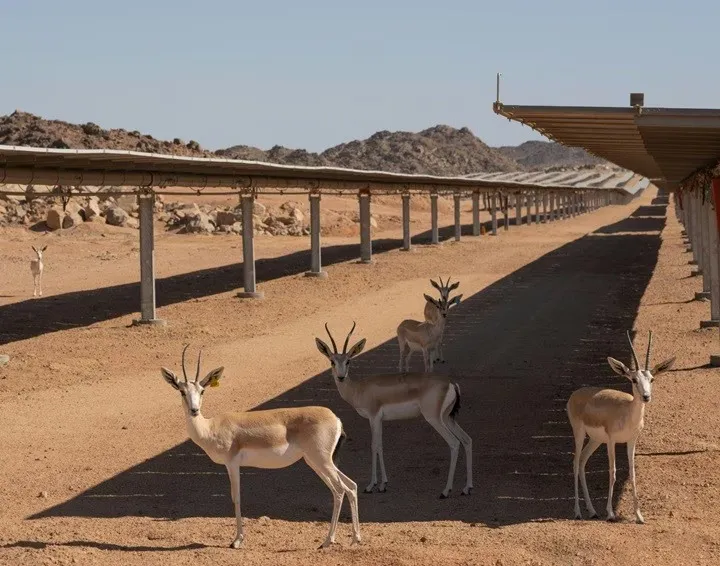
PV-Magazine reports that the project is being carried out at the Prince Mohammed bin Salman Royal Reserve. Following a seven-month trial phase that began in October 2025, 38 sand gazelles were introduced to the plant’s grounds in May 2026. Of these, 33 are female and five are male.
The solar power plant, which covers a total area of 505 hectares, has been divided into three protected sections. Approximately 370 hectares, or 73%, of the site is considered suitable for the animals to live and breed. In the initial phase, a 157-hectare area containing 66 MW of solar panels is being used.
One of the project’s most interesting features is that the solar panels protect the animals from the heat. Measurements show that the temperature of the ground beneath the panels is 5–10 degrees lower than in areas exposed to direct sunlight. This creates more favorable conditions for the gazelles in Saudi Arabia’s hot climate.
During the seven-month trial, the animals were found to have adapted to the solar energy infrastructure. Experts recorded no serious problems with either the gazelles’ behavior or the power plant’s operation. The panels’ design allows the animals to move freely beneath them.
The site is enclosed by special fencing that protects it from predators. This approach has increased the reserve’s animal breeding capacity 15-fold. Experts continuously monitor the gazelles’ health, behavior, and reproduction.
The choice of sand gazelles was not accidental. By feeding on grasses, shrubs, and tree leaves, these animals help naturally regulate vegetation and disperse seeds. Their breeding therefore also contributes to restoring the area’s ecological balance.
According to estimates by the reserve’s management, the number of gazelles kept at the solar power plant could reach approximately 600 by 2031. The first calves are expected to be born in December 2026.
Experts say that a sufficiently large and healthy population must first be established before the gazelles can be released into the wild. It is estimated that an initial population of at least 500 animals is needed to sustainably restore the species across the reserve’s 24,500-square-kilometer area.
The Prince Mohammed bin Salman Royal Reserve is one of Saudi Arabia’s largest protected natural areas. It contains 15 different ecosystems. The reserve’s long-term program calls for reintroducing 23 native animal species that historically lived in the region. Of these, 14 have already been included in the restoration program.
The project is an interesting example showing that solar power plants can be used not only to generate electricity but also to protect biodiversity and breed endangered animals.